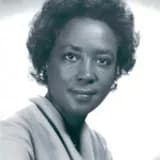
Annie Easley reported for her first day of work as a human computer at NACA's Lewis Research Laboratory in Cleveland, beginning her 34-year NASA career.
On January 13, 1955, Annie Easley reported to work at the National Advisory Committee for Aeronautics (NACA) Lewis Flight Propulsion Laboratory in Cleveland, Ohio — the agency that would become NASA in 1958. She was hired after answering a newspaper article about twin sisters who worked as human computers, a role in which women performed complex mathematical calculations by hand for engineers and scientists, long before electronic computers were widely used.
Easley was one of only four African Americans among approximately 2,500 employees at the Lewis laboratory at the time, making her entry into this highly technical, historically white-male-dominated workplace a significant act of perseverance against both racial and gender barriers of the era. Her work initially involved running simulations for the newly forming Plum Brook Reactor Facility and performing calculations to support aeronautical and rocket propulsion research.
This date marks the beginning of a career that would span more than three decades, during which Easley transitioned from human computer to computer programmer and eventually to a leading role in software development for NASA's Centaur rocket program. Her hiring is historically significant as part of the broader, often under-recognized story of Black women's essential technical contributions to the American space program during the Cold War Space Race, contributions that enabled missions ranging from early rocketry to interplanetary exploration.