← All women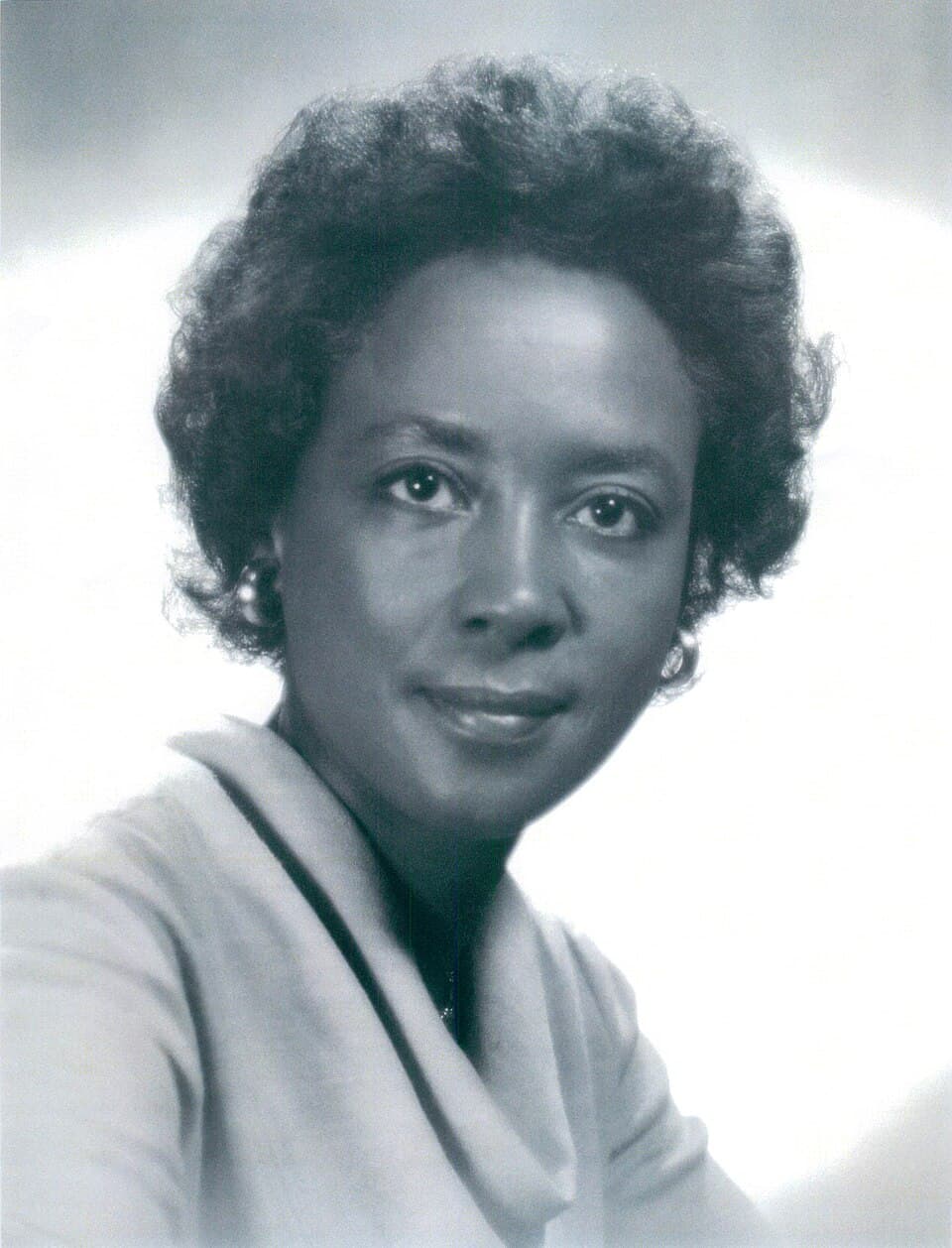
American · Science · Aviation · Activism
Annia Easley
April 23, 1933 – June 25, 2011
Early life and background
Annie Jean Easley was born on 23 April 1933 in Birmingham, Alabama, in the heart of the segregated American South.[2][7] Birmingham in the 1930s and 1940s was governed by Jim Crow laws that restricted African Americans’ access to quality education, employment, and housing. Within this context, Easley’s mother placed a strong emphasis on education, encouraging her daughter to develop the mathematical skills that would later become central to her career.[11]
Easley attended Holy Family High School, a Catholic school in Birmingham whose rigorous curriculum in mathematics and science provided a foundation that was rare for Black girls at the time.[13] Accounts of her youth emphasize her aptitude for algebra and her discipline in academic work, qualities that helped her stand out in an environment where expectations for African American women were more often centered on domestic or service jobs than on technical professions.[11]
After high school, Easley briefly attended Xavier University of Louisiana, a historically Black Catholic institution in New Orleans, where she studied pharmacy.[2] Her plans to complete a degree were disrupted, however, when she returned to Birmingham and found that the local university no longer offered the pharmacy program that had drawn her there.[11] This obstacle, combined with the limited educational options open to Black women at the time, prompted her to reconsider her path.
In the early 1950s, Easley married and moved to Cleveland, Ohio, following her husband’s posting with the U.S. military.[11] Cleveland, though not free of racial discrimination, offered more opportunities than Birmingham, including federal research facilities such as the National Advisory Committee for Aeronautics (NACA) Lewis Research Laboratory. The move would prove pivotal: it placed Easley near one of the country’s key centers of aeronautical and eventually space research, setting the stage for her future career.
Career beginnings at NACA
Easley’s entry into aeronautics began almost by chance. Looking for work in Cleveland, she read a newspaper story about two women hired as human computers at the NACA Lewis Research Laboratory.[11] Intrigued, she applied for a position and, after an interview that tested her mathematical ability, was hired as a mathematician—a human computer—at Lewis.
On 13 January 1955, Easley reported for her first day of work as a human computer at NACA.[9] In this role, she performed complex calculations by hand, using slide rules and desktop calculators to support engineers designing propulsion systems and conducting research in aerodynamics and flight technology. Human computers translated theoretical equations into numerical results, checked engineers’ work, and ensured the reliability of data used in experiments and design.
Easley’s hiring was historically significant. African American women were scarcely represented in technical positions in federal agencies, and NACA’s workforce in the 1950s, including at Lewis, remained predominantly white and male.[11] Her presence as a Black woman mathematician in a research laboratory reflected both the gradual opening of federal employment opportunities and the persistence of barriers—she faced subtle and overt discrimination, including limited access to certain training and promotion pathways.
In 1958, NACA was absorbed into the newly created National Aeronautics and Space Administration (NASA).[10] Easley continued her work at the same Cleveland facility, now renamed the NASA Lewis Research Center, and she would remain there throughout her career. As the United States entered the space race, the laboratory’s work shifted increasingly toward high‑energy rocket systems and advanced propulsion, areas in which Easley’s mathematical expertise would prove critical.
Transition to computer programming
The late 1950s and early 1960s saw rapid changes in scientific computing. Electronic computers began to replace human computers for complex calculations, requiring new skills in programming and numerical analysis. Easley recognized this shift and took the initiative to retrain herself. She learned programming languages such as FORTRAN (Formula Translating System) and SOAP (Symbolic Optimal Assembly Program), becoming an adept computer programmer.[1][5]
As a programmer, Easley moved from manual calculation to writing, testing, and debugging code that simulated physical systems and analyzed performance data. She wrote and implemented code for a range of NASA programs, including those focused on propulsion, energy conversion, and flight trajectories.[1] Her work required translating physical models into algorithms, managing the constraints of early computers, and collaborating closely with engineers to ensure that simulations accurately reflected the behavior of complicated systems.
This transition was not merely technical; it was socio‑professional. Programming was an emerging field, and women—especially Black women—were rarely recognized as engineers or scientists even when they performed highly technical work.[11] Easley had to navigate institutional structures in which her contributions could be undervalued and promotions could be slow. She responded by pursuing continuous learning and by mentoring others, particularly women and minorities, who sought to enter computing and engineering roles.
Work on the Centaur upper-stage rocket
Easley is best known for her contributions to Centaur, a high‑energy upper-stage rocket that used liquid hydrogen and liquid oxygen to boost spacecraft into high orbits and deep‑space trajectories.[4][7] Developed at NASA’s Lewis Research Center, Centaur became one of the agency’s most successful upper stages, enabling missions that expanded human understanding of the solar system.
As a leading member of the team of analyst–programmers working on Centaur, Easley developed and implemented computer code that analyzed the rocket stage’s performance under different conditions.[5][11] Her programs helped engineers evaluate structural and thermal stresses, fuel consumption, and guidance parameters, and they were essential to ensuring that Centaur could reliably deliver payloads into the correct trajectories.
Centaur’s first successful launch occurred in the early 1960s and laid the foundation for numerous subsequent missions, including Surveyor[3][11] Easley’s work on Centaur contributed to the technological infrastructure behind these missions, even if her name rarely appeared in public-facing accounts at the time. Later discussions of her career emphasize that her software and analytical work supported missions that culminated in the 1997 launch of the Cassini spacecraft to Saturn, whose upper-stage booster relied on Centaur technology.[3][7]
Beyond Centaur, Easley co‑authored technical papers on nuclear engines for rockets and contributed to studies of solar and wind power.[4] Her role exemplified the increasingly interdisciplinary nature of NASA’s technical work, combining mathematics, computer science, and engineering in support of both space exploration and energy research.
Alternative energy and hybrid vehicle research
In addition to her contributions to rocket technology, Easley developed code used in researching energy-conversion systems and alternative power technologies.[1][2] At NASA’s Lewis Research Center, she worked on simulations that evaluated the performance and viability of systems using solar, wind, and nuclear power for various applications, including potential use in space missions and terrestrial energy projects.
One notable area of her work involved simulations that supported the development of battery technology for early hybrid vehicles.[2][3] Her programs helped researchers understand how batteries could be used to power vehicles efficiently, foreshadowing later efforts to create consumer hybrid and electric cars. These studies were part of broader federal interest in sustainable energy during the energy crises of the 1970s and subsequent decades, when policymakers and scientists sought alternatives to fossil fuels.
Easley’s contributions to alternative energy research highlight the breadth of her impact: she was not only a "rocket scientist" but also a participant in early computational work on technologies that would become central to twenty‑first-century concerns about climate change and energy sustainability.[4] Her ability to move between aerospace applications and energy studies reflected both her mathematical versatility and the evolving priorities of the Lewis Research Center.
Advocacy, equal employment, and outreach
As Easley’s technical career progressed, she increasingly took on roles related to equal employment opportunity (EEO) and outreach. In the 1970s, she served as an EEO counselor at NASA, a role in which she helped colleagues navigate discrimination complaints and worked to improve the conditions of women and minorities within the agency.[9][11] This work involved listening to employees’ experiences, explaining policies, and interfacing with management to seek fair resolutions.
Easley also participated in numerous outreach and education programs. She spoke to students, particularly those from underrepresented backgrounds, about careers in science, technology, engineering, and mathematics (STEM). NASA later highlighted her "enthusiastic participation" in outreach as part of her legacy, noting that she helped inspire young people to see themselves as future scientists and engineers.[1]
Her advocacy was shaped by her own experiences of discrimination, including being denied training or promotion opportunities that were more readily available to white colleagues.[11] Rather than leaving the field, she chose to work within the institution to foster change, using both formal roles, such as EEO counseling, and informal mentoring to support others.
Awards, honors, and recognition
During her active years at NASA, Easley’s work was primarily recognized internally through performance evaluations, responsibilities, and authorship of technical reports. While specific awards with dated citations are not widely documented in public sources, later historical accounts and institutional profiles have honored her contributions.
In the 2010s, organizations including NASA, the U.S. Department of Energy, and educational initiatives such as the Lemelson Foundation and Finding Ada Project produced profiles highlighting Easley as a pioneering African American woman in computing and aerospace.[1][4][11] These recognitions describe her as one of NASA’s first African-American employees and emphasize her role in developing software for Centaur and in early hybrid vehicle research.
Universities and STEM-history projects have also featured Easley as a "hero of computer science" and a role model for diversity in technology fields. For example, materials from the University of Arkansas and the University of York’s computer science department discuss her career as part of broader efforts to showcase women’s contributions to computing.[13] These posthumous honors help correct the historical record by placing her alongside more widely known figures from the space race and early computing eras.
Personal life
Publicly available sources provide limited detail on Easley’s personal life, reflecting both her own privacy and the tendency of institutional histories to focus on professional accomplishments. It is known that she married in the early 1950s and moved to Cleveland following her husband’s military posting.[11] The relocation opened access to employment at NACA’s Lewis Research Laboratory, which became the focal point of her career and much of her adult life.
Biographical sketches suggest that Easley balanced her professional work with family responsibilities, though they do not extensively document her household or children. What emerges consistently is her commitment to community: she engaged with local educational programs, mentored students and junior colleagues, and served in roles such as EEO counselor that extended her impact beyond strictly technical work.[1][9]
Her personal experiences with racial and gender bias shaped her perspective on workplace equity and informed her determination to support others facing similar challenges. In interviews, she emphasized persistence, self‑education, and a refusal to be discouraged by obstacles—all themes that resonated in her guidance to younger generations.[9][11]
Later life, retirement, and death
Easley remained at NASA’s Lewis Research Center—later renamed the John H. Glenn Research Center—throughout her career. She retired in 1989 after approximately 34 years of service, having progressed from human computer to computer scientist and senior technologist.[1][8] By the time of her retirement, she had contributed to Centaur rocket development, alternative energy research, and internal equity efforts at the agency.
In retirement, Easley continued to be involved in community and educational outreach, though detailed accounts of her activities are sparse in public records. Her story began to attract more attention as historians and diversity advocates sought to highlight the contributions of Black women in STEM. NASA’s history office and other organizations produced profiles, photo features, and educational materials that helped bring her work to wider audiences.[1][6]
Annie Jean Easley died on 25 June 2011 in Cleveland, Ohio.[2][7] Her passing closed a life that had spanned from pre–civil rights Birmingham to the era of complex planetary exploration and computational science. Subsequent tributes framed her as a role model whose persistence and technical excellence opened doors for others.
Legacy and historical impact
Easley’s legacy operates on multiple levels. Technically, her work on Centaur contributed to launch systems that enabled key missions in NASA’s portfolio, including lunar landers, satellites, and deep‑space probes such as Cassini.[3][7][11] Her programming and analytical expertise helped ensure the reliability of high‑energy upper stages, which became central to the United States’ ability to place scientific payloads into challenging orbits and interplanetary trajectories.
In energy research, her simulations of energy-conversion systems and alternative power technologies—including battery systems for early hybrid vehicles—position her as an early contributor to computational work on sustainable energy.[2][4] Although these projects did not carry her name into popular discourse, they form part of a lineage leading to modern concerns about climate change, electric vehicles, and renewable energy integration.
Socially and institutionally, Easley’s impact lies in her role as one of the earliest African American women in NASA’s technical workforce.[11] She navigated structural discrimination while seeking to expand access to training and promotion for women and minorities, using both formal EEO roles and informal mentoring. Her story illustrates how individual persistence can intersect with institutional change, highlighting both the progress made and the barriers that remained.
In recent years, educational platforms, museums, and STEM‑advocacy organizations have incorporated Easley into curricula and exhibits about women in computing and aerospace. Articles describing her as a "forgotten NASA pioneer" aim to correct the historical imbalance that has often overlooked the contributions of Black women in favour of more widely recognized figures.[8][11] NASA’s own profiles emphasize her enthusiastic outreach and her role in breaking down barriers for women and people of color in STEM.[1]
Easley’s life thus stands as a case study in the intersection of race, gender, and technology in twentieth‑century America. From her birth in segregated Birmingham to her work on rockets that reached the outer planets, she helped expand both the physical horizons of space exploration and the social horizons of who could be a scientist or engineer. Her legacy continues to inspire efforts to diversify STEM fields and to ensure that the historical record reflects the full range of contributors to scientific and technological progress.
Dated achievements
4 indexed.
- Apr231933Science
Birth of Annie Jean Easley
Annie Jean Easley was born in Birmingham, Alabama, later becoming a pioneering NASA mathematician, computer scientist, and rocket technologist.
View details Annie Easley - Wikipedia - Jan131955Science
Begins career as a 'human computer' at NACA Lewis Laboratory
Annie Easley reported for her first day of work as a human computer at NACA's Lewis Research Laboratory in Cleveland, beginning her 34-year NASA career.