← All women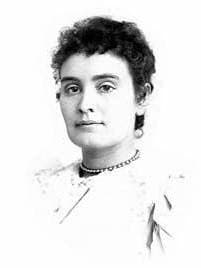
American · Medicine
Anne Sullivan
April 14, 1866 – October 20, 1936
Early Life and Background
Anne Sullivan, born Johanna (or Johanna) Mansfield Sullivan, entered the world on 14 April 1866 in Feeding Hills, a village in Agawam near Springfield, Massachusetts.[1][2][7] Her parents, Thomas and Alice Clohessy Sullivan, were poor, illiterate Irish immigrants who had fled the devastation of the Great Famine.[7][8] Anne was the eldest of several children, but only she and her younger brother Jimmie survived to adulthood; others died young, a common tragedy among impoverished families of the era.[7]
Sullivan’s childhood was marked by extreme poverty, instability, and illness. Around age seven she contracted trachoma, a bacterial infection of the eyes that went untreated and progressively scarred her corneas.[7][1] The disease left her with severely impaired vision and chronic pain, and for much of her youth she had almost no usable sight.[7] At the same time, her mother was gravely ill with tuberculosis and died when Anne was about nine.[7][6] Her father, overwhelmed and increasingly dependent on alcohol, struggled to care for his children, and the family disintegrated.
In 1876, Anne and her younger brother were sent to the Tewksbury Almshouse in Massachusetts, a combination poorhouse and institution for the indigent.[5][7][6] Conditions were harsh; later investigations would reveal overcrowding, disease, and abuse. For Sullivan, Tewksbury was both traumatic and formative. She encountered death regularly, lived among people with a range of illnesses and disabilities, and experienced firsthand the stigma attached to poverty and impairment. These years deepened her empathy for those marginalized by institutions and would later shape her insistence that blind and deaf‑blind children deserved education rather than custodial care.
At Tewksbury, Sullivan desperately sought a way out. When a state inspection visit brought the director of the Perkins School for the Blind, she reportedly pleaded to be admitted to the school.[7][13] Her tenacity impressed officials, and in 1880 she was admitted to Perkins School for the Blind in Boston, despite having little formal education and being older than typical new students.[7][10][12]
Education at Perkins School for the Blind
Perkins School for the Blind became the turning point of Sullivan’s early life. Arriving as a nearly illiterate teenager with severe visual impairment, she entered an environment that, while still paternalistic by modern standards, offered structured education, medical attention, and social support.[7][13] At Perkins she learned Braille, the raised‑dot system used by many blind readers, and acquired fluency in reading and writing English.[1][2]
Sullivan underwent several eye operations during her years at Perkins, including surgery at about age 15 that improved her vision somewhat, though she remained visually impaired throughout her life.[7][1][4] The partial restoration allowed her to read print at close range and to navigate more independently, but she continued to experience pain and periodic deterioration.
Although older than her classmates and initially academically behind, Sullivan excelled. Teachers noted her intelligence, determination, and strong will. She studied literature, history, and language, absorbing both academic content and the school’s philanthropic ethos toward blind people.[7][12] At the same time, she observed pedagogical methods used with blind students and absorbed the legacy of figures such as Samuel Gridley Howe and Laura Bridgman, an earlier deaf‑blind pupil at Perkins whose education preceded that of Helen Keller.[13]
Despite frequent health setbacks and time away for surgeries, Sullivan completed the rigorous course of study. In 1886valedictorian of her class, a remarkable achievement given her late start and ongoing eye problems.[7][10][6] Her valedictory address emphasized duty, service, and the moral obligation of educated people to assist others—a theme that would define her life’s work.
Career Beginnings and Meeting Helen Keller
Upon graduating in 1886, Sullivan faced the question of how to support herself as a visually impaired woman with no family resources.[5][6] The leadership at Perkins soon saw an opportunity that aligned both with her abilities and the institution’s mission. That year, Captain Arthur Keller of Tuscumbia, Alabama, wrote to Perkins seeking help for his daughter Helen Keller, who had become deaf and blind after an illness in infancy and was now an uncontrollable but obviously intelligent six‑year‑old.[5][13]
The school’s director recommended Sullivan, still only 20, for the position of governess and teacher.[5][13] She had no formal training in educating deaf‑blind children, but she possessed deep firsthand experience of blindness, strong academic preparation, and a fierce independence. After studying reports on the earlier Perkins student Laura Bridgman and preparing as best she could, Sullivan traveled south.
On 3 March 1887, she arrived at the Keller home in Tuscumbia to begin her work with Helen.[3][13] This moment marked the start of a nearly five‑decade partnership that would transform both women and the field of special education. Sullivan immediately began introducing the manual alphabet, spelling words into Helen’s hand while associating them with objects and everyday routines.[13] She also set firm boundaries and insisted on manners and discipline, believing that respect and high expectations were essential.
The Water‑Pump Breakthrough and Educational Innovations
For several weeks after her arrival, Sullivan’s efforts produced only mechanical imitation: Helen would imitate finger‑spelled words without understanding that they symbolized things. The breakthrough came on 5 April 1887 at the family’s outdoor water pump.[13] As Sullivan pumped cool water over Helen’s hand, she spelled "w‑a‑t‑e‑r" into her other hand, again and again. Suddenly, Helen grasped that the gestures corresponded to the liquid flowing over her skin and, more broadly, that everything has a name.[13]
This realization unleashed a torrent of learning. Helen eagerly demanded the names of objects around her, staying awake late into the night to acquire new vocabulary.[13] Sullivan’s diary and later accounts describe a dramatic transformation from frustration and isolation to joyful curiosity. The water‑pump scene, later immortalized in literature and film, became an emblem of human potential and educational perseverance.
Sullivan’s methods were innovative in several respects. She:
- Used tactile sign language as the primary channel of instruction, adapting the manual alphabet into constant, real‑time communication.[13]
- Emphasized experiential learning, linking words to physical experiences, objects, and actions rather than teaching vocabulary in isolation.[13]
- Maintained high academic expectations, introducing complex concepts, literature, and abstract ideas, not merely practical skills.[1][13]
- Insisted on social inclusion, preparing Helen to interact in the wider world rather than remain confined to home or institutional settings.[1][2]
In the context of the late 19th century, when many blind or deaf children were placed in asylums or given rudimentary training at best, Sullivan’s approach was radical. She treated Helen as a full intellectual equal whose disabilities required adaptation in method, not reduction in content.
Collaboration with Helen Keller and Academic Achievements
As Helen’s language skills developed, Sullivan expanded instruction to include reading Braille and raised‑letter print, writing, arithmetic, and later foreign languages and literature.[1][2] She accompanied Helen to formal schooling, first at the Perkins Institution annex, then the Wright‑Humason School for the Deaf in New York, and the Cambridge School for Young Ladies, serving as interpreter and tutor.[2][13]
Sullivan’s most demanding professional task came when Helen resolved to pursue higher education. From 1900, Keller attended Radcliffe College
In 1904, under Sullivan’s continuous support, Helen Keller graduated from Radcliffe with a Bachelor of Arts degree, becoming the first deaf‑blind person known to achieve such a qualification.[1][2][5][10] The accomplishment was widely reported and admired, but contemporaries often overlooked the extent of Sullivan’s labor as interpreter, note‑taker, and study partner. Their joint achievement challenged prevailing assumptions about the intellectual limits of people with profound sensory disabilities and underscored the importance of skilled, respectful assistance. Beyond the classroom, Sullivan played a central role in Keller’s emergence as a public figure—author, lecturer, and advocate for social reform. Keller’s autobiography The Story of My Life (initially serialized and later published in book form) drew heavily on Sullivan’s letters and recollections of their early years, and Sullivan worked closely on its preparation.[2][6] Literary critic John Albert Macy, whom Sullivan later married, helped edit the volume and introduce it to a wider audience.[2] Sullivan accompanied Keller on extensive lecture tours in the United States and abroad, interpreting speeches and handling queries from audiences.[2][5] Their appearances raised funds for organizations aiding the blind and promoted progressive views on education, labor rights, and social welfare. Mark Twain, impressed by their friendship and achievements, famously referred to Sullivan as a "miracle worker", a phrase later used as the title for dramatic adaptations of their story.[13] Through these activities, Sullivan moved into a public role unusual for women of her background and era. Although Keller’s name usually appeared on book covers and lecture bills, Sullivan’s presence was essential. She not only enabled communication but also served as a trusted collaborator, sometimes moderating or tempering Keller’s more radical political statements while still sharing many of her commitments. In the early 1900s, Sullivan and Keller’s household expanded to include John Albert Macy, a Harvard instructor and literary critic. Macy assisted in editing Keller’s writings and soon developed a close relationship with Sullivan. On 3 May 1905, Anne Sullivan married John Macy, with Helen Keller’s enthusiastic approval.[5][2] After the marriage, Sullivan often signed her name Anne Sullivan Macy.[2] The three lived together for years in an unconventional arrangement, with Keller remaining at the center of the household. Sullivan continued her full‑time work as Keller’s interpreter and teacher, while Macy pursued writing and editorial work. The marriage brought periods of happiness and intellectual camaraderie, but it was also strained by financial difficulties, the relentless demands of public life, and the emotional intensity of the Sullivan–Keller partnership.[2][6] Over time, Macy’s relationship with Sullivan deteriorated, and they eventually separated, though accounts differ on the precise chronology. They never had children. Sullivan retained the surname Macy in many formal contexts but effectively resumed a life structured around her collaboration with Keller. Her personal choices reflected both the constraints and the possibilities of early 20th‑century womanhood: marriage did not end her work, but her primary vocation remained her bond with Keller and the mission they shared. Sullivan’s educational philosophy, while never codified in a formal treatise, can be reconstructed from her letters, practices, and the outcomes of her work. Key principles included: These practices anticipated later approaches to special education that emphasize individualized education plans, multi‑sensory instruction, and inclusive settings. Her work with Keller demonstrated that deaf‑blind students could master complex academic disciplines, influencing professional training for teachers of visually impaired and deaf‑blind children in the 20th century.[1][6][13] As the decades passed, Sullivan’s health deteriorated. Her vision, never fully restored, worsened, and by the 1910s and 1920s she faced increasing pain and functional limitations.[1][11] In 1914, her health reportedly declined significantly, and she underwent additional treatments, though none fully alleviated her problems.[11][2] To cope with the physical demands of constant interpreting and travel, Sullivan and Keller brought in a Scottish secretary, Polly Thomson, who gradually assumed more of the day‑to‑day correspondence and logistical tasks.[2][6] Thomson’s presence allowed Sullivan to conserve energy yet remain deeply involved in Keller’s work. Even as she lost more of her remaining sight, Sullivan continued to mentor Keller, advise on speeches, and participate in advocacy campaigns. Sullivan and Keller lived for many years in Forest Hills, Queens, New York, sharing a home with Thomson.[11] From there they embarked on lecture tours, wrote articles, and supported organizations such as the American Foundation for the Blind, which would later curate an online museum dedicated to Sullivan’s life and contributions.[13] By the mid‑1930s, Sullivan was increasingly frail. She underwent further medical procedures in an attempt to preserve what little vision remained, but her overall health continued to decline.[1][6] On 20 October 1936, Anne Sullivan Macy died at her home in Forest Hills, Queens, New York, at the age of 70.[1][11] Helen Keller was with her at the end, holding her hand as she had so often done in the classroom and on the lecture platform.[11] Sullivan’s death marked the close of a singular partnership and a pioneering career in disability education. She was later interred in the National Cathedral’s columbarium in Washington, D.C., where her remains rest near those of Keller, symbolizing the enduring bond between teacher and student.[2][6] Although Sullivan was widely respected in her lifetime, public memory initially focused more on Helen Keller. Over time, however, scholars, educators, and institutions have re‑centered Sullivan as a major historical figure in her own right. Biographies and documentaries have explored her early hardships, innovative pedagogy, and complex relationships.[6][15] In the 20th century, stage and screen adaptations of Keller’s autobiography, notably The Miracle Worker, brought Sullivan’s teaching to mass audiences, dramatizing the water‑pump breakthrough and emphasizing her fierce determination. While these portrayals sometimes simplified or romanticized her methods, they reinforced her status as an icon of teaching and perseverance.[13] Institutional recognition followed. In 2006, Sullivan was posthumously inducted into the National Women’s Hall of Fame in Seneca Falls, New York, honored for her "focus, persistence, and creativity" and for reshaping public expectations of people with disabilities.[5] That same year, she was also inducted into the American Printing House for the Blind Hall of Fame for Leaders and Legends of the Blindness Field, which cited her "brilliance, passion, and tenacity" and her role in establishing a blueprint for educating blind and deaf‑blind students.[13] Anne Sullivan’s legacy rests on several intertwined contributions: Her story continues to resonate in discussions of disability rights, inclusive education, and the ethics of care. Scholars note that Sullivan’s work anticipated later rights‑based frameworks by insisting on access to communication and education as fundamental entitlements rather than benevolent gifts.[6][13] At the same time, her intense, lifelong involvement in Keller’s daily life raises complex questions about dependence, autonomy, and collaboration—questions that modern disability studies explore with renewed nuance. Today, the American Foundation for the Blind’s online museum, the Perkins School for the Blind, and other institutions preserve documents, photographs, and artifacts related to Sullivan’s life.[7][13] These collections, along with biographies and dramatizations, ensure that her role is recognized alongside Helen Keller’s in the broader history of disability and education. Anne Sullivan remains a touchstone for teachers, advocates, and students who see in her life a testament to the transformative power of high expectations, creative methods, and unwavering belief in the capacity of every learner.Writing, Public Speaking, and Advocacy
Personal Life and Marriage to John Macy
Teaching Philosophy and Influence on Special Education
Later Career, Health Decline, and Continued Work
Death
Posthumous Recognition and Honors
Legacy and Historical Impact
Dated achievements
7 indexed.
- Apr141866Medicine
Birth of Anne Sullivan
Anne Sullivan was born in Feeding Hills, Massachusetts.
View details Anne Sullivan Biography - Mar031887Medicine
Anne Sullivan begins teaching Helen Keller
Anne Sullivan started teaching Helen Keller in Tuscumbia, Alabama.
View details