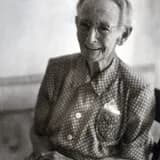
Anna Mary Robertson married Thomas Salmon Moses, beginning the family and farm life that shaped her later art.
On November 9, 1887, Anna Mary Robertson married Thomas Salmon Moses, becoming Anna Mary Robertson Moses. The marriage placed her within the demanding world of farm life and motherhood that occupied much of her adult life and delayed her artistic recognition for decades.
This event is historically significant because it helps explain the context in which Moses’s art later emerged. She and Thomas Moses had ten children, five of whom survived infancy, and she spent years balancing domestic labor, family farming, and making a living in a rural economy. In the nineteenth-century countryside, women’s work was central but often underrecorded; Moses’s later paintings would transform that ordinary rural experience into a subject of national cultural interest. Her life as a farm wife also underscores the barriers she overcame: limited schooling, physical labor, and the expectations placed on married women in her era. The name by which she became famous—Grandma Moses—would come much later, but the family life established in 1887 formed the social and material basis of the story she eventually painted into art history.