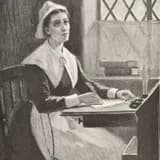
The 1650 publication of *The Tenth Muse* secures Anne Bradstreet’s reputation as America’s first woman poet and the first true American poet, a foundational figure in American literature.
With the appearance of The Tenth Muse Lately Sprung Up in America in London around September 1650, Anne Bradstreet came to be celebrated—especially by later critics—as America’s first woman poet and the first true American poet. This dual designation reflects how her work has come to symbolize the beginnings of a distinctly American literary tradition.
Bradstreet’s poems engage deeply with Puritan theology and classical learning, but they also incorporate experiences unique to life in New England: the hardships of migration, illness, domestic labor, and the emerging relationship between colonists and the American landscape. Her blend of European forms with colonial subject matter helped define what could be understood as "American" poetry long before political independence.
Literary historians and institutions such as the Poetry Foundation and academic reference works consistently point to the 1650 publication as the moment when an identifiable American poetic voice first appeared in print. Although she wrote as a loyal English subject and Puritan, her physical and emotional ties to Massachusetts imbue her verse with perspectives that differ from contemporaries who remained in England.
These recognitions carry significant implications for women’s and national literary history. By naming Bradstreet "America’s first woman poet" and "first true American poet," scholars and educators acknowledge both her gendered breakthrough and her role in inaugurating an American canon. The 1650 publication thus stands not only as an individual achievement but as a symbolic birth of American poetry itself.