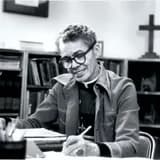
Pauli Murray died of cancer on July 1, 1985, in Pittsburgh, Pennsylvania, at age 74.
Pauli Murray died on July 1, 1985, in Pittsburgh, Pennsylvania, succumbing to pancreatic cancer at the age of 74. Her death marked the end of an extraordinary life devoted to dismantling systems of racial and gender oppression through law, activism, scholarship, poetry, and ministry.
At the time of her death, Murray had already secured a legacy as one of the most influential yet historically underrecognized figures of the 20th-century civil rights and women's rights movements. Her groundbreaking legal theories on the intersection of race and sex discrimination had informed landmark Supreme Court arguments, and her memoir Song in a Weary Throat was published posthumously in 1987, receiving critical acclaim and later winning a Christopher Award.
In the decades following her death, Murray's contributions have been increasingly recognized and celebrated. In 2012, the Episcopal Church added Murray to its calendar of saints, commemorating her on July 1st, the anniversary of her death. Her childhood home in Durham, North Carolina, was designated a National Historic Landmark, and the Pauli Murray Center for History and Social Justice was established to preserve and share her legacy.
Murray's posthumous recognition reflects a broader historical reckoning with the pivotal but often overlooked roles played by Black women, gender-nonconforming individuals, and intersectional thinkers in shaping American civil rights law and social justice movements. Scholars and activists continue to draw on Murray's pioneering concept of 'Jane Crow' and her holistic vision of justice that refused to separate race, gender, and sexuality.