← All women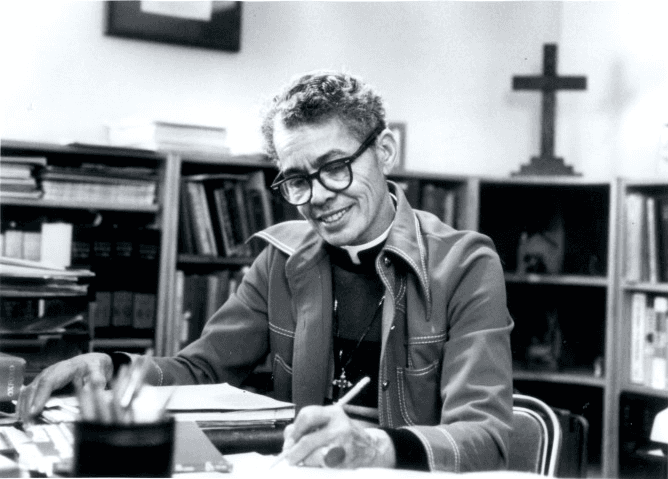
American · Activism · Law · Literature
Anna Pauline ‘Paulie’ Murray
November 20, 1910 – July 1, 1985
Early Life and Background
Anna Pauline "Pauli" Murray was born on November 20, 1910, in Baltimore, Maryland. Following the death of her mother, she was raised by her maternal grandparents in Durham, North Carolina. This formative period in the segregated South shaped her later activism. Murray attended Hunter College, fighting against racial and gender barriers, before graduating in 1933. Her early life was marked by experiences of poverty and racial discrimination, which inspired her lifelong commitment to justice and equality.
Career Beginnings and Development
Murray's career began with work for the Works Progress Administration and the Workers Defense League in a variety of roles that involved organizing around labor issues and civil rights. In 1940, Murray gained attention with her arrest for refusing to sit in a segregated section of a bus in Virginia, a full 15 years before Rosa Parks' similar act of protest. Her legal education culminated with a degree from Howard University in 1944, where she was the only woman in her class and graduated first despite facing gender discrimination.
Major Works and Accomplishments
Pauli Murray's major works include her seminal book, "States' Laws on Race and Color", which was lauded as the "bible" of civil rights lawyers by Thurgood Marshall. She played a crucial role in strengthening civil rights law through her innovative legal arguments, particularly her work in the 1950s and 1960s which laid the groundwork for the Brown v. Board of Education decision. Her pioneering work "Jane Crow and the Law: Sex Discrimination and Title VII" helped to frame gender discrimination as equivalent to racial discrimination.
Awards, Honors, and Recognition
Throughout her life, Murray received numerous accolades, including honorary degrees and letters of commendation from organizations such as the National Organization for Women (NOW), which she co-founded. She was also awarded posthumous recognition, including her inclusion in the National Women's Hall of Fame.
Personal Life
Murray's personal life was marked by a firm integration of her beliefs and identity; she identified as both black and queer, and her advocacy continued through these lenses. Although details about her personal relationships are largely private, her queerness and self-identification as a male minted her as a key figure for later LGBTQ movements.
Legacy and Impact
Pauli Murray's legal arguments and civil rights activism laid the foundation for critical advancements in equality that resonate into modern social justice movements. Her role in the inception of NOW highlights her influence on both civil rights and women's rights. Murray's writings continue to inspire modern legal strategies against discrimination.
Later Life and Death
In 1977, at age 66, Murray became the first African American woman ordained as an Episcopal priest. She served in this capacity until her death on July 1, 1985, in Pittsburgh, Pennsylvania. Throughout her later life, she remained active in writing and activism, leaving a profound legacy in the fight for equality across intersecting lines of race, gender, and sexuality.
Dated achievements
4 indexed.
- Nov201910Science
Born in Baltimore, Maryland
Anna Pauline 'Pauli' Murray was born on November 20, 1910, in Baltimore, Maryland.
View details Pauli Murray - Wikipedia - Jun011965Law
Becomes First African American to Earn a J.S.D. from Yale Law School
Pauli Murray became the first African American to earn a Doctor of Juridical Science (J.S.D.) degree from Yale Law School in 1965.