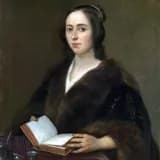
Anna Maria van Schurman died on 4 May 1678 in Wieuwerd, Friesland, while living in the Labadist religious community she had joined.
Anna Maria van Schurman died on 4 May 1678 in the small Frisian village of Wieuwerd, where she had spent her final years as a devoted member of the Labadist community, a radical Pietist religious movement led by Jean de Labadie.
In her later life, van Schurman had turned away from the scholarly and courtly circles that had celebrated her as a prodigy, choosing instead to dedicate herself entirely to a life of religious asceticism and communal living. This decision, documented in her autobiographical work Eukleria (1673), scandalized many of her former admirers and represented a dramatic personal transformation from Europe's most celebrated female scholar to a committed separatist and spiritual seeker.
Her death marked the end of an extraordinary life that had bridged Renaissance humanist scholarship, the early modern republic of letters, and radical religious dissent. She was buried in Wieuwerd, and her passing was mourned across the learned circles of Europe, even by those who disagreed with her final religious choices. Her collected correspondence, poetry, and theological writings continued to circulate and influence discussions of women's intellectual capacities long after her death, cementing her legacy as a foundational figure in the history of women's education and scholarship in Europe.