← All women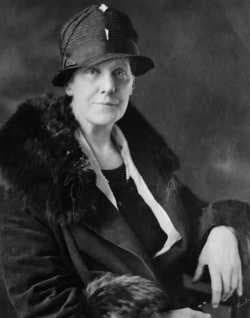
American · Activism · Politics
Anna Jarvis
May 1, 1864 – November 24, 1948
Early Life and Family Background
Anna Maria Jarvis was born on May 1, 1864, in Webster, West Virginia, during the tumultuous final years of the American Civil War. She was one of eleven or twelve children born to Ann Reeves Jarvis and Granville E. Jarvis, though high childhood mortality rates of the era meant only four of her siblings — Elsinore, Lillian, Claude, and one other — survived into adulthood. This staggering loss of siblings profoundly shaped the Jarvis household's emotional landscape and, indirectly, Anna's later devotion to honoring maternal sacrifice.
Her mother, Ann Reeves Jarvis, was a remarkable woman in her own right: a minister's daughter who, during the Civil War, organized "Mothers' Day Work Clubs" to improve sanitary conditions in army camps on both the Union and Confederate sides, provide medical supplies, and care for wounded soldiers regardless of allegiance. After the war, Ann continued her activism, organizing "Mothers' Friendship Day" events aimed at reconciling families divided by the conflict. She also taught Sunday School for more than two decades at the Andrews Methodist Episcopal Church in Grafton, West Virginia, where the family had relocated when Anna was a young girl.
It was during one of these Sunday School lessons, reportedly around 1876, that Ann Reeves Jarvis expressed a wish — while teaching a lesson on notable Old Testament mothers — that someone would eventually establish a memorial day to honor mothers, "for the matchless service she renders to humanity in every field of life." Anna, then a child, was present and would later cite this moment as the seed of her life's mission.
Education and Early Career
Anna Jarvis attended the Female Seminary at Wheeling, West Virginia (now part of West Liberty University), graduating in 1883. She then worked briefly as a schoolteacher before her family moved to Chattanooga, Tennessee, and eventually to Philadelphia, Pennsylvania, where Anna took a position as a literary and advertising editor at the Fidelity Mutual Life Insurance Company — one of the few white-collar professional roles available to women of her era. She never married and had no children, a fact often noted in relation to her lifelong campaign to honor mothers, including her own.
Anna was known to be exceptionally close to her mother throughout her adult life, caring for her during her final years as Ann's health declined. Ann Reeves Jarvis died on May 9, 1905, in Philadelphia. Her death devastated Anna, who resolved to dedicate herself fully to realizing her mother's long-expressed wish for a memorial day honoring mothers everywhere.
The Campaign for Mother's Day
Following her mother's death, Anna Jarvis quit her job and devoted herself entirely, and at considerable personal financial cost, to establishing a formal Mother's Day observance. She began a vigorous letter-writing campaign in 1907, reaching out to congressmen, senators, governors, newspaper editors, business leaders, and clergy across the country to advocate for the holiday.
On May 10, 1908, Jarvis organized the first official Mother's Day services: one at Andrews Methodist Episcopal Church in Grafton, West Virginia — her mother's home church — and another, larger event at the Wanamaker's department store auditorium in Philadelphia, sponsored by retail magnate John Wanamaker, who became an important early financial backer of her cause. At the Grafton service, Jarvis distributed white carnations, her mother's favorite flower, establishing a floral tradition that persists to this day (white carnations for mothers who had died, red or pink for those still living).
Jarvis pressed forward with remarkable tenacity. West Virginia became the first state to officially recognize Mother's Day, in 1910, under the encouragement of Governor William E. Glasscock. By 1911, every U.S. state observed some form of the holiday. Jarvis's persistent lobbying — including forming the "Mother's Day International Association" in 1912 to control and trademark terminology and symbols associated with the holiday — culminated in a joint resolution of the United States Congress. On May 8, 1914, President Woodrow Wilson signed the resolution designating the second Sunday in May as the national observance of Mother's Day, cementing Jarvis's place in American history as the founder of the holiday.
Later Disillusionment and Battle Against Commercialization
Almost immediately after the holiday's official establishment, Jarvis grew alarmed by its rapid commercialization. Florists began charging exorbitant prices for carnations; greeting card companies mass-produced sentimental cards; and confectioners promoted boxed chocolates as the "appropriate" Mother's Day gift. Jarvis, who had envisioned Mother's Day as a solemn, personal day of sentiment expressed through handwritten letters and visits, was outraged by what she considered the crass exploitation of a sacred family observance for commercial gain.
She spent the next several decades of her life — and the bulk of her personal wealth, including an inheritance from a wealthy friend — fighting the very holiday she had created. She organized boycotts of florists, filed numerous lawsuits against companies and organizations she believed were misusing the Mother's Day name or symbols, and publicly denounced first lady Eleanor Roosevelt for her involvement with a Mother's Day charity event. In one particularly striking episode in 1923, Jarvis was arrested for disturbing the peace after protesting the sale of carnations at a Mother's Day event organized by the American War Mothers, an organization using the holiday to raise funds. Reports indicate a similar arrest or altercation occurred in the following years as she continued her crusade well into the 1940s.
She reportedly went door to door and even attempted to organize a petition to have Mother's Day rescinded by the federal government, though this effort failed. Her single-minded devotion to this fight consumed her finances entirely; by the late 1930s and 1940s, she was living in increasingly reduced circumstances.
Personal Life
Anna Jarvis never married and had no children. She lived for much of her adult life with her sister Lillian in Philadelphia, and the two sisters were known to be reclusive, particularly in later years, as Anna's health and finances declined. She was deeply private, and much of what is known about her personal reflections comes from her extensive correspondence archives, which document both her advocacy work and her mounting bitterness toward commercial interests.
Later Life and Death
By the mid-1940s, Anna Jarvis's eyesight and hearing had deteriorated significantly, and she suffered from declining physical and possibly mental health, exacerbated by decades of stress and financial strain from her legal battles. She was eventually placed in the Marshall Square Sanitarium in West Chester, Pennsylvania. In a widely repeated historical anecdote, the costs of her care at the sanitarium are said to have been paid anonymously by representatives of the floral and greeting card industries — the very industries she had spent her life opposing, though some historians consider this claim only partly verified.
Anna Jarvis died on November 24, 1948, at the age of 84, blind, deaf, and largely impoverished. She was buried at West Laurel Hill Cemetery in Bala Cynwyd, Pennsylvania, alongside her mother and sister.
Legacy and Historical Impact
Anna Jarvis's legacy is deeply paradoxical. She is unequivocally recognized as the founder of the American Mother's Day holiday, one of the most widely observed and commercially significant holidays in the United States and, through subsequent international adoption, much of the world. Her successful campaign is often cited as a striking example of grassroots activism achieving national legislative change through the efforts of a single determined individual.
Yet Jarvis herself came to view her creation as corrupted, and she died believing she had failed in her original mission to preserve the day's sentimental, uncommercial character. Her later life stands as a cautionary tale about the unintended consequences of successful social movements, and about how commercial interests can co-opt and transform grassroots initiatives.
Today, the Andrews Methodist Episcopal Church in Grafton, West Virginia, where the first Mother's Day service was held, is preserved as the International Mother's Day Shrine, a National Historic Landmark. Anna Jarvis is commemorated as the "Mother of Mother's Day," and her story is frequently retold each May as a counterpoint to the holiday's commercial trappings, reminding observers of its origins in personal grief, filial devotion, and one woman's extraordinary, if ultimately bittersweet, determination.
Dated achievements
5 indexed.
- May011864Activism
Birth of Anna Jarvis in Webster, West Virginia
Anna Maria Jarvis was born on May 1, 1864, in Webster, West Virginia, later becoming the founder of the American Mother's Day holiday.
View details Anna Jarvis - Wikipedia - May121907Activism
Anna Jarvis holds first memorial for her mother, launching the Mother's Day campaign
On May 12, 1907, Anna Jarvis held a memorial service for her late mother in Grafton, West Virginia, launching her national campaign for Mother's Day.