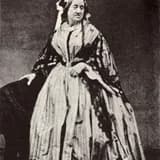
Atkins issued the first fascicle of Photographs of British Algae: Cyanotype Impressions, the first book illustrated entirely with photographic images.
In October 1843, Anna Atkins self-published the first fascicle of Photographs of British Algae: Cyanotype Impressions, a work now recognized as the first book ever illustrated entirely with photographic images. Using the cyanotype process recently invented by her family friend Sir John Herschel, Atkins created striking blue-and-white photograms by placing dried algae specimens directly onto light-sensitized paper and exposing them to sunlight.
This achievement predates the more commercially famous photographic publications of the era, including William Henry Fox Talbot's The Pencil of Nature, making Atkins's work a landmark in both the history of photography and the history of scientific illustration and publishing.
Atkins distributed the fascicles privately to her scientific and botanical acquaintances rather than through commercial channels, reflecting both the era's constraints on women's public professional activity and her own scholarly, rather than commercial, motivations. Each cyanotype plate was meticulously captioned by hand with the Latin binomial of the specimen depicted, marrying scientific rigor with visual innovation.
The significance of this achievement was not immediately recognized in her own lifetime but has grown enormously; today Atkins is celebrated as a foundational figure in the history of photography and photobooks, and original copies of her work are treasured by institutions such as the New York Public Library and the Natural History Museum, London.