← All women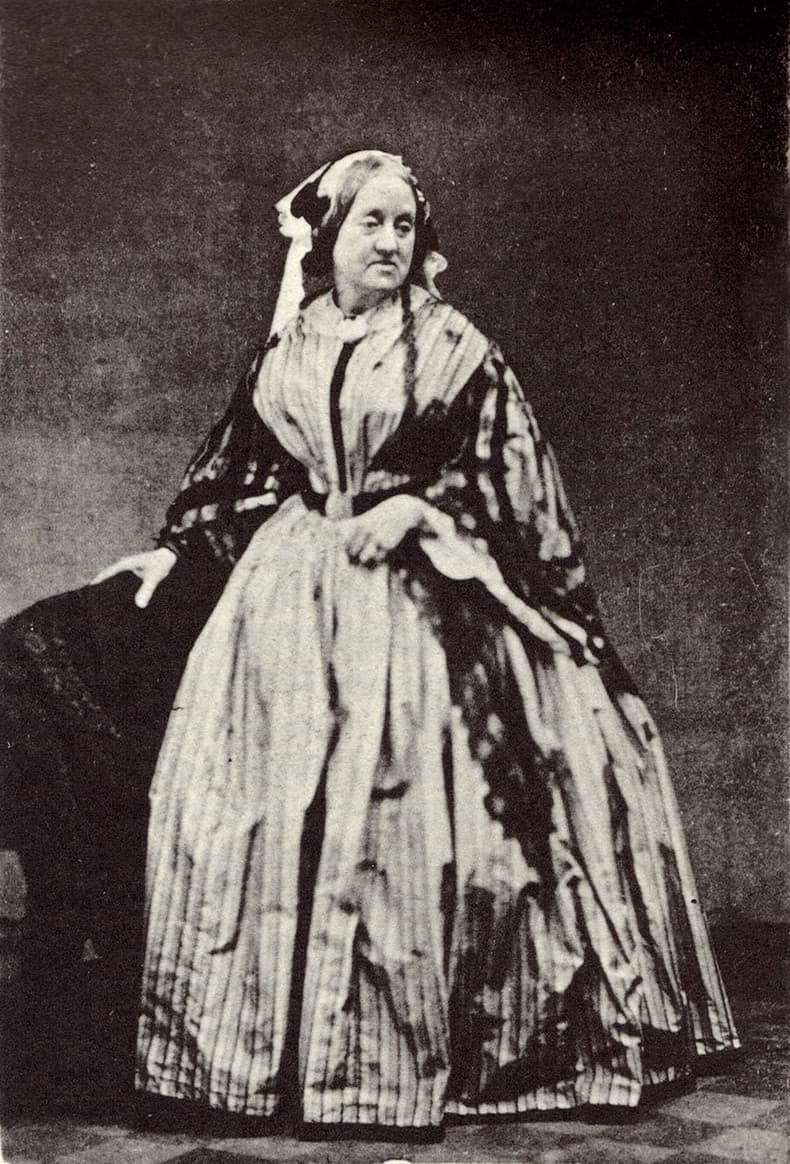
British, English · Science · Arts
Anna Atkins
March 16, 1799 – June 9, 1871
Early Life and Background
Anna Atkins, born Anna Children, entered the world on 16 March 1799 in Tonbridge, Kent, England.[1][2][9] She was the only child of John George Children, a chemist, mineralogist, and influential natural scientist who worked at the British Museum, and his wife Anne.[1][12][14] Her mother died when Anna was young, and she was raised primarily by her father, which further strengthened their intellectual bond.[1][14]
Children’s position and interests afforded Atkins an unusually rich scientific and cultural environment for a girl in late Georgian and early Victorian Britain. She grew up amidst collections of minerals, insects, and books, exposed to the practices of natural history and scientific illustration.[1][6][12] At a time when women were generally excluded from universities and scientific societies, her father ensured she received a rigorous informal education, including mathematics, drawing, and natural sciences.[1][13]
Atkins quickly demonstrated artistic and observational talent. As a teenager, around 1812–1813, she produced detailed engravings of shells for her father’s English translation of Jean-Baptiste Lamarck’s memoir on shellfish.[14] These illustrations were sufficiently precise to be used in a formal scientific publication, marking her early contribution to natural history and signalling the blend of science and art that would define her later work.
Formative Influences and Scientific Networks
Through her father, Atkins gained access to leading scientific figures of the day. Children was active in the Royal Society and other learned circles, and his acquaintances included astronomer and polymath Sir John Herschel, one of the inventors of the cyanotype photographic process.[6][8][13] This network exposed Atkins to current debates in chemistry, optics, and natural history, fostering her interest in botany and scientific illustration.
Atkins developed a serious commitment to botany, collecting, drying, and cataloguing plant specimens in the manner of a professional botanist.[6][8] Her herbarium work combined taxonomic interest with an acute sensitivity to form and structure. As she matured, she became known among friends and correspondents as a skilled naturalist, though her activities remained largely in the private sphere due to prevailing gender norms.
Marriage and Domestic Life
In the mid-1820s, Anna Children married John Pelly Atkins, a man of property linked to the Atkins family of Halstead Place in Kent.[13] After the marriage she became known as Anna Atkins, the name under which her scientific and photographic work would be recognized. The couple lived at Halstead Place, an estate in Sevenoaks district, which provided both the domestic space and the physical landscape for her botanical pursuits.[2][4][11]
Little is documented about the details of her marital relationship or about children, if any. Contemporary and later accounts focus on her intellectual and artistic work rather than her domestic life. What is clear is that the relative financial security of Halstead Place gave her the resources and leisure needed to pursue large-scale photographic experiments and to build collections of specimens and books.
Career Beginnings: Scientific Illustration and Early Photography
Atkins’s early career unfolded at the intersection of scientific illustration and emerging photographic technologies. Her shell engravings for Lamarck’s memoir established her credibility as an illustrator capable of producing precise images for scientific use.[14] She continued to draw and engrave botanical subjects, contributing illustrations to various works associated with her father and his circle.[13]
By the early 1840s, photography was beginning to transform scientific recording. In 1841, contemporaries reported that Atkins was using a camera, placing her among the earliest photographers and quite possibly among the first women to create photographs.[14] No camera-based images by her survive, and the claim that she was the first female photographer is debated, with some scholars pointing instead to Constance Fox Talbot.[3][5][7][13] Nonetheless, these reports show that she engaged with photographic equipment very soon after its invention.
The decisive influence came from Sir John Herschel, who in 1842 introduced the cyanotype, a process using iron salts to produce stable blue images through exposure to light.[6][15] Atkins, already versed in chemistry through her father, quickly recognized its potential for recording delicate botanical specimens. Cyanotype required no camera; instead, objects were placed on sensitized paper and exposed to sunlight, creating photograms.
Photographs of British Algae: Genesis of the First Photo Book
In the early 1840s, encouraged by her father and drawing on Herschel’s invention, Atkins began experimenting with cyanotypes to make images of algae and other plants.[6][8][15] Around 1843, she embarked on an ambitious project: a systematic visual record of British macroalgae using cyanotype photograms, combined with handwritten titles and notes. The resulting work, Photographs of British Algae: Cyanotype Impressions, would become her major achievement.
Atkins prepared specimens by collecting and drying them, then arranging them on chemically treated paper. Upon exposure to sunlight and subsequent washing, the areas blocked by the specimens remained pale while the rest of the paper turned a rich Prussian blue. The results were strikingly detailed silhouettes capturing fine fronds and filaments not easily rendered by engraving.[6]
She chose to self-publish and privately distribute the work in fascicles, or small instalments, to her "botanical friends"—a network of naturalists and collectors.[6][8] This mode of private circulation reflected both the limited commercial market for such a specialized work and the constraints on a woman entering formal scientific publishing.
October 1843: The First Photographically Illustrated Book
In October 1843, Atkins issued the first fascicle of Photographs of British Algae: Cyanotype Impressions, making it the first book ever illustrated with photographic images.[6][8][15] Unlike earlier publications that relied on drawn or engraved plates, every illustration in Atkins’s fascicle was produced by a photographic process.
Though the exact publication day is not documented, institutional histories consistently date this first instalment to October 1843.[6] Its content merged scientific taxonomy with aesthetic presentation, featuring Latin and English titles handwritten by Atkins alongside the cyanotype plates. The fascicle’s private distribution meant it initially reached only a small circle, but its existence has been preserved through surviving copies in major museums and libraries.
This event is now seen as a foundational moment in the history of the photo book. Atkins anticipated the idea that photography could serve as the primary illustrative medium in a bound volume, decades before photographic reproduction became routine in scientific and popular publishing. Her work demonstrated that photography could offer both precision and beauty in documenting nature.
Relationship to William Henry Fox Talbot and The Pencil of Nature
Shortly after Atkins’s first fascicle, William Henry Fox Talbot began issuing The Pencil of Nature, the first commercially produced book of photographs. By June 1844, several fascicles of Talbot’s work had appeared.[8]
Because Atkins’s first fascicle is consistently dated to October 1843, her publication predates Talbot’s commercial volume by several months.[6][8] For many years, Talbot’s work was celebrated as the pioneering photo book, but later scholarship and exhibitions—such as those of the New York Public Library and the Natural History Museum—have emphasized that Atkins’s privately circulated cyanotype volume came first.[6][8]
This chronological relationship has important historiographical consequences. It reveals how gender and commercial visibility shaped early photographic history: a privately produced scientific work by a woman was overshadowed by a public, commercially printed book by a male inventor, even though the former appeared earlier. Revisiting the dates has led institutions such as the Natural History Museum and MoMA to explicitly credit Atkins as the creator of the first photographically illustrated book.[6][16]
Expansion into a Three-Volume Work (1843–1853)
Atkins did not stop with a single fascicle. Between 1843 and 1853, she issued approximately twelve fascicles of Photographs of British Algae: Cyanotype Impressions, which were later bound into three volumes.[6][8][15] Different copies vary somewhat in composition, but the complete set contains hundreds of cyanotype plates documenting British macroalgae.
By November 1853, the project is understood to have been completed as a three-volume publication.[8] This makes Atkins’s work not only the first photographically illustrated book but also the first multi-volume publication illustrated entirely by photographs.[8] The scope of the undertaking was extraordinary: each plate required careful specimen preparation, chemical coating, exposure, and labelling, all carried out in a domestic yet scientifically informed setting.
Atkins’s algae photograms combine scientific rigor with an unmistakable aesthetic sensibility. Modern viewers and curators have noted the delicate compositions and the deep blue tonality that give the work an almost abstract beauty. Yet for Atkins and her contemporaries, these images were first and foremost a precise record of species morphology—a tool for classification and teaching.
Collaborations and Later Photographic Work
Beyond algae, Atkins extended her cyanotype practice to other plant groups, particularly ferns and flowering plants. She collaborated with her cousin and close friend Anne Dixon on several photographic albums, including works on ferns that applied similar photogram techniques.[13]
These collaborations underscore that her photographic activity took place within a network of scientifically minded women, who used domestic spaces as laboratories and studios. The albums created with Dixon are often noted for their artistic elegance and are sometimes described as among the earliest examples of photographic art books.
While precise dates for these collaborative projects are less firmly documented than those for Photographs of British Algae, they likely occurred in the 1850s and 1860s, building on the methods Atkins had already perfected. Her later work suggests that she saw cyanotype not only as a scientific instrument but also as a medium for creative exploration.
Recognition, Reception, and Awards
During Atkins’s lifetime, her work received limited public recognition. Her algae volumes were produced in very small numbers—some accounts mention as few as a dozen copies—and circulated among specialists rather than a broad audience.[5][6] The absence of a commercial publisher and the anonymity often surrounding women’s scientific work in the nineteenth century meant that her contributions were not widely celebrated.
There is no record of formal awards or honours conferred on Atkins by scientific societies, which were generally closed to women. Instead, her recognition took the form of respect within informal networks and in the preservation of her work by institutions. In 1865, a significant portion of her collections and cyanotypes was donated to the British Museum, an act later noted in educational materials and videos that celebrate her scientific legacy.[15]
Posthumously, her reputation has grown steadily. Twentieth- and twenty-first-century exhibitions at major institutions—including the New York Public Library, the Natural History Museum in London, and the Museum of Modern Art—have presented her cyanotypes as seminal works in the history of photography.[6][8][16] Scholarly articles and digital projects have further cemented her status as a pioneer, often describing her as the creator of the first photo book and one of the earliest women photographers.[2][3][5][7][8]
Debates About "First Woman Photographer"
One recurring theme in accounts of Atkins is the claim that she was the first female photographer. Several encyclopedic entries and institutional texts state that she is considered the first woman photographer or the first woman to create a photograph.[2][4][5][7][11] However, this assertion is debated among historians.
Some scholars argue that Constance Fox Talbot, the wife of William Henry Fox Talbot, may have created photographic images earlier, possibly using her husband’s calotype process.[3][13] The difficulty lies in the lack of securely dated surviving camera photographs by either woman. As a result, many responsible accounts describe Atkins and Talbot as sharing a contested honour, or they describe Atkins more cautiously as "one of the first women photographers."[3][9]
This debate illustrates the broader challenges of reconstructing women’s contributions to early photography, where documentation is sparse and authorship often obscured. Regardless of the exact precedence, Atkins’s extensive, dated and documented use of cyanotype for scientific publication makes her one of the earliest women to wield photography systematically and to leave a substantial body of work.
Personal Life and Character
Direct evidence about Atkins’s personal views and character is limited; few letters or diaries have survived in accessible form. Nonetheless, her work and choices allow some cautious inferences. She appears to have been diligent, methodical, and deeply committed to both science and art. The sheer labour involved in producing hundreds of cyanotypes over a decade suggests a temperament inclined to patience and precision.
Her decision to self-publish, rather than leave her images as private curiosities, indicates a desire to contribute actively to scientific knowledge and to share her work with peers. At the same time, the handwritten nature of her volumes and their small print run reflect the modesty and domestic framing typical of women’s scientific activity at the time.
Atkins remained closely tied to her father throughout his life, sharing intellectual pursuits and presumably discussing scientific developments. She also cultivated friendships with fellow naturalists and with Herschel’s circle. Her collaboration with Anne Dixon underscores the importance she placed on female companionship within scientific and artistic practice.
Later Life and Death
In her later years, Atkins continued to live at Halstead Place, maintaining her interest in botany and photography even as physical ailments emerged. Accounts from Portuguese and Catalan encyclopedias describe her death as resulting from "paralysis, rheumatism and exhaustion" at age 72.[4][11]
She died on 9 June 1871 at Halstead Place, Kent.[1][2][4][5][7][9][11] She was buried in the local cemetery, where inscriptions identified her primarily in relational terms—as daughter and wife—rather than as a scientist or photographer.[11] This modest commemoration reflects the norms of Victorian society and the limited visibility of women’s intellectual achievements at the time.
After her death, her collections and books gradually entered institutional care. Some were already in the British Museum, and others found their way into libraries and museums in Britain and abroad, including the New York Public Library and the National Media Museum (now part of the Science Museum Group).[5][6][15] For decades, her works were catalogued primarily as botanical or illustrative material, with little emphasis on her role in photographic history.
Legacy and Historical Impact
Since the late twentieth century, Atkins has emerged as a central figure in narratives of early photography, women in science, and the history of the photo book. Institutions such as the Natural History Museum in London and the New York Public Library highlight her cyanotypes as "the first book of photographs" and celebrate the originality of her use of Herschel’s process for scientific illustration.[6][8]
Modern scholarship emphasizes several aspects of her legacy:
- She produced Photographs of British Algae: Cyanotype Impressions, widely regarded as the first photographically illustrated book ever published, in October 1843.[6][8][15]
- Her project expanded into three volumes by 1853, constituting the first multi-volume book illustrated entirely with photographs.[8]
- She demonstrated an innovative application of photography to scientific documentation, showing how photograms could capture delicate structures more accurately than drawings.[6][8]
- She stands as one of the earliest women to use photography systematically and to leave a large, coherent body of photographic work.[2][3][5][7]
Atkins’s cyanotypes have also had a lasting aesthetic influence. Contemporary artists and photographers frequently cite her algae and fern images as inspirations, and exhibitions often situate her work at the intersection of science and art. The deep Prussian blue of cyanotype has become iconic in photographic culture, and Atkins is often credited with some of the most beautiful early uses of the process.
Digital humanities projects and women’s art initiatives, such as AWARE Women Artists and Curationist, have played an important role in disseminating knowledge about Atkins, framing her as both a pioneering botanist and a creator of the first photo book.[8][12] These efforts contribute to a broader re-evaluation of women’s roles in the development of scientific and visual culture.
Today, Anna Atkins is recognized not only in photographic histories but also in broader discussions of women’s intellectual labour in the nineteenth century. Her life exemplifies how a woman, working largely within domestic and informal scientific networks, could nonetheless make foundational contributions to emerging technologies and disciplines. From her birth in Tonbridge in 1799 to her death at Halstead Place in 1871, Atkins forged a quiet but transformative path that continues to shape how we see and study the natural world.
Dated achievements
5 indexed.
- Mar161799Science
Birth of Anna Atkins
Anna Atkins was born in Tonbridge, Kent, England, the only child of scientist John George Children.
View details AWARE - Archives of Women Artists, Researchers and Exhibitions: Anna Atkins - Oct011843Science
First fascicle of Photographs of British Algae issued — first photographically illustrated book
Atkins issued the first fascicle of Photographs of British Algae: Cyanotype Impressions, the first book illustrated entirely with photographic images.