← All women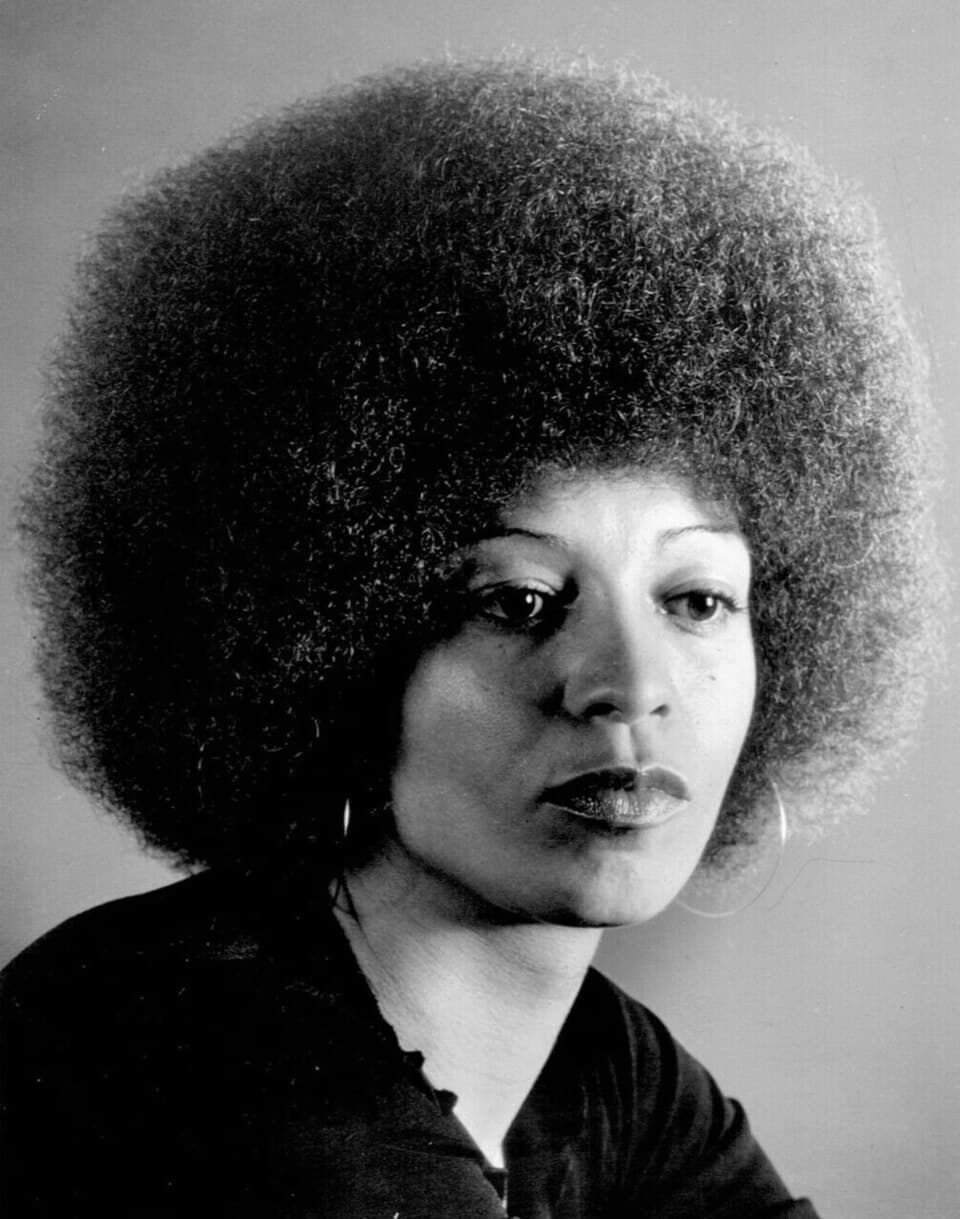
American · Activism · Politics · Literature
Angela Davis
January 26, 1944 – present
Early Life and Background
Angela Yvonne Davis was born on January 26, 1944, in Birmingham, Alabama, to Sallye Bell Davis, an elementary school teacher who had been active in the National Negro Congress, and B. Frank Davis, a former history teacher who ran a service station. The Davis family lived in a neighborhood called Dynamite Hill, so named because of the numerous bombings carried out by the Ku Klux Klan and other white supremacist groups against Black families who moved into the area. This environment of racial terrorism, combined with her mother's political activism, exposed Davis to both the brutal realities of Jim Crow segregation and the tradition of Black resistance from an early age.
Davis attended segregated public schools in Birmingham before her mother, recognizing her academic potential, arranged for her to attend high school in New York City through a program run by the American Friends Service Committee that placed Black students from the South in progressive, integrated Northern schools. At Elisabeth Irwin High School in Greenwich Village, Davis was introduced to socialist and communist ideas, and she joined a Communist youth group called Advance. This period was pivotal in shaping her political consciousness.
She went on to attend Brandeis University on scholarship, where she was one of very few Black students, majoring in French literature. During her time there, she studied briefly at the Sorbonne in Paris and became increasingly influenced by the philosophy of Jean-Paul Sartre and Herbert Marcuse, the latter of whom became her mentor. It was during her junior year abroad in France that Davis learned of the September 1963 bombing of the 16th Street Baptist Church in her hometown of Birmingham, which killed four young Black girls she knew personally—an event that deepened her commitment to the struggle against racism.
Davis graduated from Brandeis in 1965 magna cum laude and Phi Beta Kappa, then pursued graduate studies in philosophy at the University of Frankfurt in Germany before following Marcuse to the University of California, San Diego, where she earned her master's degree. She later completed her doctorate in philosophy at Humboldt University in East Berlin.
Career Beginnings and Political Development
Upon returning to the United States, Davis became deeply involved in the Civil Rights Movement, the anti-Vietnam War movement, and various Black liberation organizations. She joined the Student Nonviolent Coordinating Committee (SNCC) and later the Communist Party USA (CPUSA), as well as the Black Panther Party's political education efforts, though she was never a formal member of the Panthers. Her involvement with the Communist Party would prove particularly consequential for her career.
In 1969, Davis was hired as an acting assistant professor of philosophy at the University of California, Los Angeles (UCLA). However, her position quickly became a flashpoint of controversy when the Board of Regents, under pressure from then-Governor Ronald Reagan, voted to fire her because of her membership in the Communist Party, citing a state law barring communists from teaching at public universities. Davis fought the dismissal in court and won a ruling that the law was unconstitutional, allowing her to be reinstated—though the university later dismissed her again in 1970, this time citing her fiery political speeches rather than her party membership.
The Soledad Brothers Case and Arrest
Davis became deeply involved in advocacy for prisoners' rights, particularly the case of the Soledad Brothers—George Jackson, Fleeta Drumgo, and John Clutchette—Black prisoners accused of killing a white guard at Soledad Prison in California. Davis's activism on their behalf, and her personal relationship with George Jackson, drew her into one of the most dramatic episodes of her life.
On August 7, 1970, George Jackson's 17-year-old brother, Jonathan Jackson, armed with guns registered in Angela Davis's name, stormed the Marin County Civic Center courthouse during a trial, attempting to take hostages to secure the release of the Soledad Brothers. The ensuing shootout left a judge, Jonathan Jackson, and two others dead. Because Davis owned the weapons used, she was charged with conspiracy, kidnapping, and murder, even though she was not present at the scene.
Facing arrest, Davis went underground, and the FBI placed her on its Ten Most Wanted Fugitives list—making her only the third woman ever to appear on it. After a two-month nationwide manhunt, she was captured by FBI agents on October 13, 1970, at a motel in New York City. She was extradited to California and held for over a year, much of it in solitary confinement, sparking an international "Free Angela Davis" campaign that drew support from intellectuals, artists, and political figures worldwide, including John Lennon and Yoko Ono, who recorded the song "Angela" in her honor.
Davis was released on bail in February 1972 after supporters raised $102,500. Her trial captivated global attention, and on June 4, 1972, an all-white jury acquitted her of all charges, finding no evidence tying her to the courthouse plot beyond her legal ownership of the firearms.
Major Works and Intellectual Contributions
Following her acquittal, Davis dedicated herself to scholarship and activism, becoming one of the most influential radical intellectuals of the late twentieth century. Her 1974 autobiography, Angela Davis: An Autobiography, chronicled her early life, political awakening, and the ordeal of her arrest and trial.
In 1981, she published Women, Race, and Class, a groundbreaking work of intersectional feminist theory that examined the intertwined histories of the fight against racism and the fight for women's rights, critiquing the mainstream feminist movement for its historical neglect of Black women's experiences and labor issues. The book became a foundational text in Black feminist thought and women's studies programs.
Davis also became a leading voice in the prison abolition movement, co-founding Critical Resistance in 1997, an organization dedicated to dismantling what she termed the "prison-industrial complex." Her 2003 book Are Prisons Obsolete? argued for the abolition of the prison system in favor of restorative and transformative justice approaches, profoundly influencing contemporary criminal justice reform movements, including the modern prison abolition and defund-the-police movements that gained mainstream attention in the 2010s and 2020s.
Her other notable works include Blues Legacies and Black Feminism (1998), which examined the music of Gertrude "Ma" Rainey, Bessie Smith, and Billie Holiday through a feminist lens, and Freedom Is a Constant Struggle (2016), which drew connections between the Black Lives Matter movement and the Palestinian liberation struggle.
Academic Career and Honors
Davis went on to a long academic career, teaching at San Francisco State University, Mills College, and eventually the University of California, Santa Cruz, where she became a Distinguished Professor Emerita in the History of Consciousness and Feminist Studies departments. She also held the University of California Presidential Chair in African American and Feminist Studies.
She ran twice as the Communist Party USA's vice-presidential candidate, in 1980 and 1984, alongside Gus Hall. Over her career, Davis received numerous honors, including the Alabama's Distinguished Woman Award, induction into various halls of fame, and dozens of honorary doctorates from universities worldwide. In 1979, she received the Lenin Peace Prize from the Soviet Union in recognition of her activism.
Personal Life
Davis has been notably private about her personal life. She was briefly married to Hilton Braithwaite, a cinematographer, in the 1980s; the marriage ended in divorce. She has spoken publicly about her identity as a lesbian in later years. Davis has never had children, dedicating her life fully to her scholarship and activism.
Legacy and Historical Impact
Angela Davis remains one of the most significant and influential radical intellectuals and activists in modern American history. Her case in the early 1970s exposed the intersections of race, gender, and political repression within the American legal system and galvanized international solidarity movements. Her scholarship on intersectionality, prison abolition, and Black feminism has had a lasting and profound influence on academic disciplines including gender studies, critical race theory, and criminology.
Davis's ideas experienced renewed prominence during the Black Lives Matter movement and the 2020 protests following the murder of George Floyd, as a new generation of activists engaged with her decades-long critique of policing and incarceration. She continues to lecture, write, and organize on issues of racial and social justice into her ninth decade, remaining an enduring symbol of unwavering commitment to radical social change.
Later Life
As of the present, Angela Davis continues her work as a scholar, author, and activist, remaining a vocal commentator on issues including mass incarceration, police violence, and international human rights, including Palestinian rights. She has continued publishing and lecturing widely, cementing her legacy as one of the most consequential political thinkers of the modern era.
Dated achievements
3 indexed.
- Jan261944Science
Born in Birmingham, Alabama
Angela Yvonne Davis was born in Birmingham, Alabama, in a neighborhood so frequently bombed by white supremacists it was nicknamed 'Dynamite Hill.'
View details Angela Davis - Wikipedia - Oct131970Science
Arrested by the FBI and placed on the Ten Most Wanted list
Davis was arrested in New York after weeks as a fugitive, having been placed on the FBI's Ten Most Wanted Fugitives list in connection with the Marin County courthouse incident.