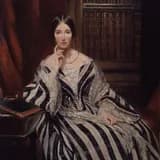
Queen Victoria created her Baroness Burdett-Coutts in her own right, the first woman raised to the peerage for philanthropic and public service.
On 21 June 1871, in recognition of her decades of extensive philanthropic work, Queen Victoria created Angela Burdett-Coutts a peeress in her own right, with the title Baroness Burdett-Coutts, of Highgate and Brookfield in the County of Middlesex.
This was an extraordinary honor: peerages granted to women in their own right (rather than through marriage or inheritance from a male relative) were exceedingly rare in 19th-century Britain. The honor recognized her unprecedented charitable contributions spanning housing for the poor, church building, education, medical charities, and international relief efforts, including famine relief in Ireland and support for those affected by conflict.
Queen Victoria reportedly considered Burdett-Coutts to be, after herself, the most important woman in the kingdom. The peerage cemented her public status and gave formal, institutional recognition to the idea that a woman's philanthropic labor could be equivalent in civic value to political or military service, the traditional routes to peerage for men.
Her elevation opened symbolic space for the idea that women could hold formal public honors independent of male relatives, marking an important, if singular, moment in the gradual expansion of women's public recognition in Victorian Britain.