← All women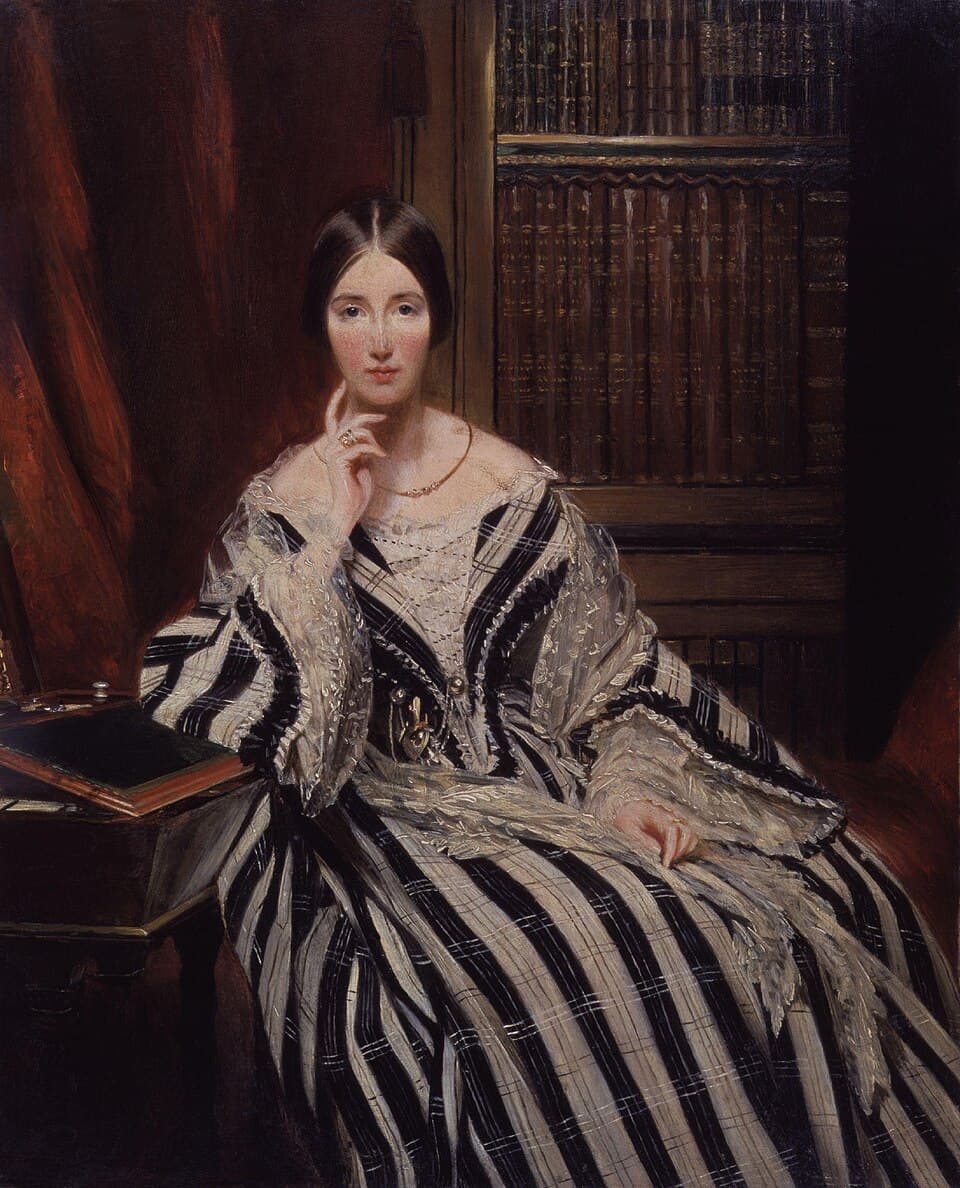
British · Activism · Politics
Angel Burdett-Coutts
April 21, 1814 – December 30, 1906
Early Life and Background
Angela Georgina Burdett was born on 21 April 1814 in Mayfair, London, the youngest of six children of Sir Francis Burdett, a radical politician and Member of Parliament, and Sophia Coutts, daughter of the celebrated banker Thomas Coutts. Her paternal lineage connected her to a family with a long tradition of political radicalism and reform, as her father was a vocal advocate for parliamentary reform and had even been imprisoned in the Tower of London for his political activities. Her maternal lineage tied her to one of London's most prestigious banking dynasties, Coutts & Co., which had been founded in the eighteenth century and served royalty and aristocracy.
Angela grew up amid considerable privilege but also amid the intellectual and political ferment of her father's radical circle. She received a private education typical of upper-class Victorian women, focused on languages, music, and the arts, but she also developed an unusually strong intellectual curiosity and social conscience, likely influenced by exposure to her father's political engagements and to discussions of social reform occurring within her extended family circle.
Inheritance and the Foundations of a Philanthropic Career
The pivotal turning point in Angela Burdett's life came on 12 May 1837, when her step-grandmother, Harriot Mellon, Duchess of St Albans (the widow of Thomas Coutts, who had remarried after his death), died and left the bulk of her enormous fortune — estimated at approximately £1.8 million along with a substantial interest in Coutts & Co. bank — to twenty-three-year-old Angela. The bequest came with important conditions: she was required to adopt the additional surname 'Coutts' and to remain unmarried to a foreign national, or risk forfeiting a significant portion of her inheritance.
This inheritance instantly made Angela one of the wealthiest women in England, often cited in contemporary accounts as 'the richest heiress in the kingdom.' Rather than using this fortune merely for personal indulgence, as many might have expected of a young Victorian heiress, Angela made a deliberate and lifelong choice to direct her wealth toward addressing the social problems of her era: poverty, disease, inadequate housing, lack of education, and animal cruelty. She became an active partner in Coutts & Co., a highly unusual position of financial authority and business involvement for a woman in Victorian Britain, where married women in particular had extremely limited property rights and unmarried women were rarely afforded genuine positions of financial control.
Major Philanthropic Works and Achievements
Over the following decades, Baroness Burdett-Coutts developed a philanthropic career of extraordinary scope and systematic ambition, distributing an estimated £3 million over her lifetime — an almost unimaginable sum for the era, equivalent to hundreds of millions in modern currency.
Among her most notable projects was her collaboration with the novelist Charles Dickens, whom she met in the 1840s and with whom she developed a close friendship and working partnership. Together, they founded Urania Cottage in 1847, a home in Shepherd's Bush, London, designed to rehabilitate women who had been involved in prostitution or petty crime, offering them education, domestic training, and the opportunity to emigrate and begin new lives, often in Australia or Canada. This project reflected progressive Victorian ideas about rehabilitation over punishment, and Dickens himself was deeply involved in its day-to-day management, with Burdett-Coutts providing both the funding and strategic vision.
She was also a major benefactor in the field of housing reform, funding the construction of model dwellings for the poor in London's East End, most notably in Bethnal Green, where she developed Columbia Square and the elaborate Columbia Market, intended to provide affordable, sanitary housing and a marketplace to support the local poor economically. Though the market itself was not a commercial success, the housing developments represented pioneering efforts in urban social housing decades before such initiatives became government policy.
Her philanthropic reach extended internationally as well. She provided substantial support during the Irish Famine in the 1840s, funded fisheries and agricultural improvements in Ireland to create sustainable economic opportunities, and supported relief efforts following various natural disasters and conflicts across the British Empire, including aid during and after the Crimean War and support for displaced and wounded soldiers.
In the field of education, she funded numerous schools, most notably in the East End of London, and supported theological education through the establishment of church institutions. She was instrumental in founding several churches, including St Stephen's Church in Westminster, and provided significant funding for missionary and colonial church-building projects, including funding for bishoprics in British Columbia and Cape Town, reflecting her strong Anglican faith and her interest in the moral and social development of the British Empire's colonies.
She was also a devoted champion of animal welfare, serving as a founding member and long-time supporter of the Royal Society for the Prevention of Cruelty to Animals (RSPCA), and she was instrumental in establishing drinking fountains for both people and animals across London, including contributing to the construction of the Victoria Fountain in Victoria Park, aimed at providing clean drinking water to combat the spread of disease among the poor.
Her interests also extended to public health and medical charity; she was a supporter of the Royal Society for the Prevention of Cruelty to Animals, and involved in a wide array of medical and nursing charities, as well as being a significant patron of the arts and education for working-class communities.
Recognition and the Peerage
In recognition of her unparalleled philanthropic contributions, Queen Victoria created Angela Burdett-Coutts a peeress in her own right on 21 June 1871, with the title Baroness Burdett-Coutts, of Highgate and Brookfield in the County of Middlesex. This was an extraordinarily rare honor: peerages granted to women independently, rather than through marriage or male inheritance, were almost unheard of in nineteenth-century Britain.
Queen Victoria reportedly held Burdett-Coutts in the highest personal regard, considering her, after the Queen herself, the most significant woman in the kingdom in terms of public influence and moral authority. Burdett-Coutts also became the first woman to be granted the Freedom of the City of London in 1872, and she received honorary citizenship and numerous other civic honors throughout her life in recognition of her charitable works, both in Britain and internationally.
Personal Life
Angela Burdett-Coutts never married for most of her life, dedicating herself instead to her philanthropic mission and to close, lifelong friendships, including her particularly significant relationship with Hannah Brown, her longtime companion, and her friendship with Charles Dickens, which lasted for decades and was central to many of her charitable projects until a rift developed between them later in Dickens's life.
In a move that startled and scandalized Victorian society, Angela married William Lehman Ashmead Bartlett on 12 February 1881, when she was 66 years old. Bartlett was American-born and 37 years her junior, having previously served as her secretary. The marriage caused considerable public controversy due to the substantial age gap and skepticism about Bartlett's motives, particularly given his more modest social background relative to hers.
Under the terms of Harriot Mellon's original bequest, Angela's marriage to a man not of British birth (Bartlett was American by birth, though of British descent) meant she forfeited a substantial portion — three-fifths — of her income derived from the Coutts fortune. Despite the financial penalty and social scandal, she proceeded with the marriage. Her husband, who adopted the name William Burdett-Coutts, later served as a Member of Parliament for Westminster. The couple remained married until her death, and though the union was controversial, it did not appear to diminish her continued dedication to philanthropic work in her later years.
Later Life and Death
In her later decades, Baroness Burdett-Coutts continued her extensive charitable activities, though her income was reduced following her marriage. She remained a prominent public figure, admired for her decades of consistent commitment to social reform across an astonishing breadth of causes.
She died on 30 December 1906 at her home in London, at the age of 92. In a testament to the extraordinary regard in which she was held by British society, she was granted a public funeral, and enormous crowds lined the streets of London to pay their respects as her funeral procession passed. She was buried in the nave of Westminster Abbey, an exceptional honor for a woman whose distinction rested entirely on private philanthropy rather than political office, military achievement, or aristocratic birth alone.
Legacy
Angela Burdett-Coutts's legacy endures through the countless institutions she funded and shaped, including churches, schools, housing developments, and charitable organizations, many of which continued to operate and bear her name or benefit from her endowments long after her death. She is remembered as one of the most significant philanthropists of the Victorian era, and her innovative, hands-on approach to large-scale, systematic charitable giving — often undertaken in direct partnership with figures like Charles Dickens — helped to establish new models for organized philanthropy that would influence charitable practices well into the twentieth century.
Her life also stands as a remarkable example of a woman wielding substantial independent financial power and public influence in an era when such autonomy was rare for women, and her creation as a peeress in her own right remains a landmark moment in the history of women's public recognition in Britain.
Dated achievements
5 indexed.
- Apr211814Science
Birth of Angela Georgina Burdett-Coutts
Born in London, later to become one of the wealthiest women in Victorian Britain and a pioneering philanthropist.
View details Angela Burdett-Coutts, 1st Baroness Burdett-Coutts - Wikipedia - May121837Activism
Inherits the Coutts banking fortune
Inherited approximately £1.8 million from her step-grandmother Harriot, Duchess of St Albans, becoming reportedly the richest woman in England.