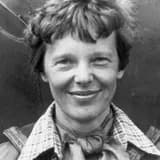
Flew solo from Newfoundland to Northern Ireland in a Lockheed Vega 5B, becoming the first woman — and only the second person after Lindbergh — to solo the Atlantic.
On May 20, 1932 — the fifth anniversary of Charles Lindbergh's historic solo transatlantic flight — Amelia Earhart departed Harbour Grace, Newfoundland, alone in her red Lockheed Vega 5B. After battling icy conditions, mechanical trouble including a cracked exhaust manifold, and a failing altimeter, she landed roughly 14 hours and 56 minutes later, on May 21, in a pasture near Culmore, Northern Ireland.
This flight made Earhart the first woman to fly solo nonstop across the Atlantic Ocean and only the second person in history, after Lindbergh himself, to accomplish the feat at all. It silenced critics who had dismissed her 1928 crossing as mere passenger tourism, proving decisively her own piloting skill and endurance.
The flight was fraught with danger throughout — she flew through a violent electrical storm, iced wings that sent the aircraft into an unplanned descent, and flames visibly leaking from a cracked manifold — yet Earhart maintained composure and skill to complete the crossing safely.
The achievement instantly elevated Earhart to legendary status, earning her the National Geographic Society's gold medal, the Distinguished Flying Cross, and international acclaim as one of the greatest aviators — male or female — of her generation, fundamentally reshaping public perceptions of women's capability in aviation.