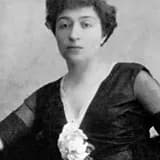
Aleksandra Ekster died on March 17, 1949, in Fontenay-aux-Roses near Paris, France, where she had lived in emigration since the 1920s.
Aleksandra Ekster died on March 17, 1949, in Fontenay-aux-Roses, a suburb south of Paris, France. She had emigrated from the Soviet Union in 1924, settling permanently in France where she continued to work as a painter, stage designer, and teacher until her death.
Her passing marked the end of a career that had spanned some of the most turbulent and creatively explosive decades of the twentieth century. Having witnessed and contributed to Cubo-Futurism, Suprematism, and Constructivism in Russia and Ukraine, and later influencing Art Deco and modernist theater design in Western Europe, Ekster died in relative obscurity compared to her male contemporaries, a common fate for many pioneering women avant-garde artists of her generation.
In the decades following her death, art historians began to reassess her substantial contributions, particularly her groundbreaking stage and costume designs, her theoretical writings on color and form, and her influential teaching in Paris academies, where she mentored designers who would go on to shape twentieth-century fashion and theater. Her death in emigration, far from her native Ukraine, exemplifies the diaspora experience of many Russian and Ukrainian avant-garde artists displaced by revolution and political upheaval. Today, her legacy is recognized through major museum retrospectives and scholarship reclaiming her as a foundational figure of modernism.