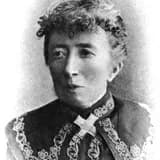
Agnes Mary Clerke died on 20 January 1907 in London at age 64, leaving behind a body of work that shaped public understanding of astronomy for generations.
Agnes Mary Clerke died on 20 January 1907 at her home in London, at the age of sixty-four. She had lived for many years at Redcliffe Square in Kensington together with her sister Ellen Mary Clerke, herself a writer, and her brother Aubrey. Agnes never married, devoting her life entirely to scholarship and writing.
By the time of her death, Clerke was recognized internationally as one of the foremost interpreters of astronomical science, despite having no formal scientific training or academic post — opportunities that were essentially unavailable to women of her era. Her obituaries in journals such as Monthly Notices of the Royal Astronomical Society and Nature praised her scrupulous accuracy, her graceful literary style, and the trust that leading astronomers placed in her judgment.
Her legacy persisted well beyond her death: the lunar crater Clerke was later named in her honor, and her multi-edition Popular History of Astronomy and biographical contributions to the Dictionary of National Biography remain cited historical resources. She is remembered as a pioneering woman of science writing who, working entirely outside the male-dominated professional astronomical establishment, became one of its most trusted chroniclers and helped popularize astrophysics for a broad readership during a formative period in the science's development.