← All women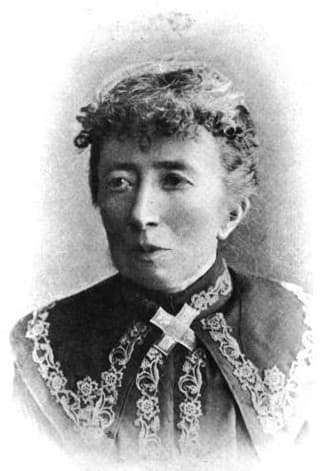
Irish · Science
Agnes Mary Clerke
February 10, 1842 – January 20, 1907
Early Life and Background
Agnes Mary Clerke was born on February 10, 1842, in Skibbereen, County Cork, Ireland. She was the daughter of John William Clerke, a bank manager, and Catherine Mary Deasy. From a young age, Clerke was exposed to an intellectual environment, as her family valued education deeply. Her brother, Aubrey St. John Clerke, became a well-known solicitor and writer, contributing to the stimulating household culture that helped nurture Agnes’s interests in science and literature.
Clerke was largely home-schooled by her mother due to limited educational opportunities for women at the time. Her father’s library offered a treasure trove of knowledge, and there she developed a keen interest in astronomy underpinned by her brother’s early studies. Despite societal constraints on women’s participation in science, this home environment facilitated her self-directed learning and laid the foundation for her future contributions to astronomy.
Career Beginnings and Development
In 1861, Agnes moved with her family to Dublin, and later to Queenstown (Cobh), broadening her exposures. Her academic pursuits were bolstered during a two-year stay in Italy, from 1877 to 1879, a period during which she began seriously writing about astronomy. On returning to London, she committed herself to writing, her focus being chronicling the advances in astronomical science in accessible forms.
In 1885, Clerke published her seminal work, "A Popular History of Astronomy during the Nineteenth Century," a comprehensive survey of progress in the field of astronomy. This book cemented her reputation as a respected science writer. Her ability to synthesize complex scientific paradigms into engaging narratives captured the admiration of both lay readers and the scientific community.
Major Works, Discoveries, or Accomplishments
Aside from her flagship book, Clerke's numerous articles for the journal "Edinburgh Review" and her contributions to the "Encyclopædia Britannica" were also critical in disseminating scientific knowledge. Additionally, her works such as "The System of the Stars" and "Problems in Astrophysics" showcased her analytical capabilities and provided insights into stellar and galactic astronomy that were forward-thinking for that era.
Awards, Honors, and Recognition
Despite the gender barriers of the time, Clerke's work earned her high esteem within male-dominated scientific circles. She was elected an honorary member of the Royal Astronomical Society in 1903, one of only a few women to receive such an honor at the time, validating her influence and contribution to the field of astronomy.
Personal Life
Clerke never married and remained devoted to her work throughout her life. Her commitment to science, complemented by her descriptive narrative style, made her a beloved figure among contemporaries. Her life, dedicated to intellectual pursuit, exemplified the capacity for women to impact science profoundly, despite societal limitations.
Legacy and Historical Impact
Agnes Mary Clerke’s legacy is marked not only by her scientific contributions but also by her role as a trailblazer for women in science. She helped pave the way for future generations of female scientists by proving that women could contribute meaningfully to scientific discourse and literature. Her narrative approach in communicating complex concepts of astronomy made the subject more approachable and helped cultivate a broader public interest in the sciences.
Later Life and Death
Agnes Mary Clerke continued writing and contributing to scientific discourses until her death on January 20, 1907, in London. Her enduring legacy in the field of astronomy remains a testament to her dedication and pioneering spirit in a male-dominated field.
Dated achievements
3 indexed.
- Feb101842Science
Birth of Agnes Mary Clerke in Skibbereen, Ireland
Agnes Mary Clerke was born on 10 February 1842 in Skibbereen, County Cork, Ireland, to a family that nurtured her early interest in astronomy.
View details Astronomy.com — Birth of Agnes Mary Clerke - Jan201885