← All women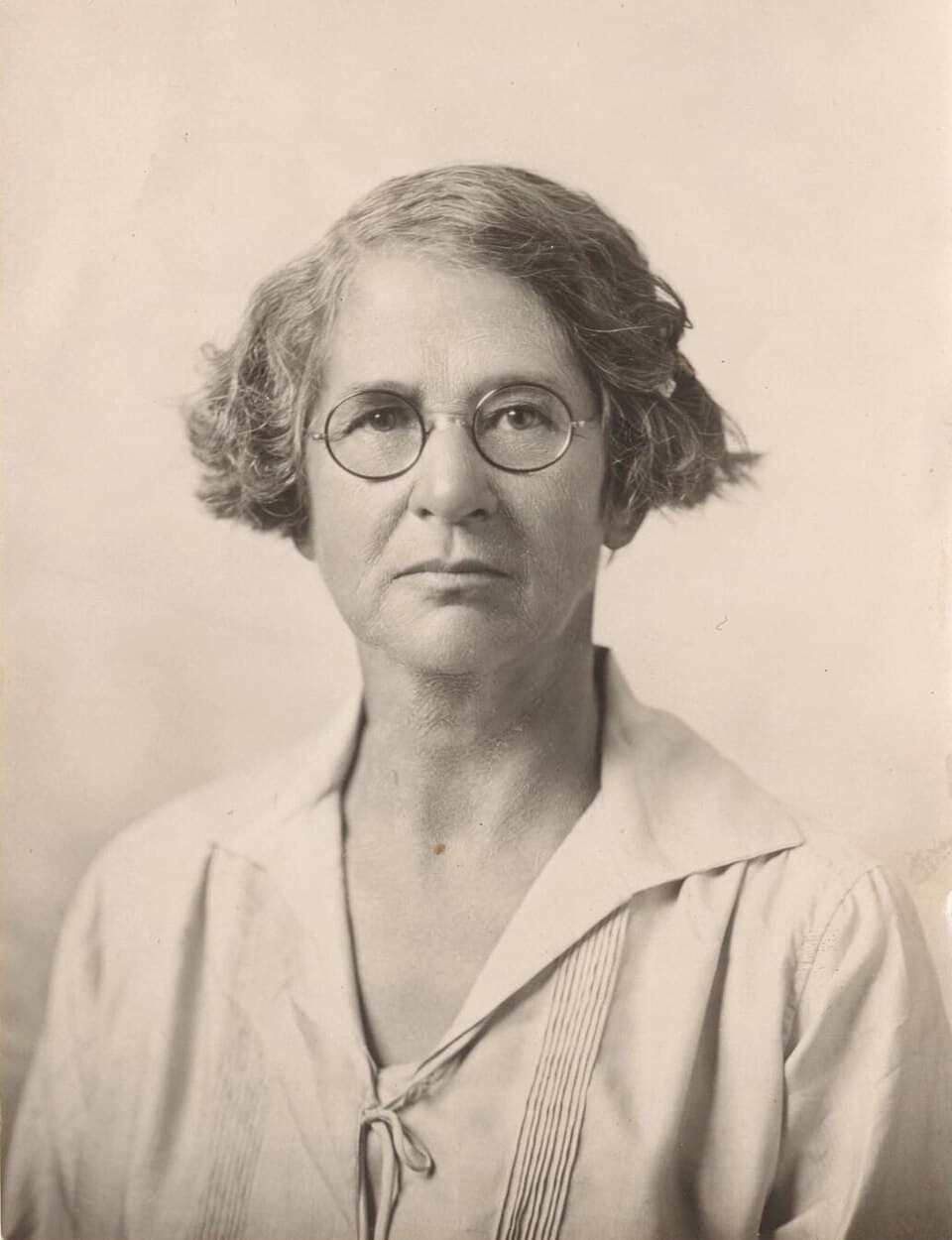
Mexican, American · Science · Exploration
Ynes Mexia
May 24, 1870 – July 12, 1938
Early life and family background
Ynés Enriquetta Julietta Mexía was born on May 24, 1870, in Washington, D.C., to Enrique A. Mexía, a Mexican diplomat, and Sarah Wilmer Mexía. Sources consistently identify her as a Mexican-American woman whose life moved between the United States and Mexico, and that transnational upbringing shaped her later work as a botanist and explorer. She spent part of her childhood in the town of Mexia, Texas, which her family had helped found, and much of her early life in Mexico. That mobility exposed her to languages, landscapes, and communities across borders, experiences that later proved useful during field collecting in remote regions of the Americas.
Mexía’s early adulthood was not centered on science. Like many women of her era, she navigated marriage, family expectation, and work outside academia before finding her vocation. She married German businessman Herman de Laue in 1897, and the couple later operated a ranch in Mexico’s Coahuila region. That marriage ended, and in 1909 she married Augustin de Reygadas; this second marriage also ended unhappily. By the early 1910s, she had relocated to San Francisco. Her life before botany was thus marked by change, displacement, and reinvention, all of which helped prepare her for the independent, physically demanding career she would later build.
From social work to conservation
After settling in California, Mexía became involved in social work and environmental advocacy. During the 1910s she joined the Sierra Club and the Save the Redwoods League, becoming part of the growing conservation movement in the state. This was an important period in American environmental history, when campaigns to preserve redwood forests and protect public lands were gaining momentum. Mexía was not simply a passive supporter: institutional biographies describe her as an early participant in the movement and an advocate for redwood preservation.
This phase of her life matters because it shows that her later botanical work grew out of an existing commitment to conservation and public service. The move from social reform to scientific fieldwork was unusual, especially for a woman in her fifties. Yet Mexía’s career demonstrates how environmental concern, practical knowledge of landscapes, and scientific curiosity could intersect. Her advocacy for redwoods also placed her in a network of women and men who viewed preservation as a modern civic cause rather than a private hobby.
Education and late start in botany
Mexía’s transition into formal science began after she moved from Mexico to Berkeley, California, in 1921. On September 23, 1921, she registered as a student at the University of California, Berkeley, where she began taking botany courses as a special student in her early fifties. This decision is one of the most remarkable features of her biography. In an era when women’s access to higher education was still constrained and professional science remained highly gendered, Mexía entered university late and pursued a field that demanded technical skill, physical endurance, and institutional credibility.
Her studies quickly led to field experience. Rather than remaining solely in classrooms or laboratories, Mexía moved toward collecting in the field, a form of botanical work that demanded travel, stamina, and the ability to preserve and document specimens under difficult conditions. Her late start did not limit her success; instead, it set the stage for one of the most productive short careers in botanical history. Mexía showed that scientific excellence could emerge outside conventional timelines and that late-life learning could become the basis for original research.
First expeditions and rapid rise
On September 23, 1925, Mexía departed on her first major botanical expedition to western Mexico, a Stanford-connected collecting trip under botanist Roxana Ferris. The expedition yielded about 1,500 specimens and several new species, and it also led to the first plant later named in her honor, Mimosa mexiae. This trip effectively launched her professional botanical career. Although she was already in her mid-fifties, she immediately demonstrated unusual skill in field collecting and plant observation.
What makes this expedition historically significant is the speed with which Mexía proved herself. Botanical collecting was not a symbolic activity; it required careful recording, preservation, and transport of materials that would later be studied by taxonomists. Mexía’s success on this first major trip made her a valued collector for scientific institutions and established a pattern of ambitious, logistically difficult expeditions. It also highlights the barriers she overcame. She entered a field that privileged male explorers and younger, university-trained professionals, yet she quickly became one of the most productive collectors of her generation.
Between 1925 and 1926, Mexía carried out a solo collecting trip in Mexico that lasted about two and a half years and produced more than 33,000 specimens. She later expanded her work through repeated expeditions across Mexico, Central America, and South America. Institutional summaries credit her with collecting roughly 145,000 to 150,000 specimens over the course of her career and with identifying more than 500 species new to science. Two genera, Mexianthus and Spumula, were also associated with her collecting legacy, and at least fifty taxa were named in her honor.
Denali and the expansion of botanical geography
In the summer of 1928, Mexía traveled to Alaska and became the first botanist known to have collected specimens in what is now Denali National Park. This is one of her clearest barrier-breaking achievements. The exact day of collection is not preserved in the accessible summaries, but the historical significance is unmistakable. By documenting the flora of a remote Arctic landscape, Mexía extended botanical knowledge into territory that had been under-collected and under-described.
Denali presented formidable conditions: isolation, rough terrain, and an unforgiving climate. For a woman collecting in the early twentieth century, the work required not only scientific competence but extraordinary physical resilience and logistical planning. Her Denali collecting now stands as a landmark in both park history and women’s history, illustrating how botanical science depended on people willing to work in places that were difficult to reach and even harder to survey. It remains one of the most celebrated examples of her field achievements.
South American expeditions and scientific output
Mexía’s later expeditions took her across the Americas. She collected extensively in Brazil in 1929 and continued with work in Ecuador in 1934, Peru and the Straits of Magellan region in 1935, and southwestern Mexico in 1937, which appears to have been her final major collecting trip. These journeys greatly enlarged her reputation as a collector who could operate across some of the most challenging geographies in the hemisphere. She traveled by a variety of means and often worked in difficult terrain, from mountains and river systems to forests and coastal zones.
Over the span of her career, Mexía’s collections helped clarify plant distributions and expand scientific understanding of the flora of the Americas. Her work was especially valuable because it combined breadth and quantity: she was not merely finding isolated novelties, but building a large empirical record used by botanists to classify, compare, and name species. The sheer volume of her specimens explains why institutional accounts continue to describe her as one of the most accomplished female botanical collectors of her time.
Personal life
Mexía’s personal life included two marriages and no widely documented children. Her first marriage, in 1897, to Herman de Laue, and her second, in 1909, to Augustin de Reygadas, both ended before her California career began. Sources indicate that by the time she moved to San Francisco, she was a widow or otherwise newly separated from earlier domestic arrangements, and she subsequently established an independent life there. Her biography is therefore also a story of self-determination: she built a scientific identity after leaving marriages that did not define her later public legacy.
Her life in San Francisco connected her to broader civic and scientific circles, including conservation organizations and university networks. Although personal papers and intimate details are not as extensively documented as her collecting, the available record shows a woman who constructed a life around work, travel, and public engagement. In that sense, Mexía’s personal history is inseparable from her professional one, because her ability to move, study, and collect depended on the independence she claimed for herself.
Recognition, honors, and legacy
Mexía’s achievements were recognized most visibly through the naming of plants and plant groups in her honor. More than fifty taxa were reportedly named for her, a rare honor that signals sustained respect from the botanical community. The genus Mexianthus remains one of the most important commemorations of her work, and the species named after her continue to appear in botanical literature. These eponyms are not merely ceremonial; they preserve her name within the scientific record she helped expand.
Her legacy also rests in the institutions and organizations that now frame her as a conservationist, explorer, and Latina scientific pioneer. The National Park Service, the California Academy of Sciences, the New York Botanical Garden, and other institutions have highlighted her life as an example of scientific excellence achieved against major barriers. She is frequently remembered as a late bloomer, but that phrase understates the originality of her career. Mexía did not simply begin late; she transformed late entry into extraordinary output and geographic reach.
In women’s history, Mexía occupies a significant place because she challenged multiple assumptions at once: that serious science belonged to youth, that field botany belonged to men, and that women of Mexican descent could not occupy a central role in American scientific exploration. Her collections remain part of the botanical record, and her story continues to inspire historians, environmentalists, and scholars of Latina history.
Final illness and death
On May 25, 1938, the day after her sixty-eighth birthday, Mexía entered a hospital in San Francisco and was diagnosed with lung cancer. She died on July 12, 1938, in Berkeley, California. Her death ended a short but astonishing scientific career, one that had lasted little more than a decade and yet produced an outsize contribution to botany. The speed and scale of that contribution are part of why she remains so notable today.
Mexía’s final years also reflect the fragility of the era’s medical care. Serious cancers were far less treatable than they are today, and a diagnosis often meant a rapid decline. Even so, by the time she died, her reputation was already established in botanical circles. The full breadth of her contribution became even clearer in later decades, as historians and institutions recognized the scale of her collections and her role in opening new paths for women in science.
Dated achievements
6 indexed.
- May241870Science
Birth of Ynés Mexia
Ynés Enriquetta Julietta Mexia was born in Washington, D.C., to Enrique A. Mexia and Sarah Wilmer Mexia.
View details National Park Service: Ynés Mexia - Sep231921Science
Enrollment at UC Berkeley
Ynés Mexia enrolled at the University of California, Berkeley, beginning her training in botany.
View details