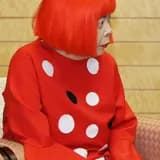
On 18 October 1969, Kusama stages "Grand Orgy to Awaken the Dead" in MoMA’s sculpture garden, painting polka dots on naked participants and attracting major press.
On 18 October 1969, Yayoi Kusama staged the performance Grand Orgy to Awaken the Dead at the Museum of Modern Art in the sculpture garden of New York’s MoMA. During the action, she painted polka dots on the bodies of naked participants who posed among the museum’s outdoor sculptures, transforming the institutional space into a site of provocation and spectacle.
The performance, which was unauthorized, drew substantial press attention and controversy. Kusama’s use of nudity, body painting, and public space addressed sexuality, anti-war sentiment, and the commodification of art, while directly challenging MoMA’s authority and the boundaries of acceptable behavior in elite cultural institutions.
Historically, the event is emblematic of Kusama’s late-1960s "happenings," in which she combined performance, video, fashion, and installation to pursue her concept of "self-obliteration." It also situates her at the forefront of countercultural activism, using art to question norms around gender, power, and public morality.
From a women’s history standpoint, the 18 October 1969 performance highlights how a Japanese woman artist asserted agency in a male-dominated, Euro-American art establishment by orchestrating a disruptive, media-savvy intervention. Kusama’s actions confronted both patriarchal control of bodies and institutional gatekeeping, contributing to the broader feminist reimagining of art practice emerging at the time.