← All women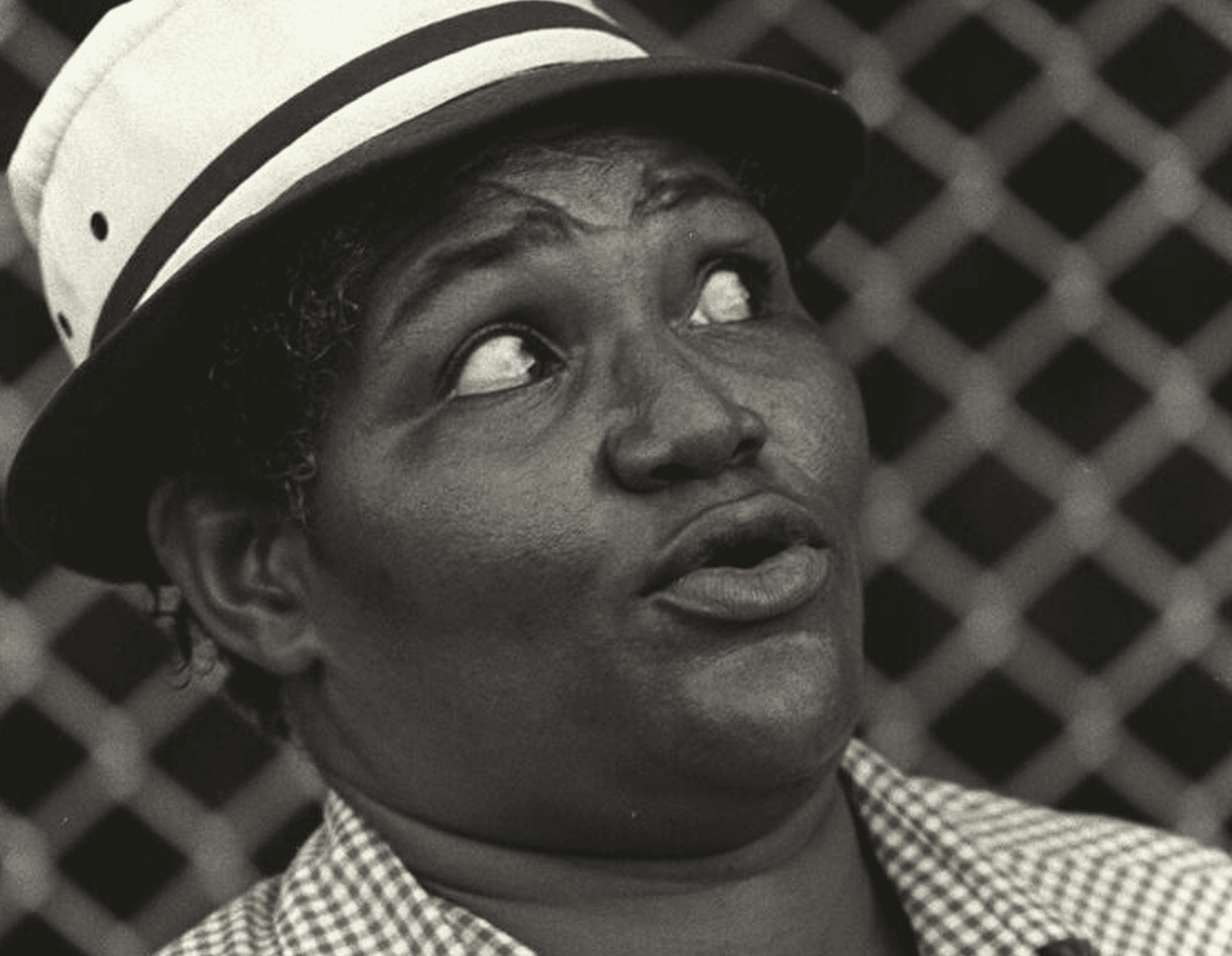
American · Arts
Willie May Big Mama Thornton
December 11, 1926 – July 25, 1984
Early Life and Background
Willie Mae “Big Mama” Thornton was born on December 11, 1926, in or near Ariton, Alabama, a rural community outside Montgomery.[3][10][13] Her parents were Thomas H. Thornton, a Baptist minister, and Edna M. Richardson Thornton, who sang in the church choir, placing Thornton in a household where religious music and spoken-word performance were central to community life.[3][10][12] Some biographical sources list Montgomery as her birth city, reflecting the proximity of Ariton to larger urban centers and the frequent conflation of rural origins with nearby towns in historical records.[11][8][9] Regardless of the exact locale, Thornton’s formative years unfolded in the segregated Deep South under Jim Crow, where Black families faced institutionalized racism and economic hardship.
Thornton’s musical education began in her father’s Baptist church. She sang in services and absorbed the call-and-response, rhythmic drive, and emotional intensity of gospel music.[10][12][13] Outside church, she listened closely to records by leading blues women such as Memphis Minnie and Bessie Smith, whose assertive lyrics and powerful vocal deliveries deeply influenced her developing style.[10][13] These early experiences helped Thornton cultivate the commanding voice, improvisational phrasing, and stage presence that later distinguished her as a performer.
Thornton faced tragedy early on: several sources note that her mother died when she was still a teenager, an event that shaped her decision to leave home to pursue music.[10][7] With limited formal education and few economic opportunities available to a young Black woman in rural Alabama, she turned to performing as a practical way to earn a living and as an outlet for her talents. Her upbringing in the church, combined with exposure to blues and the realities of Southern life, would remain central themes in her artistry, which often blended sacred and secular idioms.
Career Beginnings and Development
Thornton began singing professionally in her teens. By around 1941, at age 15, she had entered a local singing contest, an important early milestone referenced by oral histories and later accounts.[womenintexashistory.org audio] Her performance attracted the attention of Atlanta-based promoter Sammy Green, who hired her for his touring revue, the Hot Harlem Review.[3][2][10] Joining this troupe drew Thornton into the Chitlin’ Circuit, the network of Black theaters and clubs that sustained African American entertainers in the South and beyond, providing crucial performance opportunities despite segregation.[16][15]
As a member of the Hot Harlem Review, Thornton traveled extensively across the southern United States, honing her act as a singer and entertainer.[10][2] In 1951, after several years of touring, she appeared at New York’s famed Apollo Theater, a central venue on the Chitlin’ Circuit.[15] Accounts describe a show‑stealing performance there that led a manager to nickname her “Big Mama”, a moniker she embraced and that would define her public persona.[15] The nickname referred both to her physical presence and to her bold, authoritative manner on stage, signaling a performer who took up space and refused to be overshadowed.
Thornton relocated to Houston, Texas in the late 1940s, placing herself in one of the key centers of postwar rhythm and blues.[10][3] In 1951 she signed with Peacock Records, a label owned by entrepreneur Don Robey, which specialized in African American music.[3][10][11] With Peacock she began recording professionally, issuing early sides under the name Harlem Stars around 1950.[encyclopedia.com people] While exact release dates for these first records are not always documented, they mark Thornton’s transition from itinerant performer to recording artist.
Under Robey’s management, Thornton was effectively part of a vertically integrated touring and recording operation, combining Peacock’s studio output with live revues and package tours.[3] This system offered her steady work but also reflected the broader power imbalance between Black artists and label owners; Thornton, like many contemporaries, often received minimal financial compensation and had limited control over her catalog.
Breakthrough: “Hound Dog” and Early Major Works
Thornton’s most famous recording is her original version of “Hound Dog”, written for her by the young songwriting team Jerry Leiber and Mike Stoller and produced by bandleader Johnny Otis.[3][1][4][9] She recorded the song in 1952, though sources do not preserve the exact session date.[3][11] Released on Peacock in 1953, her “Hound Dog” was a major rhythm and blues hit, reaching Number 1 on the Billboard R&B chart and remaining there for seven weeks.[3][1][13][5] The single reportedly sold close to two million copies, confirming Thornton’s wide appeal within Black audiences and the R&B market.[13]
Thornton’s interpretation of “Hound Dog” differed sharply from the later rockabilly version recorded by Elvis Presley. Her performance was rooted in blues and gospel vocal traditions, featuring a gritty timbre, shouted exclamations, and spoken asides that emphasized female agency and sexual knowledge.[3][16] The lyrics, delivered in Thornton’s voice, framed the singer as a woman fed up with a faithless partner and unafraid to call him out. Scholars have highlighted this version as an instance of a Black woman asserting control over desire and disappointment in a popular music form, subverting typical representations of African American women as passive or purely romantic figures.[13][16]
Despite the record’s success, Thornton received only modest payment. One widely cited account notes that she earned $500 for “Hound Dog,” far out of proportion to the song’s sales and later iconic status.[10] When Elvis Presley recorded “Hound Dog” in 1956, his version became a massive pop hit, reaching audiences worldwide and cementing the song’s place in rock and roll history. Yet Presley’s commercial triumph obscured Thornton’s earlier achievement, a pattern that illustrates how white artists’ covers often eclipsed Black originators in the mid‑20th‑century music industry.[1][2][16]
Beyond “Hound Dog,” Thornton recorded numerous sides for Peacock throughout the 1950s, including blues and R&B numbers that showcased her raspy voice and storytelling style. She was also a multi-instrumentalist, known to play both harmonica and drums on stage and sometimes on recordings.[4][8][9][12] Her ability to command rhythm as an instrumentalist further distinguished her in a field often dominated by male backing bands.
Later 1950s and 1960s: Touring, Answer Records, and European Recognition
In the later 1950s and throughout the 1960s, Thornton continued to tour the United States, performing in clubs, theaters, and festivals. She remained a respected figure on the Chitlin’ Circuit and in blues scenes, though her commercial recording profile fluctuated as musical tastes shifted toward rock and soul.[3][14] During this period, she developed a reputation for swaggering stagecraft, appearing in transgressive, often masculine-coded attire—such as pants, work shirts, and hats—that challenged normative expectations for women performers.[16][13] Critics and scholars have pointed to this gender-nonconforming style as a key intervention in popular performance, predating later discussions of gender expression in blues and rock.
In 1963, Thornton recorded “Tom Cat”, an answer record responding to “Hound Dog.”[sheilaomalley.com] While documentation of exact recording dates is limited, the release demonstrates her willingness to engage directly with the cultural afterlife of her earlier hit, reasserting her perspective in the dialogue around the song’s meaning.
Thornton’s international profile grew in the mid‑1960s. In 1965 she released the album Big Mama Thornton in Europe on Arhoolie Records, recorded live with a European band including notable musicians such as Buddy Guy and others associated with the blues revival.[4][simple.wikipedia.org] The album captured her forceful vocals in front of enthusiastic audiences and helped introduce her to European listeners during a period when American blues artists were finding appreciative new markets abroad. Arhoolie’s documentation of her performances contributed significantly to the preservation of her work.
Thornton also appeared at major blues festivals, including events associated with the 1960s blues and folk revival, though many performance dates are preserved only in partial form in surviving sources. These appearances brought her into contact with younger white audiences and musicians who were rediscovering and reinterpreting African American blues traditions.
Key Compositions: “Ball and Chain” and Other Notable Songs
In addition to interpreting others’ compositions, Thornton wrote numerous songs herself—various sources credit her with more than 20 blues compositions.[3] Her most famous original is “Ball and Chain”, a slow, intense blues about emotional imprisonment and resilience. Thornton recorded “Ball and Chain” as a single in 1968, though the exact release date is not consistently documented.[16][3] The song’s structure and lyrics drew again on the tradition of strong blues women voicing their struggles with love, poverty, and social constraints.
“Ball and Chain” achieved wider fame when Janis Joplin performed a searing cover with Big Brother and the Holding Company, notably at the Monterey Pop Festival in 1967 and on later recordings, transforming the song into a staple of late‑1960s rock.[1][2][16] Joplin’s version introduced Thornton’s composition to predominantly white rock audiences, but Joplin herself often acknowledged Thornton’s authorship and influence. The Rock & Roll Hall of Fame has subsequently included “Ball and Chain” among the “500 Songs That Shaped Rock and Roll,” underscoring its canonical status.[13][16]
Among Thornton’s other notable singles are “Let’s Go Get Stoned”, recorded in 1969, and various blues numbers that continued to showcase her storytelling.[16] Her catalog, scattered across labels such as Peacock, Arhoolie, and others, reflects the breadth of her work: from uptempo R&B shuffles to deep, slow blues and gospel-inflected pieces.
Thornton’s ability to write songs that lent themselves to powerful reinterpretation by later artists illustrates her structural and lyrical creativity. At the same time, the uneven record‑keeping and rights management of mid‑century labels meant that she did not consistently receive the full benefits of her songwriting.
1970s: Albums, Continued Performance, and Sassy Persona
Thornton remained active into the 1970s, releasing further albums and maintaining a performing presence. Around 1975, she issued the album Sassy Mama, a title that echoed her stage persona as an assertive, no‑nonsense performer.[16] Her recordings from this era often paired her with contemporary blues musicians and captured the mature version of her voice—roughened by years of singing but still capable of dramatic dynamic shifts and emotional nuance.
She participated in projects such as The Blues…A Real Summit Meeting, a live recording that teamed her with other major blues figures and placed her firmly within the pantheon of respected artists.[2] These collaborative endeavors demonstrated the regard in which fellow musicians held her, even as she remained under-recognized by mainstream media.
Throughout the 1970s, Thornton’s repertoire frequently moved between straight blues, rhythm and blues, and gospel pieces, reflecting her eclectic musical grounding.[16] She continued to perform with harmonica and drums, reinforcing her image as a multifaceted musician. However, health challenges and the changing economics of live performance for classic blues artists meant that she did not achieve sustained financial stability.
Awards, Honors, and Recognition
During Thornton’s lifetime, she received relatively few high-profile awards compared with the scale of her influence. Much of her recognition emerged posthumously, as scholars and institutions reassessed her role in music history. She has been honored by the Blues Hall of Fame, which acknowledges her significance as a blues artist and original interpreter of “Hound Dog,” and by the Alabama Music Hall of Fame, which inducted her as a notable musician from the state.[blues.org;13]
The Rock & Roll Hall of Fame has celebrated Thornton in its interpretive materials, describing her as a defiantly eclectic artist whose music mixed blues, gospel, and rhythm and blues, and whose original recording of “Hound Dog” and composition “Ball and Chain” were foundational for rock and roll.[16] The Hall’s list of “500 Songs That Shaped Rock and Roll” includes her “Ball and Chain,” highlighting her enduring impact.[13]
In addition, educational and cultural organizations such as the Encyclopedia of Alabama, BlackPast, and the Black Music Project have produced biographical essays, exhibits, and teaching materials centered on Thornton, framing her as “the mother of rock & roll” and a key figure in African American music.[3][10][15] These forms of recognition, while not equivalent to lifetime awards, have been crucial in restoring her to public memory.
Personal Life and Identity
Public documentation of Thornton’s personal life is limited; many sources focus primarily on her musical career rather than details of family or relationships. There is little reliable evidence regarding marriage or children, and major biographical references tend not to emphasize these topics.[3][2][11] This absence itself reflects how Black women performers were often documented primarily through their professional contributions, with their private lives either overlooked or filtered through stereotype.
Thornton’s public persona, however, is well described. She was widely known for a “big” presence—physically, vocally, and stylistically.[13][16] She often dressed in ways that blurred gender norms, wearing pants and work shirts and carrying herself with a swagger more typically associated with male blues and R&B performers.[16] Scholars have interpreted this presentation as a subversion of traditional gender roles, positioning Thornton as a woman who claimed authority in spaces that often marginalized women’s voices.[13]
Her mastery of humor, audience banter, and double entendres in performance also formed part of her identity. Through these tools, she navigated the constraints of respectability and censorship while still articulating desire, frustration, and social critique.
Later Life and Death
By the early 1980s, Thornton’s health had declined. Accounts link her physical deterioration partly to heavy drinking and long-term stress, alongside the demands of decades of touring and performing.[5][3] On July 25, 1984, she died in Los Angeles at age 57, from complications of a heart attack.[2][3][11] One detailed narrative notes that at the time of her death she was living in a boarding house, a detail that underscores the economic precarity many older blues musicians faced despite their catalytic influence on popular music.[15][2]
Thornton’s passing received relatively little mainstream media attention, and for some years her story remained better known among blues aficionados and scholars than among the general public.[7] Nonetheless, her recordings continued to circulate, and later reissues and compilations ensured that new generations could hear her voice.
Legacy and Historical Impact
Willie Mae “Big Mama” Thornton’s legacy rests on several intertwined contributions: her role in shaping modern blues and rhythm & blues, her direct influence on rock and roll, and her challenge to race and gender norms in mid‑20th‑century popular performance. Her 1952–53 recording of “Hound Dog” is widely regarded as a prototype for the rock and roll vocal style—raw, rhythmic, and confrontational.[1][3][16] Elvis Presley’s later version, while commercially dominant, drew heavily on the attitude and structure of Thornton’s original, making her performance a hidden cornerstone of rock history.
Similarly, Thornton’s composition “Ball and Chain” became a vehicle through which Janis Joplin and other rock artists expressed emotional intensity and female anguish, yet the song’s origin in Thornton’s lived experience as a Black woman in the South is crucial to its meaning.[2][16] By writing and performing songs that voiced frustration with confining relationships and social conditions, Thornton helped expand the thematic range of blues and influenced how later performers—across racial and gender lines—approached material about pain and resilience.
Thornton also stands out as an example of a gender-nonconforming performer in the blues tradition. Her stage clothing and manner challenged expectations that women should appear demure or glamorous, instead presenting toughness, humor, and authority.[16][13] Scholars have praised her for “subverting the traditional roles of African-American women,” noting that she created a space in which women could be loud, confrontational, and unapologetically sexual or critical on stage.[13]
Institutional recognition—from the Blues Hall of Fame, Alabama Music Hall of Fame, and Rock & Roll Hall of Fame’s interpretive programs—has increasingly positioned Thornton as a foundational figure, not merely a footnote to Elvis Presley or Janis Joplin.[13][16][3] Educational resources such as those from the Black Music Project and BlackPast further reinforce her standing as “the mother of rock & roll,” a phrase that emphasizes her generative role in the genre’s evolution.[10][15]
Thornton’s story also illustrates the broader history of Black women in U.S. music: as innovators whose work built industries and shaped cultural tastes, yet whose names and financial rewards were often sidelined. Modern scholarship and documentary projects have aimed to correct this imbalance by foregrounding Thornton’s achievements and highlighting the structural inequities she faced.[7][19]
Today, her recordings—especially “Hound Dog,” “Ball and Chain,” live albums like Big Mama Thornton in Europe, and later releases such as Sassy Mama—remain essential listening for understanding the evolution of blues and rock vocals. Her growling timbre, improvisatory phrasing, and assertive persona continue to inspire vocalists across genres.[14][16] Willie Mae “Big Mama” Thornton thus occupies a central, if long-underrecognized, place in women’s and music history: a pioneering artist whose work helped define the sound and spirit of rock and roll.
Dated achievements
4 indexed.
- Dec111926Arts
Willie Mae Thornton's birth
Willie Mae Thornton was born on December 11, 1926, in Ariton, Alabama.
View details Rock & Roll Hall of Fame - Big Mama Thornton - Jan011941Arts
Won her first singing contest
Thornton won a singing contest, catching the attention of Sammy Green.