← All women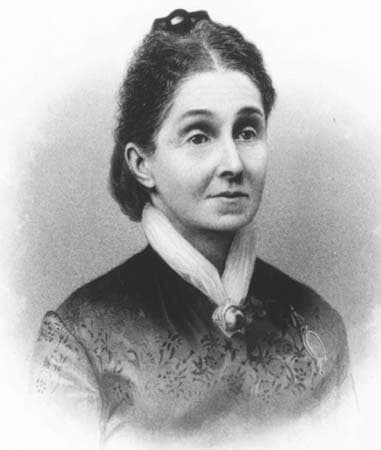
American · Activism · Law · Politics
Virginia Minor
March 27, 1824 – August 14, 1894
Early Life and Background
Virginia Louisa Minor was born on March 27, 1824, in Caroline County, Virginia. She was born into a family with connections to the prominent Minor family of Virginia, a lineage that also produced the distinguished legal scholar John B. Minor, a professor at the University of Virginia School of Law. Her upbringing reflected the customs of the antebellum South, where young women of her social class were educated primarily in domestic arts, literature, and social graces rather than in preparation for professional or public life.
Details of her childhood and formal schooling are sparse in the historical record, as was common for women of the period whose lives were not typically documented with the same thoroughness as those of their male relatives. What is clear is that Minor's early life gave few outward signs of the role she would later play in American legal and political history. She grew up in an era shaped by the tensions that would eventually erupt into the Civil War, and her family's Southern roots would later stand in some contrast to the progressive, rights-based activism she pursued in her adult life in Missouri.
Marriage and Move to Missouri
In 1843, Virginia Louisa Minor married her cousin, Francis Minor, a lawyer. The couple relocated to St. Louis, Missouri, where Francis practiced law. Missouri, a border state with a complex political identity during the Civil War era, would become the setting for Virginia Minor's most consequential contributions to American history.
The couple had one son, who reportedly died in a firearm accident during his youth, a personal tragedy that some historians suggest contributed to Virginia Minor's turn toward public activism, as she sought purpose and engagement beyond the domestic sphere that had defined her early life. Francis Minor would prove to be not merely a supportive spouse but an active intellectual partner in his wife's suffrage work, applying his legal training to construct the arguments that would eventually be tested before the nation's highest court.
Entry into the Suffrage Movement
Virginia Minor's public activism began in earnest during and after the Civil War. In 1866, she helped organize the Woman Suffrage Association of Missouri, one of the first organizations in the United States dedicated specifically to securing voting rights for women at the state level, and she served as its first president. This made Missouri one of the pioneering states in organized suffrage activism, and Minor's leadership placed her among the vanguard of women agitating for political rights in the immediate post-war period.
Minor was an articulate and strategic thinker. Rather than focusing solely on moral or natural-rights arguments for women's suffrage—arguments that had dominated the movement since the Seneca Falls Convention of 1848—she and her husband developed a distinctly legal and constitutional approach. They contended that the recently ratified Fourteenth Amendment (1868), which declared that all persons born or naturalized in the United States were citizens, and which prohibited states from abridging the "privileges and immunities" of citizens, implicitly guaranteed women the right to vote as one of the fundamental privileges of citizenship. This argument, sometimes called the "New Departure" strategy within the suffrage movement, was innovative because it sought to use existing constitutional text and Reconstruction-era amendments—originally crafted to secure rights for formerly enslaved men—as a lever for women's enfranchisement as well.
The Voter Registration Attempt of 1872
The most famous and consequential act of Virginia Minor's life occurred on October 15, 1872. In the lead-up to that year's presidential election, Minor presented herself to register to vote in St. Louis. The registrar, Reese Happersett, refused her application, citing the Missouri state constitution's explicit restriction of the franchise to male citizens.
This was not a spontaneous act but rather a carefully planned test case, consistent with the strategy Minor and her husband had developed. Because married women were legally barred from suing in their own name under the doctrine of coverture, Francis Minor filed suit on his wife's behalf, naming Happersett as the defendant. The case, formally titled Minor v. Happersett, wound its way through the Missouri state courts, where it was rejected, before reaching the United States Supreme Court on appeal.
Minor v. Happersett Before the Supreme Court
The Supreme Court heard arguments in the case, and on March 29, 1875, delivered a unanimous decision against the Minors. Writing for the Court, Chief Justice Morrison Waite acknowledged that women were indeed citizens of the United States but held that citizenship alone did not confer the right to vote. The Court reasoned that the Constitution did not affirmatively grant suffrage to all citizens and that the states retained the authority to determine voter qualifications, including the exclusion of women.
The ruling was a severe blow to the "New Departure" legal strategy that suffragists had pursued since the early 1870s. It effectively foreclosed the possibility of achieving women's suffrage through judicial interpretation of the Fourteenth Amendment and made clear that a dedicated constitutional amendment—or piecemeal state-level reforms—would be necessary to secure the vote for women nationally. In this sense, the case, while a personal legal defeat for Minor, played a pivotal role in redirecting the suffrage movement's energies for the subsequent four and a half decades, culminating eventually in the ratification of the Nineteenth Amendment in 1920.
Later Activism and Life
Following the Supreme Court's decision, Virginia Minor continued to be a respected, if less publicly active, figure in the suffrage movement. She remained associated with organizations advocating for women's rights and continued to correspond with prominent suffragists of her era, including Susan B. Anthony and Elizabeth Cady Stanton, both of whom recognized the significance of the Minors' legal strategy even in defeat.
Minor's contributions were notable not only for the direct legal challenge she mounted but for helping to popularize a constitutional, rights-based framing of the suffrage question that persisted in public discourse. Her case is frequently cited in histories of the suffrage movement as a critical juncture that clarified the legal terrain and necessitated the movement's pivot toward a formal constitutional amendment strategy, which the National Woman Suffrage Association and later the National American Woman Suffrage Association would pursue relentlessly over subsequent decades.
Death and Legacy
Virginia Minor died on August 14, 1894, in St. Louis, Missouri, at the age of 70. She did not live to see the ratification of the Nineteenth Amendment in 1920, which finally secured women's constitutional right to vote nationwide—a right she had fought for through legal and civic channels more than four decades earlier.
Her legacy endures primarily through the continued citation and study of Minor v. Happersett in American constitutional law, particularly in discussions of the scope of the Privileges and Immunities Clause and the historical limits of Reconstruction-era amendments. Legal scholars and historians regard the case as an essential episode in the long history of civil rights litigation in the United States, illustrating both the ingenuity of early suffragists in deploying constitutional argument and the resistance such arguments faced from the judiciary.
In recognition of her historical significance, the National Park Service has commemorated Virginia Minor's story as part of its interpretation of civil rights history in St. Louis, and various historical markers and organizations, including the Women's Suffrage movement's later chroniclers, have highlighted her as a foundational figure. Her life illustrates the intersection of personal courage, legal strategy, and civic activism that characterized the broader nineteenth-century struggle for women's political equality in the United States.
Dated achievements
4 indexed.
- Mar271824Activism
Born in Caroline County, Virginia
Virginia Louisa Minor was born on March 27, 1824, in Caroline County, Virginia, to a prominent Southern family.
View details Virginia Minor - Wikipedia - Oct151872Activism
Attempts to register to vote in St. Louis
Virginia Minor attempted to register to vote in St. Louis, Missouri, and was refused by registrar Reese Happersett because she was a woman.