← All women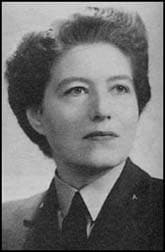
British, Romanian · Politics · Activism
Vera Atkins
June 15, 1908 – June 24, 2000
Early Life and Background
Vera May Atkins, born Vera Maria Rosenberg, entered the world on 15 June 1908 in Galați, a port city on the Danube in the Kingdom of Romania. She was the daughter of Max Rosenberg, a German‑Jewish businessman involved in the oil trade, and Hilda (or Hedwig) Atkins, an English‑born Jewish woman from British South Africa. This mixed heritage and cosmopolitan environment exposed her early to multiple languages, cultures, and the complex politics of Eastern and Central Europe.[1][3][10][15]
Her family enjoyed relative prosperity, and Vera grew up in a milieu of commercial internationalism and Jewish minority status. Sources note that the family later moved to Bucharest, around 1914, where she received an education at the Pitar Moș private school.[1][13] The move coincided with growing instability in Europe and the First World War, exposing her to shifting borders and the vulnerabilities of small states.
As a young woman, Atkins pursued advanced education abroad. She studied modern languages at the Sorbonne in Paris and attended finishing school in Lausanne, Switzerland, later training at a secretarial college in London.[1][6][8][12] These experiences deepened her fluency in French, German, and English, and gave her familiarity with British culture—skills that would become crucial in her future intelligence work.
Atkins grew up in a period marked by rising nationalism and antisemitism in Romania and across Europe. Her Jewish identity and foreign connections placed her at risk as right‑wing movements gained influence. Family and personal networks in Britain provided an alternative horizon, shaping her pro‑British outlook and willingness to assist British interests even while living in continental Europe.[3][12][14]
Between the Wars: Early Career and Move to Britain
During the interwar years, Atkins lived chiefly in Romania, where she moved in cosmopolitan circles and became well connected with diplomats and business figures. Several accounts suggest that even before formal wartime service, she undertook discreet work for British interests, possibly as an informal or undeclared agent gathering political information in Bucharest and elsewhere.[3][12][14]
Her father’s death in the early 1930s deeply affected the family’s circumstances. After Max Rosenberg died, Vera and her mother left Romania; one frequently cited account states that they moved to London in 1933, where Vera adopted the surname "Atkins"—an anglicised form of her mother’s maiden name—as part of distancing herself from obvious Jewish origins at a time of intensifying antisemitism.[2][3][8][12][14] In other narratives, she is described as remaining active in Romania through much of the 1930s but increasingly aligned with British interests.
By 1937, sources concur that Atkins had settled in Britain, a move that coincided with the worsening political climate in Europe.[1][3][13][17] She had already built ties to British officials and was well suited for roles requiring linguistic skill and cross‑border experience. Her pro‑British stance, mentioned in several biographical sketches, made her a natural candidate for intelligence recruitment as war loomed.[12][14]
In these years, Atkins reportedly undertook discreet missions in support of British security, including involvement in the evacuation of Polish Enigma code‑breakers to safety after the German invasion of Poland.[12] While details remain partly obscured by classification and incomplete records, such work indicates that she was already integrated into networks of clandestine cooperation before joining the Special Operations Executive.
Joining the Special Operations Executive (SOE)
The Special Operations Executive (SOE) was created by the British government in 1940 to "set Europe ablaze" by supporting resistance movements, conducting sabotage, and gathering intelligence in territories occupied by Nazi Germany. Within this organization, the French Section—known as F Section—was responsible for operations in France.
Atkins joined F Section in 1940, initially in a civilian capacity. She began as a secretary but quickly took on substantive operational responsibilities.[1][11][13] By 1941, she had become the principal assistant to Colonel Maurice Buckmaster, the head of F Section, effectively serving as his intelligence officer and administrative linchpin.[1][2][13]
Her responsibilities were extensive. Atkins vetted potential agents, helped select and recruit them, supervised their training, and prepared their false identities, cover stories, and documentation. She maintained meticulous records on each operative and their networks, tracking movements, radio contacts, and supply drops. Her linguistic abilities and understanding of French society allowed her to judge whether proposed stories and identities would withstand Gestapo scrutiny.
On 10 October 1941, Atkins was formally commissioned into the Women’s Auxiliary Air Force (WAAF) as an Assistant Section Officer.[1] This commission regularized her position within the British armed forces and enabled her to work officially inside SOE’s F Section. Despite her auxiliary rank, she wielded significant influence, becoming a pivotal figure in planning and overseeing clandestine missions to France.
Role as Spymaster and Intelligence Controller
From 1941 to 1945, Atkins emerged as one of the central figures in Allied clandestine operations in France. While Buckmaster held formal command, many historians describe Atkins as the de facto intelligence controller of F Section.[1][3][13][16] She was responsible for an extraordinary volume of operational detail, and her judgment often shaped whether agents were deployed and how networks were supported.
Over the course of the war, F Section sent more than 400 agents into France, including approximately 39 womenVirginia Hall and others from various Allied countries.[7][10][14] She guided them through intensive training in weapons, sabotage, clandestine communications, and survival, while insisting on rigorous psychological preparation.
Atkins’s work required balancing human empathy with ruthlessness. She forged close relationships with agents, many of whom she briefed personally before they departed for missions from which they might never return. At the same time, she had to make hard decisions about deployments, risk levels, and the potential compromise of entire circuits. Her prodigious memory and perfectionism became legendary among colleagues.[14][16]
Within SOE, Atkins navigated a male‑dominated environment as a foreign‑born Jewish woman. Some accounts note that she faced suspicion due both to her gender and her background, particularly from elements of the British establishment uncomfortable with her assertiveness and unconventional career path.[3][14] Nonetheless, her performance won respect from many officers and agents, and she exercised operational influence that was rare for women in any Allied intelligence service of that era.
D‑Day and the Crisis of the French Networks
As the war progressed, the risks faced by F Section agents escalated. The Gestapo and German security services improved their counter‑intelligence capabilities, infiltrating networks and exploiting captured radios. Several major circuits were penetrated, leading to mass arrests and deportations of agents and their French contacts.[3][11][16]
Following the D‑Day landings in June 1944, SOE activity intensified, with resistance groups playing a key role in disrupting German communications and logistics. Atkins increasingly focused on tracking and supporting agents in the field and, as reports of missing operatives mounted, on determining what had happened to them.[2][3][11] She was profoundly affected by the capture of many agents she had personally prepared and dispatched.
Critics later questioned some decisions made by F Section leadership regarding the persistence of compromised circuits and the adequacy of security procedures. In these debates, Atkins’s role has been scrutinized. However, historians have also emphasized the structural and informational limitations under which she operated, as well as the relentless pressure to maintain resistance activity in support of Allied offensives.[3][16]
By war’s end, a significant number of F Section agents—many of them women—had vanished into the Nazi camp system. This reality set the stage for Atkins’s most arduous and morally fraught post‑war work.
Post‑war Investigations into Missing Agents
After Germany’s surrender in 1945, Vera Atkins undertook an extensive mission across Europe to discover the fate of 118 missing SOE agents from F Section.[1][2][3][11] Operating under the auspices of British authorities, she traveled through liberated territories and occupied Germany, visiting concentration camps, execution sites, and administrative offices.
Atkins interviewed former Gestapo and SS officers, camp personnel, and survivors. She combed through lists of prisoners and transport records, cross‑checking names and dates to match agents with specific fates. Her work contributed evidence to war crimes investigations and trials and provided families with long‑awaited information about loved ones who had disappeared.[1][3][16]
One of her most notable tasks was identifying the final journeys and deaths of women agents such as Noor Inayat Khan, Yolande Beekman, and others who had been executed in camps including Dachau, Ravensbrück, and Natzweiler.[3][11][16] Atkins paid scrupulous attention to detail, insisting on accurate accounts even when official narratives preferred more reassuring simplifications.
This investigative work took a profound emotional toll. Biographical sources portray Atkins as haunted by guilt over the agents’ suffering and deaths, even though she had little control over the conditions they faced once captured.[3][6][16] Her determination to document their fates nonetheless established a crucial historical record and ensured that many were later formally honoured by their governments.
By 1947, much of Atkins’s work on the missing agents had been completed, and she began transitioning back to civilian life.[1][2] Her role in SOE’s dissolution and the restructuring of post‑war British intelligence further distanced her from operational work, but she remained a key repository of knowledge about F Section’s history.
Later Career and Civilian Roles
Following her intensive post‑war investigations, Atkins worked for international organizations including the International Refugee Organization and later UNESCO, applying her administrative and linguistic skills to issues of displacement, reconstruction, and cultural cooperation.[1][2] While less dramatized than her wartime life, these positions reflected continuity in her commitment to dealing with the human consequences of conflict.
Atkins maintained a relatively low public profile for decades. Bound by official secrecy and personal reticence, she spoke sparingly about her wartime activities. Many details of her career remained classified or confined to specialized archives, and she did not seek public recognition.
Over time, however, historians, journalists, and former colleagues began to bring her story to light. Her efforts to trace missing agents contributed to memorialization projects and to growing interest in the role of women in resistance and intelligence. Yet until the late twentieth century, she remained largely unknown outside specialist circles.
Awards, Honours, and Recognition
Atkins received several significant honours for her wartime and post‑war services. On 26 July 1944, she was appointed a Member of the Order of the British Empire (MBE), civil division, for her contributions to SOE operations, as announced in the London Gazette.[1] This recognised her work during the most intense years of clandestine activity in France.
On 1 January 1948, she was promoted to Companion of the Order of the British Empire (CBE), civil division, in the 1948 New Year Honours.[1] This higher distinction acknowledged both her wartime leadership within F Section and her difficult post‑war investigations into missing agents.
Atkins also received French honours. Secondary sources and commemorative writings indicate that she was awarded the Croix de Guerre, recognising her service to France, although specific dates are less consistently recorded.[8] More clearly documented is her investiture, on 7 November 1995, as a Chevalier of the Légion d’Honneur by the French government, formally honouring her contributions to resistance and clandestine operations in France.[1][8]
Together, these honours illustrate the gradual acknowledgement, by Britain and France, of a woman whose work in intelligence had long been shielded by secrecy. They also reflect changing attitudes toward recognising foreign‑born Jewish women in national orders of merit, particularly in the context of Second World War and Holocaust memory.
Personal Life and Identity
Atkins never married and had no children, a fact noted in several biographical accounts.[1][3][13] Her life was dominated by professional commitments and, later, by the emotional aftermath of war. She cultivated a composed, somewhat enigmatic public persona, guarded about personal details and background.
Her decision to adopt her mother’s surname, Atkins, and to anglicise it further was both practical and symbolic. In an era of virulent antisemitism, particularly in continental Europe, a more neutral, English‑sounding name provided protection and facilitated work in British structures that were themselves not free from prejudice.[3][10][14] Some sources emphasise that she actively sought to conceal aspects of her Jewish heritage to navigate hostile environments.[10][14]
Despite such protective strategies, Atkins remained deeply conscious of her Jewish identity and of the fate of European Jewry under Nazi rule. Her post‑war investigations into the deaths of many Jewish and non‑Jewish agents intersected with broader efforts to understand and document the mechanisms of genocide and political repression.
Personality accounts describe her as disciplined, highly intelligent, and sometimes intimidating, with a formidable memory and insistence on accuracy.[14][16] At the same time, letters and testimonies from agents suggest that she could be warm and supportive, particularly in the intense moments before departures on dangerous missions.
Legacy and Historical Impact
Atkins’s legacy rests on her dual role as wartime spymaster and post‑war investigator. Within SOE’s French Section, she was instrumental in recruiting, preparing, and directing hundreds of agents whose work contributed materially to the Allied war effort in France. Her expertise in language, documentation, and network management set a professional standard for clandestine operations.[1][3][13][16]
For women’s history, her career challenges assumptions about gender roles in intelligence. As a woman, foreigner, and Jew in a conservative British security establishment, she nonetheless attained substantial operational authority. Some commentators have argued that she was one of the first women to exercise such a level of control within SOE’s history.[14] Even where formal titles did not fully reflect her influence, contemporaries and later scholars recognise her as a central architect of F Section’s activities.
Her post‑war investigations into missing agents helped shape the historical record of SOE and the French Resistance. By tracing individual fates and gathering evidence for war crimes trials, Atkins contributed to a more precise understanding of how Nazi repression operated, especially against clandestine operatives. Her work ensured that many agents were formally commemorated and that their sacrifices were not consigned to anonymity.[1][3][11][16]
In the 1990s and early 2000s, interest in her life deepened. Research that culminated in books such as A Life in Secrets: Vera Atkins and the Missing Agents of WWII and Spymistress brought renewed public attention to her story and, by extension, to the broader contribution of women to Allied intelligence.[2][3][16] These works stimulated scholarly debates about the ethics of clandestine warfare, the limitations of historical sources, and the ways in which secrecy can distort both contemporary understanding and later remembrance.
Atkins has since been portrayed in documentaries, articles, and online tributes as a "legendary spymaster" and one of the "most dangerous and effective" intelligence officers of the war.[5][6][10][14] Such characterizations, while sometimes dramatized, underscore the shift from near‑invisibility to symbolic prominence in public narratives of the Second World War.
Later Life and Death
In her later years, Atkins lived in Hastings, on the south coast of England. She maintained contact with a small circle of friends, former colleagues, and families of SOE agents, but largely remained out of the public eye.[1][3] The gradual declassification of wartime documents and the growing prominence of her story occurred mostly through the work of others rather than through her own self‑presentation.
On 24 June 2000, Vera Atkins died in Hastings at the age of 92.[1][13][17] Her death came at a moment when scholarly and popular interest in SOE and female agents was accelerating, ensuring that her contributions would be more fully explored posthumously than they had been during her lifetime.
Some memorial sources record that she is buried at St Senara Churchyard in Zennor, Cornwall, though her principal association in memory remains with the shadowy offices of wartime London and the networks of agents she supported.[8] Subsequent commemorations by institutions such as the International Bomber Command Centre and Jewish historical organizations have highlighted her role as a Jewish woman who overcame discrimination and secrecy to help direct one of the most complex clandestine campaigns of the war.[12][14]
Assessment
Today, Vera Atkins is widely regarded as a key figure in the history of Allied intelligence and resistance operations. Her life illustrates the intersections of gender, nationality, and religion in wartime service and the challenges faced by women seeking authority in security institutions.
Her meticulous operational work in F Section, combined with her dogged post‑war investigations, has left an enduring mark on historical scholarship and public memory. The honours she received—from Britain and France—stand as official acknowledgements, but perhaps more significant is the recognition embedded in the names and stories of the agents whose lives she helped shape and whose deaths she helped to document.
In the broader narrative of women’s history, Atkins exemplifies the critical, often unseen role that women played behind the scenes of major twentieth‑century conflicts. Her career demonstrates that leadership in intelligence has never been the exclusive province of men and that the boundaries of gendered service, even in the mid‑twentieth century, were capable of being stretched by determined and highly skilled individuals.
Dated achievements
6 indexed.
- Jun151908Politics
Birth of Vera Atkins
Born in Galați, Romania, Vera Maria Rosenberg, later Vera Atkins, emerges as a significant WWII intelligence officer.
View details Wikipedia: Vera Atkins - Oct101941Politics
Commissioned into Women’s Auxiliary Air Force
Vera Atkins was commissioned on October 10, 1941, empowering her formal role in SOE's French Section.