← All women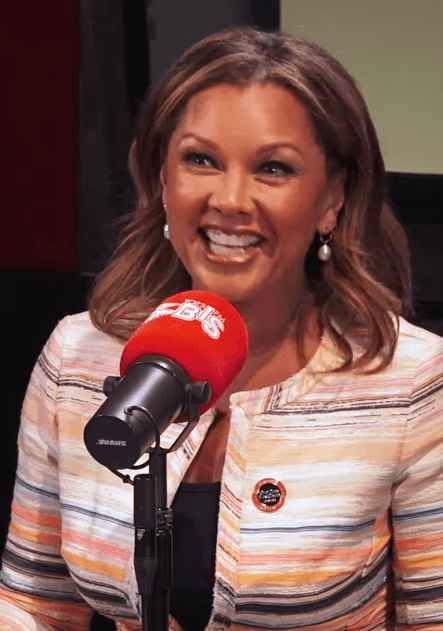
American · Arts
Vanessa L. Williams
March 18, 1963 – present
Early Life and Background
Vanessa Lynn Williams, known professionally as Vanessa L. Williams or simply Vanessa Williams, was born on March 18, 1963, in the lower Hudson Valley region of New York, commonly cited as Tarrytown and Millwood.[3][10][14][17] Her parents, Helen and Milton Augustine Williams Jr., were both music teachers, and they instilled in their daughter a deep appreciation for the arts from an early age.[3][14] The family’s birth announcement famously read "Here she is, Miss America," a playful but prescient statement about the future direction of her life.[14]
Williams grew up in a middle‑class, largely white suburban community, where her parents worked to ensure access to strong educational and musical opportunities. She studied classical piano and French horn, sang in school and community choirs, and was exposed to theater and dance. These early experiences laid the technical and emotional foundation for a multifaceted performing career.[3][14]
She attended high school in the region and distinguished herself as a talented student and performer. In 1981 she enrolled at Syracuse University, initially as a musical theater major.[3][13] At Syracuse she continued to develop her skills in acting, singing, and dance, gaining stage experience that would later inform her work in Broadway productions and screen roles. Her time at the university was cut short when her life changed dramatically in the early 1980s due to pageant success.
Entry into Pageants and Miss America
Williams began entering beauty and talent competitions in her late teens and early twenties. In 1983, she won the titles of Miss Syracuse 1983 and Miss New York 1983, becoming the first Black woman to win the Miss New York state preliminary in the Miss America system.[3] These victories positioned her to compete at the national Miss America pageant in Atlantic City.
On September 17, 1983, Williams was crowned Miss America 1984, becoming the first Black/African‑American woman to win the Miss America title since the pageant’s inception in 1921.[3][6][14] Performing "Happy Days Are Here Again" in the talent competition, she impressed judges and audiences with her vocal control, stage presence, and charisma. Her win was heralded as a major symbolic breakthrough for African‑American women in mainstream American culture and was widely reported in national and international media.[3][6]
As Miss America, Williams undertook the customary schedule of public appearances, charity events, and speaking engagements. Her official term, as later summarized by the Miss America Organization, ran from September 17, 1983, until July 23, 1984.[3] During this period she became a highly visible figure, negotiating the expectations placed on both beauty queens and groundbreaking Black public figures. Her presence challenged long‑standing racialized beauty norms that had historically excluded Black women from the pageant and similar institutions.
The 1984 Resignation and Media Scandal
Williams’ Miss America reign ended abruptly amid controversy. In July 1984, the men’s magazine Penthouse announced plans to publish nude photographs of her taken years earlier, before she entered the pageant world.[3] The images had been shot by a photographer for private use and were sold to the magazine without Williams’ consent. As public and sponsor pressure mounted, the Miss America Organization demanded that she relinquish the crown.
On July 23, 1984, Williams officially resigned, becoming the first Miss America in history to give up the title before the end of her term.[3][10] The organization quickly passed the crown to the first runner‑up, Suzette Charles. Williams’ resignation was framed in the media as a national scandal, and she endured intense scrutiny and moral judgment, much of it inflected by racism and sexism. Commentators and later scholars have noted the double standards involved: a young woman was punished for images created under different personal circumstances, despite the absence of consent in their sale and publication.
In the years that followed, the episode came to be seen as a case study in the exploitation of women’s images, the politics of shame, and the racialized moral standards applied to female public figures. For Williams personally, it marked a painful turning point; yet it also set the stage for one of the most striking career recoveries in modern entertainment history.
Transition to Music Career
After leaving the Miss America world, Williams focused on building a career in entertainment, drawing on her musical theater training and vocal talent. By the late 1980s she had recorded her debut album, The Right Stuff (released in 1988), which introduced her as an R&B and pop singer.[3][13] The album produced singles that charted on the Billboard rankings and earned her a reputation as a serious recording artist, not simply a former beauty queen.
Her follow‑up album, The Comfort Zone (1991), proved even more commercially successful, featuring the hit ballad "Save the Best for Last," which became one of her signature songs.[3][13] The track’s success on the charts led to Grammy nominations and extensive radio play. Williams’ vocal style—combining warmth, clarity, and emotional nuance—helped her bridge R&B and adult contemporary audiences.
In 1994, she released The Sweetest Days, further consolidating her status as a versatile singer capable of handling pop, jazz‑inflected, and theatrical material.[3] Over the course of the 1990s, Williams accumulated numerous music industry honors, including gold and platinum records and multiple Grammy nominations for songs such as "The Right Stuff," "Save the Best for Last," and "Colors of the Wind."[3][13]
Her recording of "Colors of the Wind" for Disney’s Pocahontas, released in 1995, became a major hit, reaching the top of adult contemporary charts and peaking at No. 4 on the Billboard Hot 100.[3][4] The song’s critical and commercial success culminated in the Academy Award for Best Original Song in 1996, and Williams’ live performance at the 68th Oscars further solidified her stature as a respected vocalist.[4]
Film and Television Career
Parallel to her music work, Williams pursued acting roles in both film and television. She appeared in the feature film Soul Food (1997), playing Teri Joseph, a high‑powered attorney navigating complex family dynamics.[16] The film’s focus on an African‑American family and its intergenerational relationships made it notable in Hollywood’s representation of Black life, and Williams’ performance contributed to its critical acclaim.
Over subsequent years she took on roles in television movies and series, gradually building a résumé that demonstrated range across drama, comedy, and musical performance. Her ability to move between music and acting distinguished her from many of her contemporaries and helped shift perceptions of former beauty queens as limited to modeling or hosting gigs.
Williams’ major television breakthrough came with the ABC series Ugly Betty, which aired from 2006 to 2010. She played Wilhelmina Slater, a fierce, fashion‑driven executive at a high‑end magazine.[3][5][13] The role earned her critical acclaim and multiple Emmy and Screen Actors Guild nominations. Her portrayal combined sharp comedic timing with dramatic depth, illustrating both the vulnerability and ruthless ambition of her character.
Following Ugly Betty, Williams joined the cast of Desperate Housewives in its later seasons, playing Renee Perry, a glamorous and outspoken friend from the past.[16] The part allowed her to continue exploring complex, charismatic female characters on prime‑time television. She also appeared in series such as The Good Wife, further demonstrating her adaptability to different genres and formats.
Broadway and Stage Work
Williams has maintained a significant presence in theater, especially on Broadway. In 1994, she appeared in the musical Kiss of the Spider Woman, bringing her combination of acting and singing skills to the stage.[4] Her performance helped consolidate her reputation as a legitimate musical theater performer rather than a celebrity stunt casting.
She later played roles in productions such as Into the Woods and The Trip to Bountiful, and her stage work extended to concerts and special events, including performances at major venues and with orchestras. The Kennedy Center, among other institutions, has highlighted her as an artist whose career spans film, television, recordings, and Broadway, and notes the breadth of her nominations across major industry awards.[5]
Williams’ theatrical pursuits underscore her sustained commitment to live performance and her deep roots in musical theater training dating back to her Syracuse University days. They also situate her within a tradition of Black women who have made significant contributions to American stage entertainment, navigating the intersecting challenges of race, gender, and commercial expectations.
Awards, Honors, and Recognition
Over the course of her career, Vanessa Williams has received extensive recognition from major arts and entertainment organizations. She has accumulated multiple Grammy nominations for her recording work, including songs such as "The Right Stuff," "Save the Best for Last," and "Colors of the Wind."[3][13] In television, she has earned Emmy nominations for her performances, notably for Ugly Betty, and Screen Actors Guild (SAG) Award nominations acknowledging ensemble and individual work.[5][13]
Her contributions to theater have been recognized with a Tony Award nomination, and she has won or been nominated for numerous NAACP Image Awards, honoring excellence among Black performers and creatives.[5][13] The Kennedy Center notes that her work has been recognized by "every major industry award affiliate," including 4 Emmy nominations, 11 Grammy nominations, a Tony nomination, 3 SAG Award nominations, 7 NAACP Image Awards, and 3 Satellite Awards.[5]
In 2007, Williams received a star on the Hollywood Walk of Fame, a symbolic marker of her impact on film, television, and music.[13][14] The Walk of Fame profile emphasizes her pioneering Miss America victory, her successful transition into entertainment, and her status as one of the most versatile talents of her generation.
Her alma mater also recognized her achievements. Syracuse University later granted Williams a Bachelor of Fine Arts degree in Musical Theater, crediting her extensive professional experience and accomplishments in the industry.[13] This honor acknowledged both her early academic training and the real‑world expertise she developed in the intervening decades.
Personal Life
Williams’ personal life has intersected with her professional trajectory in visible ways. She has been married three times. Her first marriage was to Ramon Hervey II, a public relations professional who helped manage her early post‑Miss America career.[16] The couple had children together before eventually divorcing.
She later married Rick Fox, a former professional basketball player and actor, in 1999, a union that drew media attention because of the visibility of both spouses.[16] They divorced in 2005. In 2015, Williams married Jim Skrip, a businessman she met during travel; their relationship has been described in interviews as a stabilizing presence in her later life.[16]
Williams is the mother of several children, and she has spoken publicly about balancing parenting with a demanding career in entertainment. Her discussions of family, work, and resilience have made her a relatable figure for many women navigating their own work‑life challenges.
Beyond family, Williams has been involved in philanthropic and advocacy efforts, particularly those related to the arts, education, and health. She has participated in benefit concerts and campaigns that use her celebrity to support broader social causes, although many of these initiatives are documented primarily in media interviews and event coverage rather than formal institutional histories.
Legacy and Historical Impact
Vanessa Williams’ legacy in women’s and Black history is anchored in her Miss America breakthrough and in the remarkable career she built afterward. Her crowning on September 17, 1983 as the first Black Miss America challenged a beauty standard that had long favored white women and excluded Black contestants.[3][6][14] The symbolism of a Black woman holding the title of "Miss America" resonated far beyond the pageant stage, influencing debates about representation in media, advertising, and entertainment.
The scandal and forced resignation in 1984, while deeply damaging at the time, did not end Williams’ public life. Instead, her subsequent success in music, television, film, and Broadway turned her story into a narrative of resilience and reinvention. She demonstrated that a woman could survive intense public scrutiny and reclaim her career on her own terms, a message that gained renewed relevance in later decades amid conversations about privacy, consent, and the circulation of intimate images.
Williams also expanded the perceived possibilities for former beauty queens. Her serious achievements—Grammy, Emmy, and Tony nominations; a Hollywood Walk of Fame star; acclaimed roles in major television series—helped shift the stereotype of pageant winners as limited to superficial celebrity. She showed that such backgrounds could lead to substantive artistic careers.
For Black women in particular, Williams’ visibility across multiple platforms has been significant. Her presence in mainstream romantic ballads, animated feature soundtracks, prestige television, and Broadway musicals contributed to normalizing Black female excellence in areas long dominated by white performers. She has often been cited as an inspiration by younger artists who grew up seeing her succeed in fields from which Black women had historically been marginalized.
Return to Miss America and Later Life
On September 13, 2015, more than thirty years after her resignation, Williams returned to the Miss America stage as head judge for the Miss America 2016 competition.[3] During the live broadcast, the pageant’s executive chairman and CEO issued a public apology, acknowledging that she had not been treated fairly in 1984 and expressing regret for how the situation was handled.[3] This moment was widely interpreted as a form of institutional reconciliation and a recognition of the enduring respect for Williams’ accomplishments.
In the 2000s and 2010s, Williams continued to work in television, film, and theater, taking on new roles and projects while also engaging in concerts and special performances. She remained a sought‑after entertainer, with a reputation for professionalism, versatility, and vocal excellence. Media profiles and interviews from this period often emphasize her balanced perspective on fame, family, and the lessons of her early experiences.
As of the mid‑2020s, Williams is regarded as an iconic figure whose career has spanned more than four decades. She is celebrated not only for specific roles and songs but also for the broader narrative of her life: a talented young woman who broke a major racial barrier, endured a highly public fall, and rebuilt a distinguished career across multiple artistic disciplines.
Vanessa L. Williams’ story continues to be cited in discussions of representation, the politics of celebrity, and the evolving standards applied to women’s conduct in public life. Her achievements in music, television, film, and stage, combined with her historical role in the Miss America pageant, make her a central figure in any editorial almanac of women’s history.
Dated achievements
5 indexed.
- Mar181963Arts
Birth of Vanessa L. Williams
Vanessa Lynn Williams was born in Millwood, New York, to music teachers Helen and Milton Williams.
View details BlackPast Entry on Vanessa L. Williams - Sep171983Arts
First Black Miss America crowned
Vanessa Williams was crowned Miss America 1984, the first Black woman to achieve this.