← All women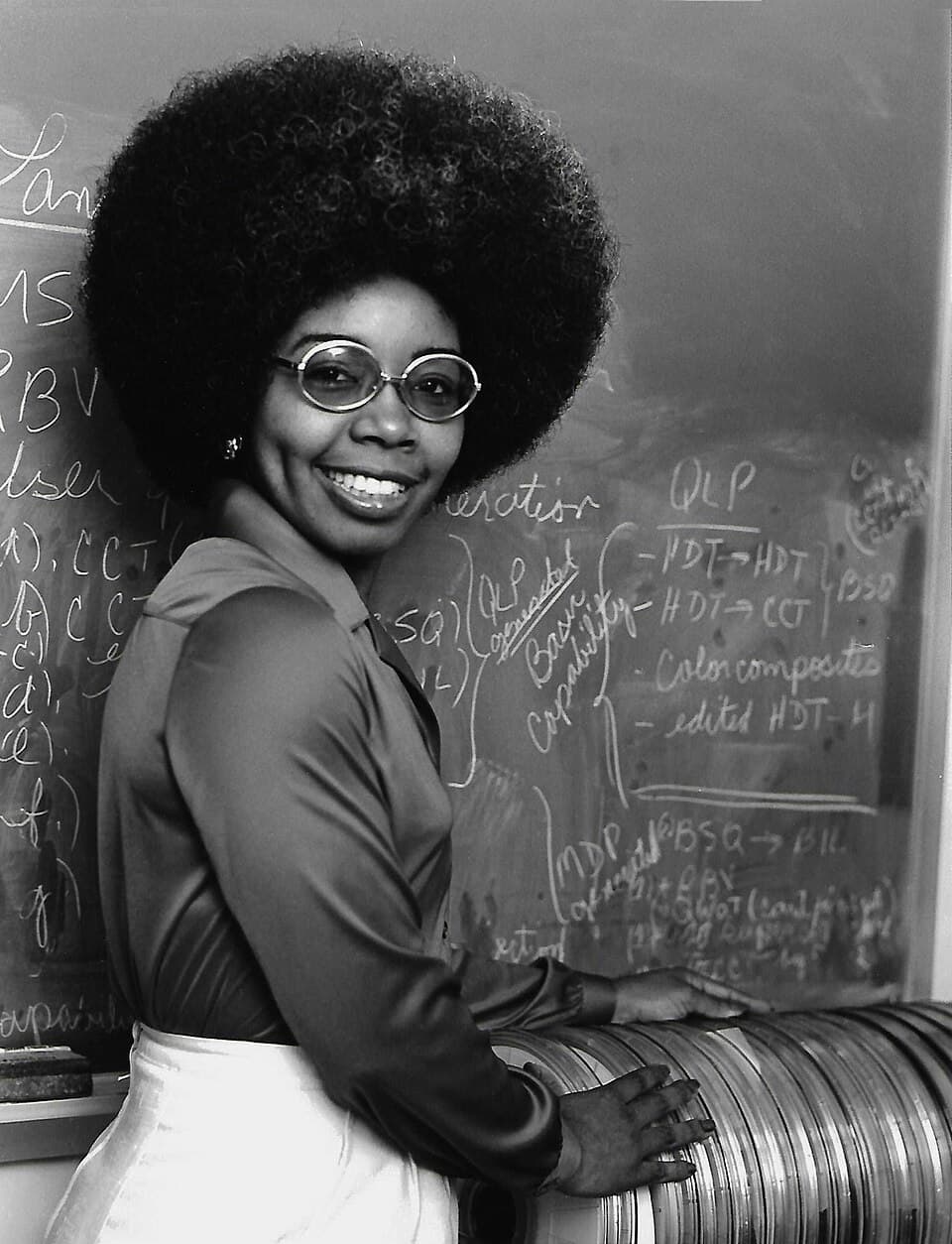
American · Science
Valerie Thomas
February 8, 1943 – present
Early Life and Background
Valerie LaVerne Thomas was born on February 8, 1943, in Baltimore, Maryland, United States, during the era of Jim Crow segregation.[1][3] She grew up in a predominantly Black community, where access to advanced scientific education and resources was limited by both race and gender barriers. As a child, Thomas developed a fascination with technology and mechanics, reportedly taking an interest in how televisions and other household devices worked and experimenting with simple equipment whenever she had the opportunity.[2][5]
Despite her curiosity, Thomas did not receive strong encouragement in science at school. Racial segregation and social expectations placed constraints on Black girls’ educational trajectories in mid‑20th‑century Maryland.[3] Nonetheless, she maintained an interest in mathematics and physics. In high school, she gravitated toward physics courses, laying the groundwork for her eventual decision to major in the field.[5][9]
Thomas went on to attend Morgan State University, a historically Black university in Baltimore. There she majored in physics, at a time when women in physics were extremely rare; she was one of only two women in her class to major in the subject.[2][3][5] Her success at Morgan State reflected both her academic talent and her persistence in a discipline that offered few role models who looked like her. The rigorous training she received in physics and mathematics would prove crucial for her later work at the National Aeronautics and Space Administration (NASA).
Education and Transition to NASA
Thomas completed her bachelor’s degree in physics at Morgan State University in 1964.[1][3] She excelled academically, combining strong mathematical skills with a deep interest in applied science. Immediately upon graduation, she was hired by NASA’s Goddard Space Flight Center in Greenbelt, Maryland, as a mathematical/data analyst.[1][2][7] This hiring represented a significant step: NASA, still a relatively young agency created in 1958, was expanding its scientific and technical staff for new satellite missions, but African American women occupied only a tiny fraction of those roles.
At Goddard, Thomas entered an environment dominated by white male scientists and engineers. Her role involved designing and managing computer data systems that supported satellite operations. Early assignments included work on the Orbiting Geophysical Observatory missions, which gathered data on Earth’s magnetosphere and upper atmosphere.[2][8] Thomas was responsible for helping ensure that the raw measurements collected in orbit could be stored, processed, and analyzed using the computers available at the time, an intensive task given the limited memory and processing capacities of mid‑1960s systems.
Career Beginnings and Development at NASA
Thomas began working at NASA Goddard in 1964 and soon became known for her expertise in mathematical analysis and data systems.[2][7] During her early years, she contributed to the development of computer data systems for various scientific satellites, learning how to translate physical measurements into digital formats usable by researchers.
In the late 1960s and early 1970s, NASA’s ambitions expanded from geophysical observatories to systematic Earth observation from space. Thomas’s skills placed her at the intersection of satellite engineering, computing, and environmental science. Around 1970, she was assigned to work on the nascent Landsat program, the first satellite series designed to provide continuous multispectral images of Earth’s surface for scientific study and resource management.[2][3][9]
At Goddard, Thomas became a key member of the early Landsat digital image‑processing team. She helped manage the development of image‑processing software and became the resident expert on Computer Compatible Tapes (CCTs), the format used to store early Landsat imagery.[3][9] Her work involved designing data structures and processing routines that allowed scientists to convert raw satellite signals into calibrated images, making Landsat data usable for applications such as land‑use mapping, agricultural assessment, and environmental monitoring.
Work on Landsat and Remote Sensing
Thomas’s contributions to Landsat were both technical and managerial. By 1974, she had become the technical lead for the development of Landsat’s image‑processing system at NASA.[2][9] In this role, she oversaw the creation of software and data standards that defined how multispectral images would be stored, processed, and distributed. Her expertise in digital formats helped set conventions that influenced subsequent remote‑sensing programs.
Thomas played a central role in the ambitious Large Area Crop Inventory Experiment (LACIE), a joint project that used Landsat data to evaluate whether satellite imagery could be employed to predict global wheat yields.[5][9] As a team leader for LACIE at Goddard, she coordinated image processing and data analysis needed to estimate crop conditions across large geographic areas. The experiment ultimately demonstrated that space‑based imagery could support global agricultural monitoring, foreshadowing later systems for food‑security analysis and environmental assessment.
Her work on Landsat required bridging disciplines: physics to understand the sensors, computer science to manage the data, and environmental science to interpret the results. In addition, as a Black woman in a largely white, male technical environment, she navigated institutional biases while asserting her expertise. Her contributions were crucial to transforming satellite data into practical information that governments, researchers, and industries could use.
Invention of the Illusion Transmitter
In the mid‑1970s, Thomas’s career took a new direction when she encountered a scientific exhibit that demonstrated the optical properties of concave mirrors. Around 1976, she attended a seminar or demonstration where a light bulb and concave mirrors were used to create a compelling illusion: viewers saw what appeared to be a real bulb glowing in space even after the physical bulb had been removed.[2][5] Intrigued by this phenomenon, she began experimenting to understand how concave mirrors could produce such real‑image effects.
Thomas set up equipment to observe the relationship between objects and real images formed by pairs of concave mirrors and explored how these images could be transmitted from one location to another.[2] Through systematic experimentation, she devised a device that used a concave mirror on the transmitting end to form a real image of an object, and another concave mirror on the receiving end to reconstruct that image in three dimensions. She called this invention the illusion transmitter.
On October 20, 1978, Thomas filed a U.S. patent application (No. 05/953,205) for the illusion transmitter.[2][3] The device was designed to transmit three‑dimensional real images, allowing observers to see apparently solid images in space without specialized viewing glasses. After the usual period of examination, the United States Patent and Trademark Office granted U.S. Patent 4,229,761 to Thomas on October 21, 1980.[2][3]
The illusion transmitter is considered an important contribution to the field of three‑dimensional imaging. NASA has used the technology for certain visualization applications, and researchers have discussed potential uses in medical imaging, where surgeons might benefit from 3‑D views inside the human body, as well as in entertainment and advanced display systems.[2][5] The principles behind Thomas’s invention are frequently cited in discussions of the origins of modern 3‑D technologies.
NASA Career in Data Systems and Networks
Even as she pursued inventive work, Thomas continued to assume increasingly responsible roles at NASA. Beyond Landsat, she became involved in the development of the Space Physics Analysis Network (SPAN), an early networking system that connected space‑physics researchers around the world.[2] SPAN facilitated collaborative analysis of data from missions studying phenomena such as Halley’s comet, the ozone hole, and supernovae, and helped pave the way for later, more advanced scientific networks.
Thomas’s expertise in both data systems and user needs made her a natural leader in these projects. Over time, she served as SPAN project manager and took on broader responsibilities in NASA’s data operations. By the early 1990s, she was serving as associate chief of the Space Science Data Operations Office at Goddard, overseeing multimission data systems that supported a variety of space‑science projects.[2][10] In this senior role, she helped guide the design and management of infrastructures that allowed scientists across the globe to access NASA data.
Her career at NASA spanned 1964 to 1995, a period marked by rapid advances in computing, satellite technology, and scientific networking.[2][6] Throughout, she contributed both technical innovations and leadership, and she remained a visible example of an African American woman succeeding in high‑level technical management within a major federal science agency.
Awards, Honors, and Recognition
Thomas received multiple awards from NASA in recognition of her scientific and managerial contributions. She was honored with the Goddard Space Flight Center Award of Merit, reflecting her exceptional work in developing and managing data systems.[2][8] She also received the NASA Equal Opportunity Medal, acknowledging her efforts to promote diversity and equal opportunity within the agency.[2][3] These awards underscored both her technical excellence and her commitment to improving the working environment for underrepresented colleagues.
Beyond NASA, Thomas’s achievements have been celebrated in broader scientific and public contexts. In 2018, she was inducted into the National Inventors Hall of Fame, which recognized her invention of the illusion transmitter and her contributions to satellite communication and remote‑sensing technology.[3][12] Her induction placed her among a select group of inventors whose work has had lasting impact on technology and society.
Thomas has also been featured in profiles highlighting Black scientists and engineers, and her story appears in educational materials aimed at inspiring students—especially girls and students of color—to pursue careers in STEM. An asteroid, (198989) Valeriethomas, has been named in her honor, reflecting international recognition of her contributions to science and technology.[6]
Personal Life
Publicly available sources focus primarily on Thomas’s professional achievements and do not provide extensive detail about her personal life, such as marriage or children. Biographical entries emphasize her identity as a scientist, data analyst, project manager, and inventor, along with her role as a mentor to younger generations.[1][3][9] This focus reflects both her own public emphasis on professional and educational work and the limited documentation of her private life in mainstream sources.
What is well documented is her commitment to mentoring. After retiring from NASA, Thomas has remained active in educational programs, particularly those aimed at underrepresented youth in STEM fields. She has participated in hands‑on activities, talks, and mentoring initiatives that encourage students—especially Black students and girls—to consider careers in science and engineering.[3][9] In interviews, she has expressed pride not only in her technical accomplishments but also in her efforts to support fellow Black scientists and future scientists.
Later Life and Ongoing Work
Thomas retired from NASA in 1995, leaving her post as associate chief of the Space Science Data Operations Office.[2][10] Retirement did not mark an end to her engagement with science and education. She has continued teaching and participating in STEM outreach programs, often highlighting the importance of representation and encouragement for students from historically marginalized communities.[9][10]
In interviews conducted decades after her retirement, Thomas has reflected on both her invention and her broader career. She notes that, while the illusion transmitter brought her notable recognition, she remains particularly proud of her contributions to data systems that enabled major scientific discoveries and of her role in supporting other Black scientists within NASA.[10]
As of the mid‑2020s, Thomas is widely recognized as a pioneering figure in NASA’s history, and she continues to serve as an inspirational figure in STEM education. Her career is frequently cited in discussions of Black women’s contributions to space science, remote sensing, and invention.[1][3][9]
Legacy and Historical Impact
Valerie Thomas’s legacy is multifaceted. Technically, she made significant contributions to the development of digital image‑processing systems for the Landsat program and to the data infrastructures that support space‑science research. Her work on Computer Compatible Tapes and image‑processing formats helped establish standards that influenced how satellite imagery is stored, processed, and used.[3][9]
Her invention of the illusion transmitter opened new possibilities for three‑dimensional visualization. While subsequent developments in holography and 3‑D display technologies have built on multiple lines of research, Thomas’s patented device stands as an early and influential example of engineering concave‑mirror systems to create real images that appear to occupy physical space.[2][3] NASA’s use of the technology and ongoing interest in its potential applications in medical imaging and advanced displays underscore its enduring relevance.[2]
Socially and historically, Thomas has had a profound impact as a Black woman scientist and inventor in a field that has long lacked diversity. Her successful navigation of NASA’s technical and managerial hierarchies demonstrated that African American women could and did play central roles in shaping major scientific enterprises. Her receipt of a U.S. patent for a significant imaging technology added an important example of Black women’s inventive activity to the historical record.
Thomas’s commitment to mentoring and outreach has extended her influence beyond her own research. By working with students and younger scientists, she has helped cultivate a more diverse pipeline into STEM fields. Educational profiles and STEM‑career resources now frequently feature her story as a case study of perseverance, innovation, and leadership.[3][9]
Her induction into the National Inventors Hall of Fame and the naming of an asteroid in her honor further cement her status as a figure of lasting importance to science and technology.[3][6][12] Collectively, these recognitions highlight not only her technical achievements but also her symbolic role in a broader movement to acknowledge and celebrate the contributions of Black women to scientific innovation.
Historical Context
Thomas’s career unfolded during a period of significant change in both American society and science. She entered NASA in the wake of the civil‑rights movement, at a time when federal agencies were beginning, slowly, to open more opportunities to African Americans and women. Her rise within NASA—from data analyst to project manager and then to associate chief—occurred alongside the evolution of space science from individual missions to integrated, global data systems.
In the context of women’s history, Thomas stands alongside other pioneering figures who broke into male‑dominated scientific fields in the twentieth century. Unlike some contemporaries whose work focused on theoretical physics or chemistry, Thomas’s contributions were concentrated in applied data systems, remote sensing, and optical device engineering—areas essential to the operation and utility of space missions but often less visible to the public.
Her story also intersects with the history of computing. The data systems she helped design and manage evolved from early tape‑based storage and limited‑capacity computers to networked infrastructures capable of serving global research communities. In this sense, Thomas contributed to the information architecture of modern science, helping to define how large volumes of data are organized, accessed, and interpreted.
Overall, Valerie LaVerne Thomas’s life and work exemplify the impact that a determined, highly skilled scientist can have on both technology and society. From her childhood curiosity in segregated Baltimore to her leadership roles at NASA and her ongoing mentoring of young people, Thomas has left a legacy that continues to shape remote sensing, 3‑D imaging, and the representation of Black women in STEM.
Dated achievements
8 indexed.
- Feb081943Science
Birth of Valerie L. Thomas
Valerie L. Thomas was born in Maryland, USA, destined to become a noted NASA scientist.
View details Valerie Thomas - Wikipedia - Jul131964Science
Starts work at NASA Goddard Space Flight Center
Valerie Thomas starts her career at NASA as a data analyst on July 13, 1964.
View details