← All women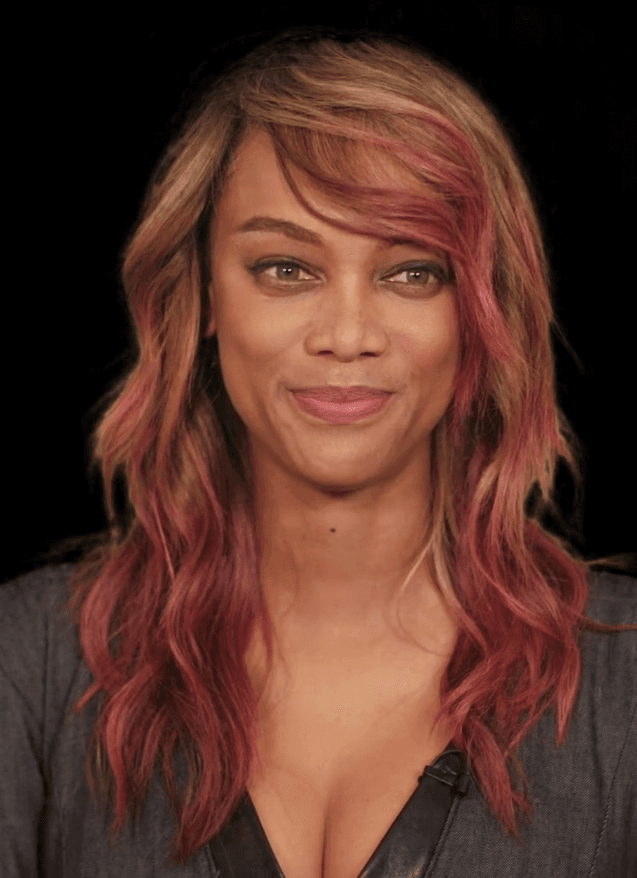
American · Arts · Sports · Activism
Tyra Banks
December 4, 1973 – present
Early Life and Background
Tyra Lynne Banks was born on December 4, 1973, in Inglewood, California, part of the greater Los Angeles area.[1][2][3] She was raised in a middle-class African American family; her mother, Carolyn London, worked as a medical or NASA-associated photographer and later served as her manager, while her father, Donald Banks, was a computer consultant.[3][9][11] Banks has one older brother, Devin.[9] Her parents divorced when she was six, but both remained involved in her upbringing, and she has frequently emphasized the stability and love she received at home.[11]
Growing up in Los Angeles during the late 1970s and 1980s, Banks was exposed to the entertainment and fashion industries but did not initially see herself as a future supermodel. She has spoken about being teased for her height and appearance as a child, experiences that later informed her focus on self-esteem and body positivity.[3] Banks attended Immaculate Heart High School, an all-girls Catholic school in Los Angeles, where she was a strong student and participated in extracurricular activities while beginning to explore modeling opportunities.[9]
As a teenager, Banks experienced a rapid growth spurt and began to attract attention from modeling scouts. Encouraged by her mother, she pursued professional modeling while still in high school. This early support from her family, combined with her proximity to Los Angeles’s media infrastructure, created a foundation for a career that would soon become global.[3][11]
Career Beginnings in Modeling
Banks formally entered the modeling industry at age 15, signing with Elite Model Management in the late 1980s.[1][3][5] She started with commercial work and teen modeling, appearing in catalogues and local campaigns. Initially, she faced rejection from some agencies that considered her look unconventional or doubted the marketability of a Black model in high fashion, reflecting the limited opportunities available to women of color in the era.[3][11]
In 1991, after completing high school, Banks moved to Paris to focus on high-fashion modeling.[3][11] Her debut season on the Paris runways was a breakthrough: sources report that she was booked for an unusually high number of shows, sometimes described as 25 in her first week, for major designers.[3][11] She walked for houses such as Chanel, Valentino, and Oscar de la Renta, and quickly gained a reputation for her runway presence and versatility.[3][11]
By the early 1990s, Banks was appearing in leading fashion magazines in Europe, including Elle, Vogue, and Harper’s Bazaar, and shooting campaigns for brands such as Yves Saint Laurent.[1][2][3] In 1993, she signed a prominent contract with CoverGirl cosmetics, becoming one of the company’s visible Black spokesmodels at a time when major beauty brands were under pressure to diversify their advertising.[1][2][3] This contract expanded her recognition in the United States and underscored the commercial appeal of her image.
During this period, Banks was often described as straddling the line between high fashion and commercial modeling, able to appear in couture shows while also selling mass-market products. Her strategic decision to shift focus from Paris runways to the broader U.S. commercial market would become central to her later success as a household name.[3][11]
Rise to Supermodel Status and Barrier-Breaking Firsts
The mid-1990s saw Banks transition from successful model to international supermodel, marked by a series of historic "firsts" that significantly advanced representation for Black women in fashion and popular media.
In February 1996, she became the first African American woman to appear on the cover of GQ magazine, a men’s lifestyle publication that had long featured predominantly white cover subjects.[1][6] The February 1996 issue placed Banks at the center of a platform shaped by male consumer culture, challenging assumptions about who could be an aspirational figure in such media.
That same month, she appeared on the cover of the Sports Illustrated Swimsuit Issue alongside model Valeria Mazza, becoming the first Black model ever featured on the Swimsuit cover.[1][3][13] The Swimsuit Issue was one of the most visible modeling venues in American media, and Banks’s presence on the cover marked an important step toward diversifying the images associated with beach beauty and desirability.
In June 1996, she became the first African American model to appear on the cover of the Victoria’s Secret catalog, a widely distributed catalogue that helped define mainstream portrayals of lingerie and feminine glamour.[1][2][6][7] Her selection for this cover indicated that the brand saw her not only as photogenic but as central to its marketing, a notable change in an industry that had historically sidelined women of color in intimate-apparel advertising.
In February 1997, Banks’s influence grew further when she appeared alone on the cover of the Sports Illustrated Swimsuit Issue, making her the first Black woman to have a solo Swimsuit cover.[1][3][13] Shot in the Bahamas, the cover became an iconic image of the late 1990s and is frequently cited as a milestone in racial representation within sports and fashion media.
That year, Banks’s achievements were formally recognized when she received VH1’s "Supermodel of the Year" award, affirming her status among the top tier of international models.[1] She also became part of the original group of Victoria’s Secret Angels, signing a contract that would make her one of the brand’s marquee faces and wearing the high-profile Diamond Dream Fantasy Bra, valued at around $3 million.[1][2][6] From 1997 to 2005, she served as a Victoria’s Secret Angel, appearing in fashion shows and campaigns that reached worldwide audiences.[2][6][7]
By the late 1990s, Banks had appeared on numerous magazine covers, including multiple issues of Sports Illustrated, and had become one of the highest-earning models globally.[4] Her barrier-breaking covers and contracts not only solidified her supermodel status but also contributed to the broader inclusion of Black women in high-visibility fashion roles.
Transition to Television and Acting
Parallel to her modeling work, Banks pursued opportunities in film and television. In the mid-1990s, she took acting classes and began to appear in small roles, including a notable part in John Singleton’s film "Higher Learning" (1995), where she played a college student.[11] She went on to appear in the popular sports film "Love & Basketball" and later in the television movie "Life-Size" (2000), in which she starred as a doll who comes to life opposite Lindsay Lohan.[3][9]
Banks also had recurring roles on television series, including the sitcom "The Fresh Prince of Bel-Air", where she played Jackie Ames, and guest appearances on various shows.[1][3] These roles allowed her to test her talents beyond modeling and helped build name recognition with audiences who knew her primarily from fashion imagery.
Throughout the late 1990s and early 2000s, Banks regularly appeared as a guest on talk shows and variety programs, where her charisma and ability to connect with viewers became evident. These experiences laid groundwork for her later work as a television host and producer.[2][3]
America’s Next Top Model and Television Production
In 2003, Banks created and began hosting the reality television series "America’s Next Top Model" (ANTM), which followed aspiring models as they competed for a modeling contract and other prizes.[1][2][3] Serving as both host and executive producer, she structured the show as a combination of competition, education, and personal development, often emphasizing themes of confidence, professionalism, and resilience.
"America’s Next Top Model" quickly became a ratings success and expanded into a global franchise with adaptations in numerous countries. The show ran in the United States from 2003 to 2015, then returned for additional cycles in 2017–2018
Through ANTM, Banks became one of the few women—and one of the few women of color—to serve simultaneously as creator, executive producer, and on-screen host of a long-running reality competition series. The show’s influence on popular culture and the modeling profession was substantial; many contestants went on to careers in fashion and entertainment, and the format helped cement the idea of modeling as a narrative-driven, televised competition.[2][3] In 2005, Banks launched her daytime talk show, "The Tyra Banks Show", which aired until 2010.[2][3] The program focused on issues such as body image, relationships, self-esteem, and popular culture, often featuring a mix of celebrity interviews, expert commentary, and audience participation. Banks positioned herself as a relatable host who shared personal stories, including her experiences with weight fluctuation and industry pressures. The show received critical recognition, earning two Daytime Emmy Awards for Outstanding Talk Show Informative.[2][3] Its success demonstrated Banks’s ability to transition from modeling to hosting and producing, and it widened her influence beyond fashion, reaching viewers who may not have followed her modeling career. During this period, Banks announced her retirement from runway and high-fashion modeling, choosing to focus on television production and other entrepreneurial ventures beginning around 2005.[2] She continued to appear in campaigns and projects but increasingly defined herself as a media mogul and businesswoman rather than solely as a model. Banks expanded her career into writing and entrepreneurship in the 2010s. She co-authored a book titled "Tyra’s Beauty Inside & Out" and later published a young adult fantasy novel, "Modelland", inspired by her experiences in the modeling world.[15] As an author, she used fiction and self-help formats to explore themes of identity, confidence, and the pressures of beauty culture. In 2014, Banks launched her own cosmetics line, TYRA Beauty, positioning it as a brand focused on empowerment and accessibility.[2][3][13] The line leveraged her extensive experience with makeup and photographic work, and she promoted it through direct selling and digital platforms. TYRA Beauty reinforced her status as a beauty entrepreneur and reflected her ongoing interest in expanding the definition of beauty. Beyond cosmetics, Banks has described herself as the CEO of her own company, often referred to as TYInc., and has pursued various business ventures, including production companies and branded projects.[5][15] She has also engaged in educational initiatives, including involvement with programs at Harvard Business School’s Executive Education, further underlining her focus on business leadership. After the initial run of "America’s Next Top Model," Banks continued to appear on television as a host and personality. In 2017, she took over hosting duties on the talent competition series "America’s Got Talent", succeeding Nick Cannon.[3] Her role on the show showcased her ability to manage large live productions and interact with a wide variety of contestants and performances. Banks also returned to acting, reprising her role as Eve in "Life-Size 2" (2018), the sequel to the 2000 television movie.[9] She remains a frequent guest on talk shows and special programs, where she discusses topics ranging from entrepreneurship to body image and representation in media. Her media presence extends across social platforms, where she engages with fans and promotes her projects. Official accounts, including verified Instagram and X/Twitter profiles, contribute to her ongoing role as a public figure in discussions of beauty, fashion, and empowerment.[9] Over the course of her career, Banks has received numerous awards and honors. In addition to the VH1 "Supermodel of the Year" award in 1997, she has been recognized by industry and media institutions for her work in television and modeling.[1] Her talk show, "The Tyra Banks Show," earned two Daytime Emmy Awards for Outstanding Talk Show Informative, underscoring the program’s impact on daytime television and its success in addressing social and personal issues in an accessible format.[2][3] In 2008, Banks was named one of Time magazine’s "100 Most Influential People in the World", a distinction that reflected her influence not only in fashion but also in television, business, and cultural conversations about beauty and self-esteem.[2][3] She has also appeared on various lists and features highlighting powerful women in entertainment and business. These recognitions collectively illustrate how Banks moved beyond the traditional confines of modeling to become an influential producer, host, and entrepreneur, with a public persona centered on empowerment and diversity. Banks has generally kept aspects of her personal life private, but certain relationships and family developments have been publicly noted. She dated NBA player Chris Webber from 2001 to 2004, a relationship that attracted media attention due to both partners’ prominence.[9] In 2016, Banks became a mother with the birth of her son, York, via surrogacy with her then-partner, Norwegian photographer Erik Asla.[9] She has spoken about the emotional journey of infertility and the decision to use surrogacy, framing her experience as part of broader conversations about modern parenthood and women’s reproductive choices. Throughout her career, Banks has emphasized the importance of family support and self-care, often referencing her close relationship with her mother, who played a significant role in managing and guiding her career.[3][11] She has also been active in philanthropic and advocacy initiatives related to self-esteem, education, and empowerment for girls and young women, though many of these efforts are informal or tied to her media projects rather than standalone organizations.[15] Tyra Banks’s legacy in women’s and Black history rests on her dual role as a barrier-breaking supermodel and a television and business innovator. Her firsts—being the first African American woman on the covers of GQ and the Sports Illustrated Swimsuit Issue, and the first African American model on the Victoria’s Secret catalog cover—challenged entrenched racial boundaries in some of the most visible arenas of commercial fashion and men’s media.[1][2][3][6][7] These achievements helped broaden mainstream conceptions of beauty, demonstrating that Black women could be central, not peripheral, figures in high-profile marketing. Her long tenure as a Victoria’s Secret Angel and her status as one of the world’s highest-earning models in the late 1990s and early 2000s further reinforced the commercial viability and cultural influence of Black supermodels.[2][4][6] In television, Banks’s creation and leadership of "America’s Next Top Model" contributed to the evolution of reality competition formats and expanded opportunities for aspiring models from diverse backgrounds. As one of the few women of color to serve as creator, executive producer, and host of a major long-running series, she helped shift expectations about who could occupy positions of power behind and in front of the camera.[1][2][3] Her talk show and public advocacy around issues such as body image, self-esteem, and women’s empowerment have had lasting influence on how these topics are discussed in mainstream media. Banks often used her own experiences—ranging from weight changes to industry pressures—to illustrate the challenges facing women and girls, and she promoted messages of self-acceptance and resilience.[2][3][15] As an entrepreneur and author, Banks extended her impact into business and literature, using beauty products and narrative storytelling to further her mission of expanding the definition of beauty. Her recognition by Time magazine and other institutions underscores the breadth of her influence across multiple domains.[2][3] Within the broader context of women’s history, Tyra Banks stands as a pivotal figure who transformed personal success in modeling into platforms for cultural change, particularly around race, beauty standards, and women’s leadership in media. Tyra Banks remains active in media and business. After her tenure on "America’s Got Talent" and the revival cycles of "America’s Next Top Model," she has continued to explore new projects in television, digital media, and entrepreneurship.[3] She maintains a public profile through social media and occasional onscreen appearances, including revisiting her role in "Life-Size 2" and participating in special events and interviews.[3][9] As of the most recent sources, Banks is alive and continues to be cited as an influential figure in fashion, television, and business. Her ongoing work reflects a sustained commitment to issues of representation, empowerment, and innovation in the industries she helped to transform.[1][2][3]The Tyra Banks Show and Talk-Show Career
Writing, Entrepreneurship, and TYRA Beauty
Later Television Work and Media Presence
Awards, Honors, and Recognition
Personal Life
Legacy and Historical Impact
Later Life and Current Activities
Dated achievements
7 indexed.
- Dec041973Activism
Birth of Tyra Banks
Tyra Lynne Banks was born in Inglewood, California, United States.
View details Wikipedia - Feb011996Arts
First African American woman on the cover of GQ
Tyra Banks became the first African American woman on the cover of GQ magazine.
View details