← All women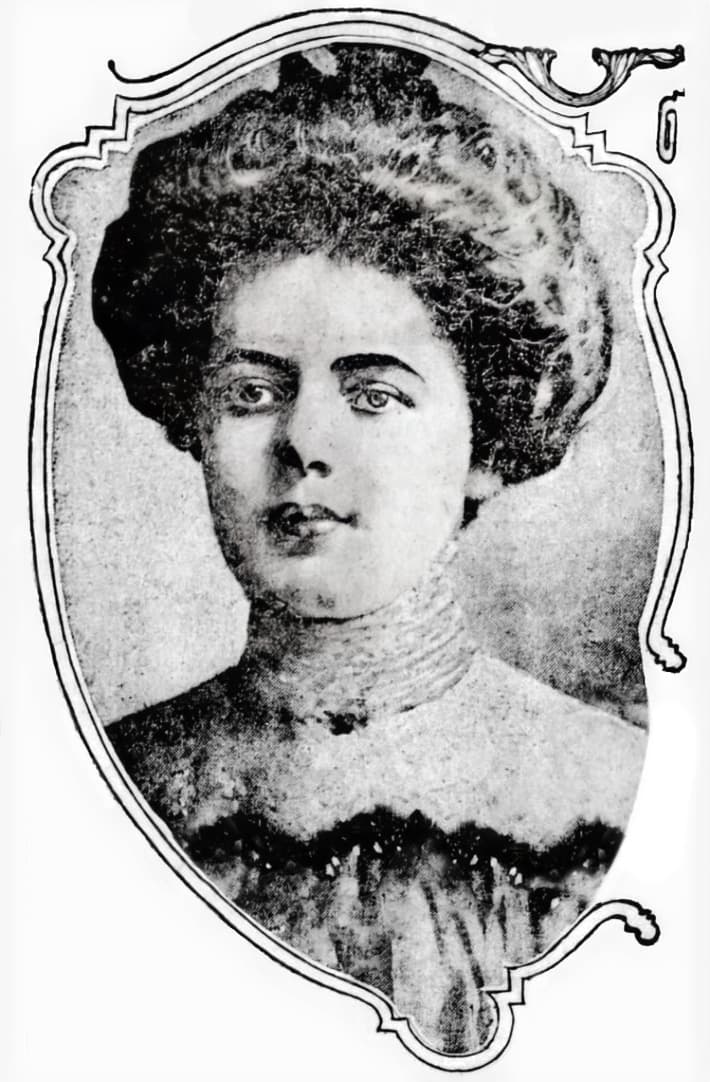
Irish, American · Medicine
Typhoid Mary Mallon
September 23, 1869 – November 11, 1938
Early Life and Background
Mary Mallon, later infamous as "Typhoid Mary," was born on 23 September 1869 in Cookstown, County Tyrone, Ireland, then part of the United Kingdom of Great Britain and Ireland.[1][8][4] She grew up in a rural, largely Catholic community marked by economic hardship and emigration pressures in the decades following the Great Famine.[18] Little documentary evidence survives about her parents, siblings, or formal education, but historians broadly agree that she came from a modest, working-class background and received limited schooling.[3][8]
Like many Irish girls of her generation, Mallon likely learned domestic skills—cleaning, laundry, and cooking—that prepared her for service in middle- and upper-class households.[5] These gendered skills shaped her later trajectory in the United States, where domestic service was one of the few respectable and accessible occupations for immigrant women.
As a teenager, Mallon joined the large wave of Irish emigrants leaving for North America. Sources differ slightly on the year of her migration, placing it in the early 1880s when she was around 15 years old.[3][8][17] She arrived in New York City, a major destination for Irish immigrants, and settled into the growing Irish neighborhoods whose residents supplied a substantial proportion of the city’s domestic labor force.
Immigration and Career Beginnings
In New York, Mallon initially worked as a domestic servant, performing household tasks for middle- and upper-class families.[8][15][17] Over time, she developed a reputation as an excellent cook, a skill highly valued in affluent homes. By about 1900, she was employed primarily as a cook for wealthy families in Manhattan and on Long Island, moving from household to household on a temporary or seasonal basis.[1][8][15]
This period—roughly 1900 to 1907—would later become central to public health investigations. Epidemiologists and sanitary engineers reconstructed her employment history and linked her to numerous outbreaks of typhoid fever in households that otherwise appeared hygienic and well supplied with clean water.[1][3][10][16]
Typhoid fever, caused by the bacterium Salmonella Typhi, was a serious systemic infection characterized by high fever, abdominal symptoms, and, in severe cases, intestinal hemorrhage or perforation. In the early 20th century, typhoid was endemic in many urban centers, but its occurrence among wealthy families with good sanitation confounded health officials, who initially suspected contaminated water or shellfish rather than household staff.[3][18]
Outbreaks and Investigation
Between 1900 and 1907, at least seven documented typhoid outbreaks in and around New York City were eventually linked to households where Mary Mallon had worked as a cook.[1][3][8][15] One of the most studied episodes occurred in the summer of 1906, when Mallon was employed by banker Charles Henry Warren at a rented house in Oyster Bay, Long Island.[5][6]
Within weeks of her arrival, several members of the Warren household developed typhoid fever. The property’s owner, concerned about liability, hired sanitary engineer George A. Soper to investigate. Soper initially suspected clams or contaminated water but found no evidence of environmental contamination. Instead, he noted a pattern: outbreaks seemed to follow the employment of a particular cook.[3][6][18]
Soper tracked Mallon’s recent positions and discovered similar outbreaks in other wealthy families. He concluded that she was the common factor, though she appeared healthy and denied ever being ill with typhoid. This led him to suspect that she might be a "healthy" carrier—a concept still poorly understood at the time.[3][6][18]
Soper approached Mallon to request specimens for bacteriological testing, but she refused, reportedly reacting with hostility to the accusation that she was spreading disease.[3][12] Unable to secure her cooperation, Soper turned to the New York City Department of Health. Under its broad legal powers to protect public welfare, the department dispatched physician Dr. Sara Josephine Baker and police officers to apprehend Mallon and obtain samples.[3][12]
Discovery as a Healthy Carrier
After her arrest, stool and urine samples from Mallon were cultured at the department’s laboratory; many tested positive for Salmonella Typhi.[3][6][18] She thus became the first person in North America to be identified and analyzed as a healthy carrier of typhoid bacilli, and by late 1907 she was widely recognized as the first asymptomatic typhoid carrier in the United States.[1][3][6][16][18]
Medical reports estimated that Mallon had infected at least 47–51 people and possibly more, with three to five confirmed deaths, though numbers vary by source.[1][3][15][20] Her case provided vivid evidence that apparently healthy individuals could harbor and transmit pathogenic bacteria, fundamentally altering understandings of infectious disease epidemiology.
Physicians hypothesized that her gallbladder was chronically infected with typhoid bacilli. Surgical removal (cholecystectomy) might have eliminated her carrier state, but at the time such operations carried high risk and Mallon refused the procedure.[3][12][18] Her distrust of medical authorities grew as she was treated more as a menace than a patient, a dynamic shaped by class and gendered power imbalances.
First Quarantine on North Brother Island
On 19 March 1907, following her identification as a carrier, the Department of Health forcibly moved Mallon to the isolation facilities on North Brother Island, a small island in the East River used for quarantine.[3][12] There she was housed in a cottage adjacent to Riverside Hospital and subjected to regular medical monitoring and repeated stool cultures.
During this first quarantine, which lasted nearly three years, Mallon remained physically healthy but deeply resentful. She insisted that she had never had typhoid fever and therefore could not be responsible for the outbreaks. She viewed her detention as unjust imprisonment and resisted efforts by physicians to persuade her to undergo gallbladder surgery.[3][9][12]
Her case quickly became a public fascination. Newspapers reported on "Typhoid Mary" and framed her as a stubborn woman endangering society by refusing medical advice.[13][20] By June 1908, the nickname "Typhoid Mary" was widely used in the press and soon entered common discourse as a term for someone who spreads disease or harm to others.[20] The coverage often relied on stereotypes about immigrant, working-class women and cast Mallon as a villain rather than as a subject of nascent scientific understanding.
Legal Challenge and Conditional Release
In 1909, Mallon sought legal redress. With the assistance of a lawyer, she petitioned the courts for a writ of habeas corpus, arguing that her indefinite detention without trial violated her constitutional rights.[3][9] Her case sparked public debate over the balance between individual liberty and the state’s responsibility to protect public health.
The court ultimately upheld the Department of Health’s authority, ruling that the city’s police powers permitted quarantine of a carrier to prevent disease spread. Nevertheless, the controversy prompted a reconsideration of her situation within the health department.[3][9] In early 1910, the new health commissioner, Dr. Ernst J. Lederle, evaluated her case and decided to release her under strict conditions. On 19 February 1910, Mallon left North Brother Island after signing an affidavit promising never again to work as a cook and to observe hygienic precautions.[3][13]
Following her release, Mallon attempted to support herself as a laundress and domestic worker, but these jobs were lower paid and less stable than cooking. Economic pressures, combined with the relative invisibility of her carrier status outside the health department, would later draw her back into kitchen work, despite the prohibitions.
Return to Cooking and Second Quarantine
In the years after 1910, Mallon struggled to maintain employment that did not involve cooking.[9][14] Eventually she resumed work as a cook under the alias "Mary Brown", taking positions in institutions where her history was unknown.[1][5] Her skills and experience made kitchen work the most viable way to earn a living.
In 1915, an outbreak of typhoid fever occurred among staff and patients at Sloan Maternity Hospital in New York.[3][8] Public health investigators, seeking the source, discovered that the hospital’s cook was Mary Mallon. The revelation that she had violated the conditions of her release and returned to cooking was treated as a grave breach of public trust.
On 27 March 1915, authorities arrested Mallon and took her back to North Brother Island, where she was placed in second quarantine.[3][8] This time, officials resolved that she would remain there permanently. For the next 23 years, until her death in 1938, Mallon lived in enforced isolation on the island.
While confined, she worked intermittently in the hospital’s laboratory and kitchen, helping with bacteriological tests and food preparation under supervision.[9][17] She reportedly adapted to island life to some extent, but remained distrustful of health officials and seldom expressed remorse, maintaining that she could not accept responsibility for infections she did not feel.
Personal Life
Documented details of Mallon’s personal life are sparse. She never married and had no known children.[1][8] She is believed to have had a long-term relationship with an alcoholic man named "Mr. Hogan" or "Hogan," with whom she lived before her first quarantine; some accounts suggest he died while she was confined.[9][14] Her social circle largely consisted of fellow immigrants and employers, though isolation on North Brother Island severely limited her contacts.
Contemporary descriptions portray her as strong-willed, proud of her cooking skills, and resistant to authority, traits that both reflected and challenged gender norms for working-class women of her era.[9] She maintained her innocence throughout her life, insisting that her detention was unjust and that she was being scapegoated by elites and officials.
Later Life on North Brother Island
During her prolonged second quarantine, Mallon lived in a small cottage on North Brother Island, near Riverside Hospital. She remained under the constant supervision of medical staff and public health officials.[3][9] Over the years, her case became less visible in the press, but she remained a figure of interest in medical circles as a classic example of an asymptomatic carrier.
On 15 December 1932, Mallon suffered a paralytic stroke, which left her bedridden and largely incapacitated.[1][8] She spent her final years in the island’s hospital, dependent on institutional care. Despite her declining health, her carrier status remained a concern; she continued to be regarded as a potential risk if ever released.
Mallon died on 11 November 1938 on North Brother Island at the age of 69.[1][8] An autopsy reportedly found live typhoid bacilli in her gallbladder, supporting the longstanding hypothesis that chronic infection of that organ had sustained her carrier state.[1][3] She was buried in the Bronx, and her death drew limited public attention compared to the sensational coverage of her earlier years.
Awards, Honors, and Contemporary Recognition
Mary Mallon did not receive awards or honors in the conventional sense. Instead, her "recognition" took the form of notoriety. The nickname "Typhoid Mary" became globally known and was often used pejoratively.[13][20] She was featured in medical journals, public health reports, and popular magazines as a cautionary tale of carrier-mediated transmission.
In the decades following her death, scholars began to reconsider her story, exploring the ethical dimensions of her treatment and situating her case within broader histories of immigration, gender, and civil liberties. Modern analyses often frame her as both a crucial epidemiological case and a victim of coercive public health practices.[3][9][14]
Scientific and Historical Significance
Mallon’s most important historical contribution lies in her role as the first documented asymptomatic carrier of typhoid fever in North America and the United States.[1][3][6][16][18] Her case provided early, concrete evidence that apparently healthy individuals could transmit infectious diseases, spurring the development of the scientific concept of the "healthy carrier".
This concept profoundly influenced epidemiology and public health practice. After Mallon’s identification, health departments increasingly sought carriers during outbreak investigations, used bacteriological testing to trace transmission chains, and implemented regulations targeting food handlers and domestic workers.[3][18] Her story contributed to more systematic surveillance of typhoid, improved sanitation, and later adoption of vaccination campaigns.
At the same time, Mallon’s prolonged quarantine exposed the ethical and legal challenges of managing carriers. She had committed no criminal act, yet spent most of her adult life confined. Her case raised questions about due process, informed consent, access to medical options, and the fairness of placing heavy burdens on individuals—especially those with limited economic and social power—to protect public health.[3][9][14]
Modern scholars note parallels between Mallon’s experience and later responses to other infectious diseases, including HIV and COVID-19, particularly around stigma, the figure of the "super-spreader," and the tension between individual autonomy and collective safety.[18][20] Her name is still invoked in debates about asymptomatic transmission and quarantine, underscoring the enduring relevance of her case.
Gender, Class, and Immigration in Her Story
Mary Mallon’s biography is deeply shaped by gender, class, and immigrant status. As an Irish immigrant woman working in domestic service, she occupied a position of low social power and high visibility in households. Her cooking, a feminized and undervalued form of labor, became the pathway for bacterial transmission and thus the focus of official scrutiny.[5][15]
Public narratives about "Typhoid Mary" drew on stereotypes of Irish immigrants as ignorant or reckless and of working-class women as unsanitary. She was portrayed as stubbornly refusing medical advice and endangering respectable families, reinforcing class and ethnic hierarchies in the discourse of disease.[9][14] Yet these portrayals often ignored the structural factors that limited her choices: the lack of alternative employment, the risks of surgery, and the absence of meaningful legal representation.
Her case illustrates how coercive public health measures have disproportionately targeted marginalized groups, particularly women in care and service roles. Domestic workers and food handlers—frequently immigrant women—became focal points of regulation and surveillance, even when environmental and infrastructural causes of disease were more widespread.[3][10][16]
Legacy and Cultural Impact
Mary Mallon’s legacy is multifaceted. Scientifically, she is remembered as the paradigmatic asymptomatic carrier, whose case helped establish fundamental principles of infectious disease transmission and control.[1][3][18] Public health textbooks and articles continue to cite her as an early example of carrier-mediated outbreaks.
Culturally, the term "Typhoid Mary" has entered the English language as a metaphor for a person who spreads something undesirable—disease, rumors, or trouble—often without obvious signs. The phrase has appeared in literature, journalism, and popular media, sometimes detached from its original historical context.[13][20]
More recently, historians and ethicists have emphasized the tragedy of her life: an immigrant woman whose body became the locus of fear and experimentation in an era before comprehensive social protections or clear legal frameworks for quarantine. Works such as Judith Walzer Leavitt’s analysis, as well as essays from institutions like the Smithsonian and academic journals, encourage readers to see Mallon as both a crucial figure in medical history and a person caught in the crosscurrents of science, law, and prejudice.[3][9][12][14]
In women’s history, Mallon stands as a complex figure: neither heroine nor simple villain, but an example of how the lives of working-class women can shape—and be constrained by—major developments in science and public policy. Her story remains central to contemporary discussions of how societies respond to infectious threats, distribute risks and responsibilities, and remember those whose lives become case studies.
Assessment
Mary Mallon’s biography illuminates early 20th-century struggles to understand and manage infectious disease in modern cities. As an Irish immigrant cook, she unwittingly stood at the forefront of epidemiological discovery. As "Typhoid Mary," she became a symbol of both scientific progress and ethical failure, confined for decades in the name of public health.
Her life underscores enduring questions: How should societies treat individuals who pose a health risk without being ill? How do gender, class, and ethnicity shape who is blamed and who is protected? And how can public health balance the imperative to prevent harm with respect for the rights and dignity of those under its authority?
Through the lens of Mary Mallon’s experience, historians and public health experts continue to grapple with these issues, making her a pivotal figure in the almanac of women’s history and in the global history of medicine.
Dated achievements
10 indexed.
- Sep231869Medicine
Birth of Mary Mallon
Mary Mallon was born in Cookstown, County Tyrone, Ireland on September 23, 1869.
View details Mary Mallon - Wikipedia - Sep011907Medicine
First identified asymptomatic typhoid carrier in the United States
Mary Mallon was identified as the first asymptomatic typhoid carrier in the United States by September 1, 1907.