← All women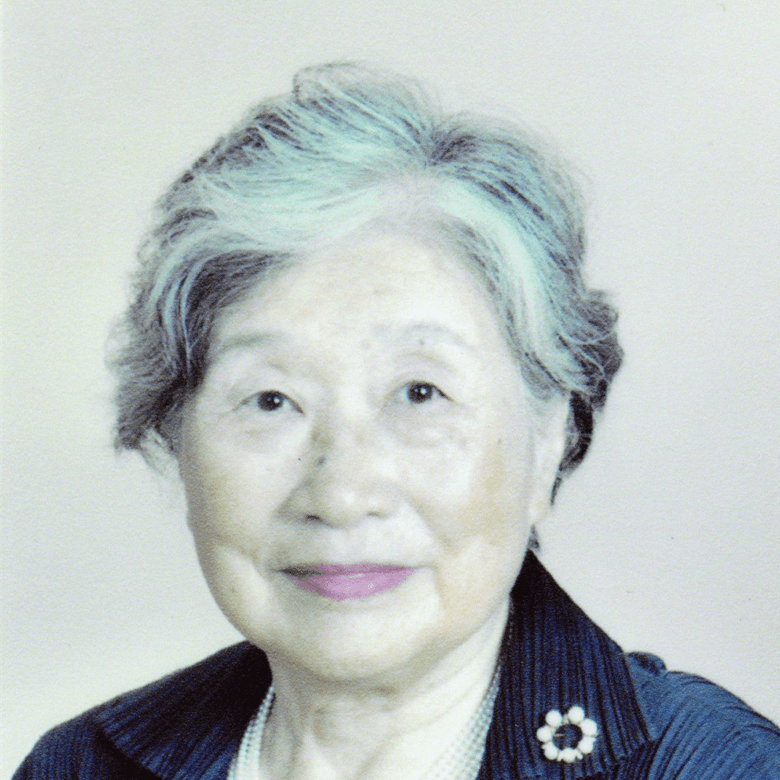
Japanese · Science
Tsuneko Okazaki
June 7, 1933 – present
Early life and education
Tsuneko Okazaki (born 7 June 1933) is a Japanese molecular biologist best known for her role in the discovery of the Okazaki fragments, the short DNA segments involved in discontinuous replication of the lagging strand. She was born in Nagoya, Aichi Prefecture, Japan, and biographical accounts consistently place her early life in the city and region where she would later study and work. Sources also note that she was born Tsuneko Hara and later used the surname Okazaki after marriage.
Okazaki’s childhood fell during the difficult years surrounding the Second World War, a period when educational paths for girls in Japan were still constrained by social expectations and by the disruptions of wartime life. Despite those conditions, she pursued science and entered Nagoya University, an institution that would remain central to her career. Later biographical accounts describe her as part of the first generation of Japanese women to benefit from the postwar expansion of educational opportunities, which made university study more accessible to women than it had been before the war.
She graduated from the Faculty of Science at Nagoya University in 1956 and met Reiji Okazaki there. The pair married and became scientific collaborators as well as partners in life. Okazaki later earned a doctorate in biology from Nagoya University, and sources describing her academic trajectory consistently connect her education to the beginnings of her lifelong research on DNA synthesis and replication. Her early years in the university environment shaped both her scientific interests and her ability to persist in a field that was still dominated by men.
Career beginnings and research partnership
After her studies, Okazaki began a research career focused on molecular biology and DNA synthesis. Accounts of her early work describe experiments involving frog eggs and sea urchins, model systems that were widely used in developmental and molecular research because they offered large, accessible cells and active DNA synthesis. These studies helped build the technical foundation that later allowed the Okazakis to investigate DNA replication more directly.
Tsuneko and Reiji Okazaki developed their research together in an era when resources for molecular biology could be limited and when Japanese scientists often had to build equipment, techniques, and collaborations under constrained conditions. Later retellings of their work emphasize that the pair did not have abundant funding or high-quality materials, yet they were able to produce an insight that altered the understanding of how DNA is copied. Their collaboration became one of the most famous scientific partnerships in Japanese biology.
By the 1960s, the Okazakis were pursuing the question of how the two strands of DNA are replicated. The problem was especially challenging because the two strands run in opposite directions, making it difficult to explain how the lagging strand could be copied continuously. Their work gradually led them to propose that replication on that strand occurs discontinuously, in short segments later joined together. That insight became the core of their enduring scientific legacy.
Discovery of Okazaki fragments
In 1968, Tsuneko and Reiji Okazaki published the work that identified what are now called Okazaki fragments. Their research showed that DNA replication on the lagging strand proceeds in short pieces rather than as one continuous chain. This was a foundational advance in molecular biology and genetics because it resolved a major conceptual problem in the mechanism of DNA copying.
The discovery mattered not only because it explained a specific biochemical process but also because it changed the way scientists understood the architecture of replication itself. Instead of a simple continuous synthesis, the replication machinery had to be understood as a coordinated process in which short fragments are made and then joined. That concept became a standard part of textbooks and laboratory teaching, and the fragments themselves became permanently associated with the Okazaki name.
Although the research is often credited jointly to Tsuneko and Reiji Okazaki, Tsuneko’s role was central to the experimental and intellectual development of the work. The achievement is especially notable because it came from a woman working in a mid-twentieth-century scientific culture in which women were still underrepresented in leading research positions. The discovery remains one of the best-known examples of Japanese contribution to global molecular biology.
Academic career and barrier-breaking appointment
Okazaki continued her scientific work after the landmark replication studies and remained active in research and teaching for decades. One of the most important milestones in her career came in 1983, when she became the first female full professor at Nagoya University. This appointment marked a barrier-breaking first in Japanese higher education.
The significance of that promotion went beyond a personal career achievement. Senior academic ranks at major universities had long been overwhelmingly male, and the appointment of a woman to the rank of full professor at Nagoya University reflected a slow but important transformation in institutional norms. Okazaki’s elevation demonstrated that a woman scientist could attain the highest faculty rank on the basis of internationally recognized research and scholarly leadership.
Her presence at the university also had symbolic value for students and junior researchers, especially women who could see in her career a model of scientific accomplishment and persistence. The appointment connected her individual excellence to a wider history of women gaining visibility and authority in Japanese academia.
Later work, institutions, and family life
Sources describing Okazaki’s later career note that she continued to work in Japanese science after the death of her husband Reiji Okazaki in 1975. Biographical summaries also identify her as associated with Fujita Health University later in life and, in more recent institutional accounts, as a distinguished professor emeritus there. These accounts present her as an enduring figure in Japanese molecular biology rather than as a scientist whose major contributions ended with the 1968 discovery.
Publicly available biographical material indicates that she had children and continued her scientific work while balancing family life, although the surviving sources consulted here provide limited detail about her private life beyond her marriage to Reiji Okazaki and their collaborative partnership. That partnership was historically important in itself: it combined intellectual and personal life in a way that helped shape one of the key discoveries of twentieth-century biology.
Okazaki’s life also illustrates the experience of women scientists who worked through a period when domestic and professional expectations were often difficult to reconcile. Her ability to maintain a long research career, raise a family, and achieve major academic distinction reflects both personal determination and the gradual expansion of opportunities for women in Japanese science.
Awards and honors
In 2000, Okazaki received the L’Oréal-UNESCO Award for Women in Science, an international prize that highlights the achievements of outstanding women researchers. The award acknowledged the scientific importance of her work and brought renewed visibility to her role in the discovery of Okazaki fragments.
She was later awarded the Order of the Sacred Treasure in 2008, one of Japan’s national honors, and named a Person of Cultural Merit in 2015. That same year, Nagoya University established the Tsuneko and Reiji Okazaki Award to honor the couple’s legacy. In 2021, she received the Order of Culture, one of the highest honors in Japan for contributions to scholarship and culture.
Taken together, these honors show the long-term recognition of Okazaki’s influence. They also reflect the unusual arc of a scientist whose signature discovery became foundational to an entire field and whose personal career helped open doors for later generations of women in Japanese academia.
Legacy
Tsuneko Okazaki’s legacy rests on both scientific and historical grounds. Scientifically, her name is permanently attached to the Okazaki fragments, a core concept in the understanding of DNA replication. Historically, she stands as one of the most significant Japanese women scientists of the twentieth and twenty-first centuries, particularly because she broke a major academic barrier by becoming the first female full professor at Nagoya University.
Her career has been repeatedly used in educational and institutional settings to illustrate the importance of women’s contributions to science. She is also cited as an example of how collaborative research, persistence under limited conditions, and intellectual rigor can produce discoveries that transform an entire discipline. The fact that her work remains standard material in biology education underscores the durability of her impact.
Okazaki’s life is therefore important not only as a story of discovery but also as a story of representation. She helped reshape molecular biology while demonstrating that women could occupy the highest levels of scientific authority in Japan. That dual legacy—scientific and social—makes her one of the defining figures in modern women’s history and the history of science.
Dated achievements
8 indexed.
- Jun071933Science
Birth of Tsuneko Okazaki
Birth of Tsuneko Okazaki in Nagoya, Japan, later a pioneering molecular biologist known for Okazaki fragments.
View details Wikipedia: Tsuneko Okazaki - Jan011968Science
Publication on discontinuous DNA replication
Publication of the work that revealed discontinuous DNA replication and the Okazaki fragments.