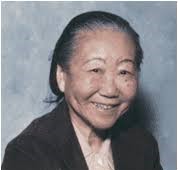
Birth of Tsai-Fan Yu in Shanghai, China, on 24 October 1911.
On 24 October 1911, Tsai-Fan Yu was born in Shanghai, China, into a society where women’s access to higher education and professional careers—especially in medicine—was still rare and heavily constrained.
Her birth in early twentieth‑century Shanghai placed her at the intersection of profound political and social change: the last years of the Qing dynasty, the Republican era, and later war and revolution in China. Growing up in this context, Yu pursued schooling with unusual determination, ultimately winning a coveted scholarship to the prestigious Peking Union Medical College, which was modeled on leading Western medical schools.
This birth date marks the beginning of the life of a woman who would become a pioneering Chinese‑American physician and researcher, internationally recognized for transforming the understanding and treatment of gout and related metabolic diseases. Her later achievements—developing modern gout therapies and breaking gender barriers in academic medicine—gain additional historical resonance when set against the obstacles faced by girls born in 1911 Shanghai.
In women’s history, Yu’s birth is significant not simply as a biographical marker, but as the starting point of one of the twentieth century’s most influential careers in rheumatology and internal medicine, demonstrating how a woman from early‑century China could shape global standards of care in a major field of clinical practice.
Images