← All women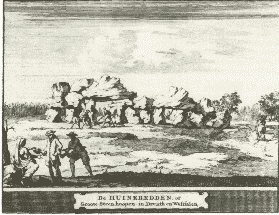
Dutch · Literature · Arts
Titia Brongersma
1650 – 1700
Early life and background
Titia Brongersma was a Frisian poet and antiquarian active in the late seventeenth-century Dutch Republic. Standard reference works agree that she was born in Dokkum, a town in Friesland, around 1650, although no baptismal record has yet been identified and her exact birth date remains unknown.[2][4][5] Her parents are named as Bronger Wijtses, a surgeon (chirurgijn), and Aeltien Koertsdochter, placing her within an urban, middling professional household rather than among the rural poor or high nobility.[2][5]
Dokkum in the mid‑seventeenth century was part of the prosperous Dutch Republic, a society marked by commercial expansion, religious diversity, and a rich culture of learning. As the daughter of a surgeon, Brongersma likely had access to a relatively high level of literacy and intellectual conversation, though there is no direct documentation of her schooling. Later assessments of her poetry, however, note her evident familiarity with classical literature and contemporary Dutch verse, suggesting that she benefited from the informal education networks available to bourgeois women in the region.
Biographical entries describe her as a "Fries-Groningse" poet, reflecting both her Frisian origins and her later association with the city of Groningen in the neighbouring province.[2] It was in Groningen that her major work would eventually be printed, indicating that she moved within northern literary circles rather than the more frequently studied Amsterdam milieu.
Career beginnings and development
Very few documents survive that illuminate Brongersma’s early adult life or the precise moment when she began writing poetry. The principal testimony to her literary activity is her 1686 volume De bron-swaan, of mengeldigten; the scarcity of other sources has led scholars to describe this book as "virtually the only trace of her literary activity."[1][4][5] Nevertheless, the sophistication of the collection suggests that she did not begin writing only shortly before publication, but rather had been active for some years in manuscript circulation or private literary gatherings.
Modern Dutch literary historians characterize her as a poet with pronounced intellectual interests, including theology, natural philosophy, and archaeology, as reflected in the thematic range of her poems.[3][5] The Huygens Vrouwenlexicon notes that she showed a particular "belangstelling voor archeologie" (interest in archaeology), which would become one of the distinctive features of her career.[5] Her social environment likely included learned men and women who engaged in the era’s culture of letters and debates about classical antiquity, the Bible, and the natural world.
In the second half of the seventeenth century, the Dutch Republic saw an increase in women’s literary participation, though printed volumes by women remained relatively rare and were often religious in nature. Against this backdrop, Brongersma’s emergence as an author of a substantial secular poetry collection marks her as part of a small, pioneering group of early modern Dutch women who claimed public literary authority.
Major works and literary accomplishments
Brongersma’s principal work is the poetry collection De bron-swaan, of mengeldigten (“The Swan of the Well, or Mixed Poems”), published in Groningen in 1686 by the printer Carel Pieman.[3][5][8] The volume is described as having 240–259 pages, depending on the counting of preliminaries, and includes an authorial address "To the Reader" in which she advises readers to consult the list of errata at the back of the book.[8] This paratext demonstrates her awareness of print conventions and her desire to guide the reading of her work.
The collection gathers a wide range of poems, including:
- Occasional verse celebrating or lamenting events and individuals in her social network.
- Religious and moral reflections, though not in the form of doctrinal treatises.
- Love poetry and meditations on friendship.
- Topical pieces such as the poem “’t Hunne-bed”, inspired by her archaeological engagement with dolmens, and “Op de Heerlijkheyt van de Thee” (“On the Delightfulness of Tea”), reflecting contemporary fascination with new colonial commodities.[3]
According to the Huygens Vrouwenlexicon and other reference works, the publication of De bron-swaan made Brongersma one of the first women in the Netherlands to publish a non‑religious volume of poetry and one of the earliest Dutch women to issue an independent poetry collection under her own name.[5][1][4] This is significant in the context of early modern print culture, where women’s writing was often confined to devotional genres or circulated anonymously or in manuscript.
Later commentators have noted that contemporaries in Friesland’s intellectual circles celebrated her with the hyperbolic epithet "Sappho reborn" – aligning her with the legendary ancient Greek woman poet and signalling the esteem in which some readers held her verses.[6] Modern literary historians continue to cite De bron-swaan as an important example of women’s authorship in the northern Netherlands and as evidence of the diversity of topics women poets could address.
Archaeological investigations and the Borger excavation
Alongside her literary work, Brongersma is best known for her interest in antiquities, particularly the prehistoric stone graves known in Dutch as hunebedden (dolmens). Reference entries and essays recall that she became widely known for a visit to Borger in the province of Drenthe, a region famous for its concentration of hunebedden.[1][2][3][6]
On 11 June 1685, during Pentecost, Brongersma travelled to Borger and there directed and conducted an excavation of the large hunebed that dominates the site, now registered as D27 in the Dutch numbering system.[1][6][8] She collaborated with Jan Laurens Lenting(h), the local bailiff, and oversaw the excavation of the central chamber. Accounts state that she discovered funerary pottery inside the monument, which disintegrated upon removal due to its fragility.[6]
Modern scholarship identifies this intervention as the first recorded archaeological excavation of a Dutch hunebed, noting that although earlier disturbances of such monuments likely occurred, Brongersma’s work is the earliest documented attempt to examine one as an object of historical and scientific curiosity rather than superstition.[1][6][8] Her excavation, described in both literary and antiquarian sources, thus occupies a special place in the early history of archaeology in the Low Countries.
In her poem "’t Hunne-bed", included in De bron-swaan, Brongersma reflects on the monument and uses it to explore questions of mortality, memory, and the deep past, blending poetic imagination with observational detail.[3] This interplay between field investigation and literary representation underscores the integrated nature of her pursuits: she was at once a poet and a proto‑archaeologist.
As a woman directing such an investigation in the seventeenth century, Brongersma confronted social expectations that tended to marginalize women from scholarly inquiry. Her ability to obtain cooperation from local authorities and to have her findings circulated in print indicates that she commanded a certain level of respect and support within her milieu.
Awards, honours, and contemporary reception
No formal awards from academies or learned societies are recorded for Brongersma; the institutionalization of such honours in the Dutch Republic was still developing, and women were generally excluded from membership. However, her contemporary reception and later assessments amount to a form of recognition.
Literary historians report that the male intelligentsia of Friesland and Groningen praised her as a "Sappho reborn", a metaphor that simultaneously exalted her talent and framed it within familiar classical imagery.[6] This praise suggests that at least some contemporaries saw her not merely as a curiosity but as a serious poetic voice.
In modern times, Brongersma’s work has attracted renewed attention. The Huygens Institute’s Vrouwenlexicon includes a detailed entry on her, underscoring her significance within the history of Dutch women writers.[5] Literary-history websites devoted to Dutch and Frisian authors present her as a "noordelijke ster" (“northern star”), highlighting her role in the cultural life of the northern provinces.[3] Scholarly essays and popular articles, such as those on the hunebedden and on her poetry, continue to introduce her to wider audiences and to reassess her contributions to literature and early archaeology.[6][8]
Personal life
Archival documentation concerning Brongersma’s personal life is sparse, and many details remain unknown. The Huygens Vrouwenlexicon notes that she "bleef vermoedelijk ongehuwd" (presumably remained unmarried).[5] This cautious phrasing indicates that no marriage records have been firmly linked to her, and her writings do not contain explicit references to a husband or children.
Her status as an apparently unmarried woman may have influenced her ability to dedicate time to literary and antiquarian activities, though it also placed her outside the normative model of domestic womanhood in the period. Without concrete evidence, however, it is difficult to reconstruct her household arrangements or economic situation. Her poems of love and friendship may be read as evidence of rich social connections, but they cannot be straightforwardly mapped onto biographical relationships.
Beyond her parents’ names and her movements between Dokkum and Groningen, little is known about her extended family or kin networks. The silence of the sources underscores both the gendered biases of archival survival and the challenges historians face in reconstructing the lives of non‑elite women, even those who achieved a measure of literary prominence.
Later life and death
The chronology of Brongersma’s later life is uncertain. The Huygens Vrouwenlexicon records her lifespan as "ca. 1650 – na 1687", indicating that documentary traces place her still alive after 1687, but do not establish a firm date of death.[5] Other reference works, including Dutch and French Wikipedias, give approximate dates of ca. 1700 for her death in or near Groningen.[1][2][4] These estimates likely derive from indirect evidence about her last known activities and the absence of further records.
There are no surviving letters or personal documents that describe her final years. It is possible that she continued to write or to engage with antiquarian circles, but such work has not been preserved or has not yet been identified. The absence of additional printed volumes after De bron-swaan has led some scholars to suggest that her literary career, at least in terms of public print, was relatively brief.
Because the exact date of her death is unknown, biographical summaries treat her passing in general terms, emphasizing instead the durable impact of her 1685 excavation and 1686 publication.
Legacy and historical impact
Despite the limited surviving documentation, Titia Brongersma occupies an important place in both literary history and the history of archaeology in the Netherlands.
In literary terms, De bron-swaan has been recognised as one of the earliest non‑religious poetry collections by a Dutch woman and as a significant milestone in the gradual emergence of women’s voices in printed secular literature.[5][1][4] Her work demonstrates that women in the northern provinces of the Dutch Republic engaged with a broad range of contemporary topics, from theology and moral philosophy to global commodities like tea and the material remains of the distant past.
In archaeological terms, her 1685 excavation of hunebed D27 at Borger stands out as the first recorded archaeological investigation of a Dutch dolmen, predating the formal professionalization of archaeology by more than a century.[1][6][8] By approaching the monument with a desire to learn about its builders and their burial practices, she challenged folkloric explanations and contributed to an emerging historical understanding of prehistory in the Low Countries.
Modern writers and scholars have begun to recover and reassess her contributions. Essays on Borger’s hunebedden often mention her by name and recount her excavation, sometimes foregrounding her status as a woman investigator in a male‑dominated field.[6] Literary-history projects include her among the key female authors of the Dutch seventeenth century, and new editions and translations, such as studies and partial translations of De bron-swaan, aim to make her work accessible to present‑day readers.[8]
Her legacy also speaks to broader historiographical questions: the ways in which women’s intellectual labour has been recorded, forgotten, and rediscovered. Brongersma’s case illustrates how a single printed volume and a single documented excavation, when placed in context, can reveal networks of learning and curiosity that exceeded the conventional boundaries of women’s lives in early modern Europe.
Distinguishing from other women named Titia Brongersma
The surname Brongersma has been borne by several individuals, and modern research sometimes encounters potential confusion between them. For example, twentieth‑century biographical materials mention a Titia Aukje Johanna Maria Brongersma, born in 1935 to zoologist Leo Daniel Brongersma, who became a biologist and later published on Japanese garden history and related topics.[20][10] There is also a mid‑twentieth‑century figure Titia van der Eb‑Brongersma recorded in local Dutch newspapers and university events.[7][10]
These later women are distinct from the seventeenth‑century poet Titia Brongersma. The historical Titia discussed in this profile lived circa 1650–1700, authored De bron-swaan, and excavated the Borger hunebed. Modern encyclopedic sources, including Dutch, French, and English references, treat her as a separate person whose life and work belong squarely to the early modern period.[1][2][4][5] Careful attention to dates and contexts is therefore essential when consulting materials about "Titia Brongersma" to avoid conflating distinct biographies.
Modern scholarship and continuing research
Interest in Brongersma has grown in recent decades as scholars of women’s history and early modern culture seek to recover lesser‑known female figures. The Huygens Institute’s Vrouwenlexicon entry by Marrigje Paijmans offers a concise, research‑based overview of her life and work and anchors her in current historiography.[5][3] Essays such as "Titia Brongersma on the Beach" introduce her to broader audiences by linking her story to visits to Borger’s hunebedden and by reflecting on the fragility of historical memory.[6]
Additionally, modern translations and studies of De bron-swaan, including work referenced in discussions of the book as Swan of the Well, aim to provide access to her poetry for readers who do not read seventeenth‑century Dutch.[8] These efforts contribute to a more nuanced understanding of women’s roles in the intellectual and cultural life of the Dutch Republic.
Although gaps in the documentary record remain, ongoing research may yet uncover additional manuscripts, references, or contexts that further illuminate Brongersma’s career. For now, the combination of her 1685 excavation and 1686 poetry collection continues to distinguish her as a remarkable figure at the intersection of literature and early archaeology in European women’s history.
Dated achievements
2 indexed.
- Jun111685Exploration
First recorded excavation of Dutch hunebed D27 at Borger
On 11 June 1685, Brongersma led the first recorded excavation of a Dutch hunebed.
View details Swan of the Well by Titia Brongersma - Jan011686Literature
Publication of 'De bron-swaan of mengeldigten'
In 1686, Brongersma published her poetry collection, one of the earliest by a Dutch woman.