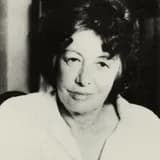
Thea Astley died on 17 August 2004 at her home near Byron Bay, New South Wales, shortly after completing her final novel.
Thea Astley died on 17 August 2004 at her home at Cardwell, near Byron Bay, New South Wales, just days before what would have been her 79th birthday. Her death marked the loss of one of Australia's most formidable literary voices, a writer whose career spanned more than four decades and produced sixteen novels and collections of short fiction.
At the time of her death, Astley had recently published her final novel, Drylands (1999), which won her a fourth Miles Franklin Award, an unprecedented achievement that remains unequalled. Her death was marked with tributes across the Australian literary community, recognising her as a fearless satirist who used her fiction to expose the underbelly of small-town Australian life, exposing racism, misogyny, religious hypocrisy, and environmental degradation with wit and unflinching moral seriousness.
Astley's passing prompted renewed critical assessment of her body of work, and she is remembered today as a key figure of the post-war Australian literary renaissance, alongside contemporaries such as Patrick White. Biographer Karen Lamb's 2015 study Thea Astley: Inventing Her Own Weather further cemented her legacy, exploring both her literary achievements and the personal struggles — including her complicated relationship with fame, gender bias in the literary establishment, and her often prickly public persona — that shaped her extraordinary career.