← All women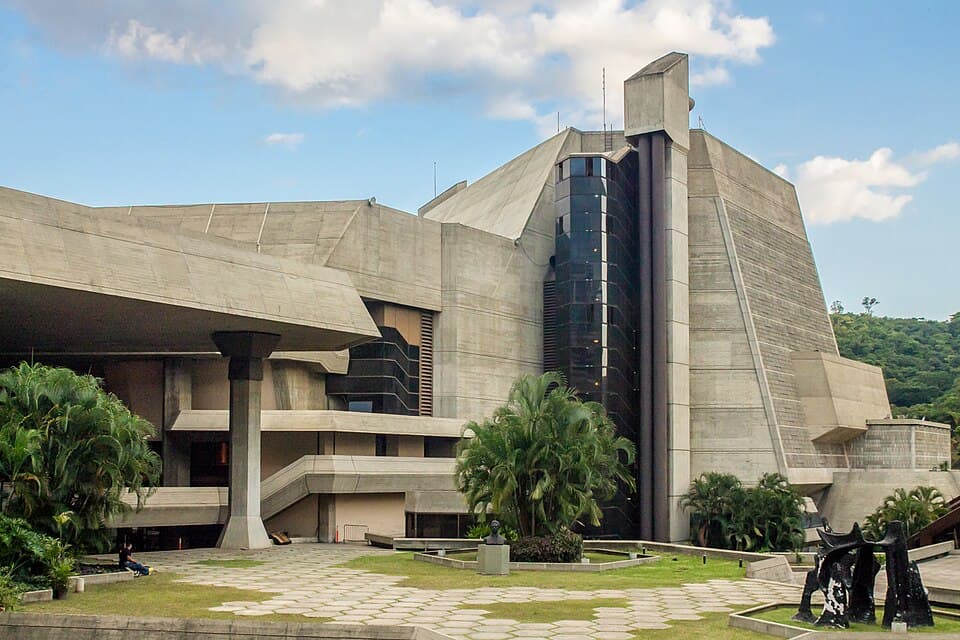
Venezuelan, American · Arts
Teresa Carreño
December 22, 1853 – June 12, 1917
Early Life and Family Background
María Teresa Carreño García de Sena was born on December 22, 1853, in Caracas, Venezuela, into a family of considerable social standing and intellectual accomplishment. Her father, Manuel Antonio Carreño, was a former Venezuelan finance minister, diplomat, amateur pianist, and the author of a widely used manual of etiquette, Manual de urbanidad y buenas maneras, which remained influential in Latin American schools for generations. Teresa's great-uncle, Simón Rodríguez, had been the tutor of Simón Bolívar, placing the Carreño family firmly within Venezuela's political and cultural elite.
From a very young age, Teresa displayed prodigious musical talent, and her father began teaching her piano when she was still a small child. She progressed with remarkable speed, and by the age of seven she was already composing simple pieces. However, political instability in Venezuela — including the fall of the government her father had served — forced the family into exile. In 1862, the Carreños emigrated to New York City, where Teresa's musical education and public career would truly begin.
Career Beginnings and the Child Prodigy Years
Teresa made her formal public debut as a pianist at Irving Hall in New York on November 25, 1862, at the age of eight. Critics were astonished by her technical maturity and expressive depth, and she quickly became a sensation in New York's musical circles. Word of her talent spread rapidly, and in 1863 she was invited to perform for President Abraham Lincoln at the White House, an extraordinary distinction for a child performer during the tumult of the American Civil War.
Recognizing the need for further refinement, Teresa's family took her to Paris in 1866, where she studied briefly and had the opportunity to play for the composer and pianist Franz Liszt, who is said to have offered encouragement and informal guidance, though she was largely self-taught and shaped by her father's rigorous instruction combined with independent study of the great virtuoso repertoire. She also studied composition, and some sources note she received informal mentorship from Louis Moreau Gottschalk's circle and other prominent musicians of the era.
Throughout her adolescence, Carreño toured extensively across the United States and Europe, building a reputation as a formidable interpreter of Beethoven, Chopin, Liszt, and Schumann. Her powerful, commanding style at the keyboard eventually earned her the nickname "the Valkyrie of the Piano," a title bestowed by later critics who marveled at the combination of strength and lyricism in her playing.
Mature Career: Pianist, Composer, Singer, and Conductor
By her twenties, Carreño had established herself as one of the leading concert pianists in the world, performing regularly in the great concert halls of London, Paris, Berlin, and other European capitals, as well as touring extensively throughout North and South America. She was celebrated not only for her virtuosity but also for the emotional intensity and structural clarity of her interpretations, qualities that drew comparisons to the greatest male pianists of her generation, including Anton Rubinstein and Hans von Bülow.
Carreño was also a gifted composer, producing a substantial body of work that included piano pieces, songs, chamber music, and orchestral compositions. Perhaps her best-known composition is the "Himno a Bolívar" and various salon pieces and mazurkas for piano that reflected both her rigorous classical training and her Latin American heritage. Her most ambitious work was the opera Giovanni de Napoli, which, though not widely performed, demonstrated her aspirations beyond the concert stage.
In a further demonstration of her versatility, Carreño also pursued a brief career as an opera singer, performing soprano roles, and she took up conducting at a time when women conductors were virtually unheard of. She organized and conducted an opera company in Caracas in the 1870s, and later conducted orchestral concerts in the United States — a remarkable achievement given the deep-seated prejudice against women in front of an orchestra during the nineteenth century.
Personal Life
Carreño's personal life was as dramatic and eventful as her public career. She was married four times. Her first marriage, in 1873, was to the French violinist Émile Sauret, with whom she had a daughter; the marriage ended in divorce. She subsequently married the baritone Giovanni Tagliapietra, with whom she had several children and toured extensively, blending family life with relentless concertizing. This marriage also ended in divorce.
Her third marriage was to the pianist and conductor Eugen d'Albert, a union that combined two significant musical careers but was likewise short-lived and ended in divorce. Her fourth and final marriage was to Arturo Tagliapietra, the brother of her second husband, and this marriage lasted until her death. Carreño's children from her various marriages included several who went on to have their own notable careers, including her daughter Teresita Carreño, who became a pianist, and Giovanni Tagliapietra's children who pursued musical paths as well.
Despite the personal upheavals of multiple marriages and divorces — scandalous by the standards of her era — Carreño maintained an unrelenting performance schedule and continued to be regarded as a serious and respected artist, a testament to both her talent and her personal resilience in the face of social judgment aimed disproportionately at women in her position.
Awards, Honors, and Recognition
During her lifetime, Carreño received acclaim from critics, fellow musicians, and audiences across multiple continents. She performed for heads of state and royalty, including reportedly playing for Queen Isabella II of Spain during a tour, and was widely regarded by contemporaries as one of the finest pianists of her time, male or female. Composers and performers of the era, including Edward MacDowell (who dedicated his Second Piano Concerto to her) and other prominent musicians, sought her endorsement and performance of their works, a mark of the esteem in which she was held within elite musical circles.
Her legacy has been honored posthumously in numerous ways. In 1983, Venezuela named its premier performing arts venue in Caracas the Teresa Carreño Cultural Complex (Complejo Cultural Teresa Carreño) in her honor, and it remains one of the most important cultural institutions in the country, hosting orchestral concerts, opera, and theater. Her image has appeared on Venezuelan currency and postage stamps, and numerous music competitions, scholarships, and streets across Venezuela and Latin America bear her name.
Later Life and Death
Carreño continued to perform into the final years of her life, though her health declined in her sixties. She died of pneumonia on June 12, 1917, in New York City, the city where her legendary career had begun more than half a century earlier as an eight-year-old prodigy. Her remains were later repatriated to Venezuela, where she was given a hero's honor befitting one of the nation's most celebrated cultural figures.
Legacy and Historical Impact
Teresa Carreño's career stands as a landmark in the history of women in classical music. At a time when the concert stage — particularly as soloist, composer, and especially as conductor — was almost exclusively the domain of men, Carreño achieved sustained international success across multiple musical disciplines. She is remembered not only as a virtuoso pianist of extraordinary power and sensitivity but as a trailblazer who challenged the gendered boundaries of the nineteenth-century musical world.
Her influence persists in Venezuela, where she is considered a national treasure and a symbol of the country's contribution to world culture. Music historians continue to study her compositions and her performance career as an important case study in the history of women's participation in the professional arts during an era that offered them severely limited opportunities. She remains one of the most significant Latin American musicians of the nineteenth century and a pioneering figure whose life illuminates both the possibilities and the obstacles faced by women artists of her generation.
Dated achievements
3 indexed.
- Dec221853Science
Born in Caracas, Venezuela
María Teresa Carreño García de Sena was born in Caracas, Venezuela, on December 22, 1853.
View details Teresa Carreño - Wikipedia - Nov251862Science
New York Debut as a Child Prodigy Pianist
At age 8, Carreño made her sensational public piano debut in New York City on November 25, 1862.