← All women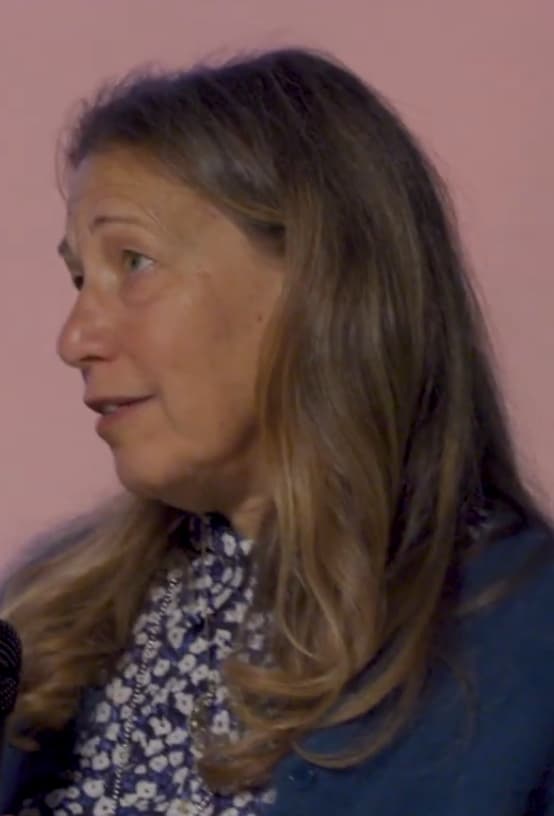
American · Arts
Susan Kare
February 5, 1954 – present
Early Life and Background
Susan Kare was born on February 5, 1954, in Ithaca, New York, United States, a college town that exposed her early to academic and cultural institutions.[1][2][7][9][12] She grew up wanting to be a fine artist or a teacher, interests that would later underpin her distinctive approach to digital iconography and user-interface design.[7] Her early fascination with art led her toward formal study in the discipline, long before personal computers became common household tools.
Kare attended Harriton High School, graduating in 1971.[4] She then enrolled at Mount Holyoke College, a historically women’s college in Massachusetts, where she studied art and graduated summa cum laude with a Bachelor of Arts degree in 1975.[4][7][12] Mount Holyoke’s environment—emphasizing rigorous scholarship and women’s leadership—offered both technical and conceptual training in visual arts, as well as exposure to feminist academic discourse that increasingly recognized women’s achievements in creative fields.
After Mount Holyoke, Kare moved to New York City to continue her education at New York University (NYU). She completed graduate studies, earning an MA and a Ph.D. in fine arts in 1978.[4][12][15] Her training focused on sculpture and traditional art-making, with no expectation that computers would become the primary medium through which her work would later be known. This deep grounding in composition, form, and visual metaphor would prove crucial when she began designing bitmap icons under strict technical constraints.
Academic and Curatorial Beginnings
Following her doctoral studies, Kare took a curatorial position at an art museum, working behind the scenes to organize exhibitions and collections.[5] She later described this period as realizing she was "on the wrong side of the creative equation," preferring to make art rather than manage others’ work.[5] Although the museum role was short‑lived, it acquainted her with professional standards of visual presentation and interpretation, and it demonstrated how institutional contexts frame artistic work for audiences.
By the early 1980s, Kare was an art Ph.D. living in the San Francisco Bay Area, immersed in traditional artistic practice but physically close to the emerging personal-computer industry.[6] This geographical proximity to Silicon Valley and its technology firms would soon bring her into contact with Apple Computer at a pivotal moment in computing history.
Joining Apple and the Macintosh Team
In 1982, Kare’s childhood friend Andy Hertzfeld, a software engineer working on a new computer project at Apple, contacted her about an opportunity to join the Macintosh team.[1][5][6][13] Hertzfeld knew she had strong visual-art skills and believed she could translate those talents into graphical elements for the experimental interface they were building. Although Kare was initially unfamiliar with computer graphics, she accepted the challenge.
Kare joined Apple as the sole creator of screen graphics in the Macintosh group, sometimes referred to as the "Macintosh Artist."[1][5][10][13] Her role was unusual: she was a studio-trained sculptor stepping into a technology company at a time when the concept of a dedicated interface or icon designer scarcely existed. From 1983 onward, she began designing icons, bitmap typefaces, and user-interface elements that would define the visual identity of the Macintosh personal computer.[1][5][7][10]
The early Macintosh had severe technical limitations: low-resolution black‑and‑white screens and minimal memory meant every pixel counted. Kare first sketched ideas on graph paper, mapping each square to a screen pixel, to create images that remained legible and expressive at very small sizes.[5][13] Her work drew on her fine‑arts background, using visual metaphor and humor to make computer functions understandable to non‑technical users.
Designing the Visual Language of the Original Macintosh
By 1983, Kare had designed the visual core language for the first Macintosh computer.[7] Her work included many of the most iconic interface elements of personal computing in the 1980s, such as the Happy Mac startup icon, the trash can for deleting files, the paintbrush, the watch cursor, and the command key symbol still printed on Apple keyboards.[1][4][7][10][13] These images were intuitive, welcoming, and imbued with personality, a stark contrast to the text‑based command‑line interfaces that had dominated computing.
In addition to icons, Kare created several bitmap typefaces specifically for the Macintosh, including Chicago, Geneva, and Monaco.[1][4] Chicago, used extensively in the system interface, became one of the most recognizable screen fonts of the early personal-computer era. Its robust, high‑contrast forms were designed to maintain legibility on low‑resolution displays, showcasing Kare’s ability to adapt traditional typographic principles to digital constraints.
Her design process emphasized clarity and empathy. She favored familiar real‑world objects—such as a folder, paint palette, or trash can—to represent digital functions, making it easier for first‑time users to understand what the computer could do. Kare’s icons also included whimsical touches, like Clarus the Dogcow, an abstract dog‑cow hybrid used in Apple’s print dialog boxes that became an internal mascot.[4] This blend of functionality and playfulness helped ease public apprehension about using computers.
Kare’s role on the Macintosh team extended beyond the screen. She contributed to original marketing materials and promotional graphics that supported Apple’s attempt to present the Mac as a friendly, approachable machine.[7][15] As a member of a cross‑functional team, she helped bridge engineering, marketing, and user experience, demonstrating how design could mediate between technical capability and human comprehension.
Leaving Apple and Joining NeXT
Kare worked at Apple from 1982 until the mid‑1980s, during which time the Macintosh launched and began reshaping expectations for personal computing.[1][2][4][15] When Steve Jobs left Apple and founded NeXT in 1985, he recruited several members of the Macintosh team, including Kare. In 1986, she became NeXT’s creative director and one of its earliest employees—often cited as employee number ten.[1][4][5][7][15]
At NeXT, Kare again worked at the intersection of technology and design, contributing to visual identity and interface graphics for the company’s workstation computers. NeXT targeted higher education and professional markets with advanced hardware and software, and Kare’s designs helped differentiate the brand aesthetically. Her presence reinforced the growing recognition that thoughtful visual design was essential to the usability and appeal of sophisticated computer systems.
Independent Design Practice and Work with Major Technology Firms
After her tenure at NeXT, Kare moved into independent practice, founding Susan Kare Design in the late 1980s.[5][10][15] As a consultant, she created icons, user-interface graphics, and related visual materials for a wide range of clients, extending her influence far beyond Apple.
Over the 1990s and 2000s, Kare worked with major technology companies including Microsoft, IBM, Motorola, and Sony PicturesWindows Solitaire, a small but culturally significant piece of interface art that introduced many users to the mouse and graphical interaction through casual play.[11][13] Her work across platforms helped establish visual standards for software icons and digital branding in the era when graphical user interfaces became ubiquitous.
Kare’s consulting practice reflected the maturation of interface design as a profession. She was no longer a solitary "Macintosh artist" but part of a broader ecosystem of designers who specialized in digital products. Nonetheless, her signature style—clear, metaphorically rich, and user-friendly—continued to shape the look and feel of numerous consumer applications and operating systems.
Work in the 21st Century: Facebook, Pinterest, and Niantic
In the 2010s, Kare’s work remained highly sought after. She created or refined icons and interface elements for clients such as Facebook and other digital products, helping update user interfaces that were now used by billions of people worldwide.[4][5][10] Her experience in early low‑resolution environments gave her a unique perspective on maintaining clarity and personality even as displays became more complex.
Since 2015, Kare has worked as a Creative Director at Pinterest, a visual discovery and inspiration platform.[5] In this role, she contributes to the overall aesthetic and usability of a service deeply rooted in imagery, further extending her influence on how people encounter and organize visual information online.
She has also been described as a design architect at Niantic Labs, known for augmented‑reality games that layer digital interfaces over physical spaces.[10] This association underscores her continuing engagement with cutting‑edge forms of human‑computer interaction, from early desktop interfaces to mobile and location‑based experiences.
Expert Witness and Design Authority
Kare’s authority in icon and interface design led to her involvement in major legal and intellectual‑property debates. In 2012, she served as an expert witness for Apple in its patent litigation against Samsung concerning smartphone design and iconography.[3][5] Her testimony drew on decades of experience designing screen graphics and helped articulate how visual elements contribute to the distinct identity and usability of digital products.
This role highlighted the increasing importance of design in legal disputes and corporate strategy. Icons and interface layouts were no longer considered mere decoration; they were recognized as integral to a product’s brand, functionality, and market position. Kare’s participation as an expert witness demonstrated that women designers could play central roles in defining legal and commercial understandings of digital design.
Awards, Honors, and Recognition
Over time, institutions across design and technology have formally recognized Kare’s contributions. In 2001, Mount Holyoke College awarded her an honorary Doctor of Science degree, acknowledging her impact as an alumna whose work transformed a major technological medium.[7]
In 2003, she was recommended by U.S. Representative Nancy Pelosi to join the Citizens Coinage Advisory Committee, which advises the United States Mint on coin designs.[7] This appointment extended her design influence into national numismatic imagery, reflecting trust in her ability to create symbols for broad public use.
Kare’s work has been celebrated widely in media and scholarship as pioneering in pixel art and graphical user interfaces.[1][2][4][8][10][16] She is often described as "the woman who gave the Macintosh a smile," a phrase that captures the friendly anthropomorphic quality of her Happy Mac icon and her broader impact on humanizing computers.[2][8][10][13]
In 2018, Kare received the AIGA Medal, the American Institute of Graphic Arts’ highest honor.[5][8][10] AIGA recognized her "bold and intelligent" icon design for early Macintosh computers that defined the Apple user experience and set an industry standard.[8] The Medal, long associated with leading figures in graphic design, confirmed that screen‑based interface work belonged within the core canon of the discipline.
In 2019, she was honored with the Cooper Hewitt, Smithsonian Design Museum National Design Award for Lifetime Achievement.[5][10][16] This award, presented at the museum’s National Design Awards Gala in New York City, celebrated her decades‑long influence on user-interface design and digital iconography. Cooper Hewitt’s recognition positioned her work alongside other major figures in industrial and graphic design, reinforcing the idea that early computer icons are historically significant artifacts of design culture.
Personal Life
Publicly available sources focus primarily on Kare’s professional accomplishments and do not extensively document her private personal life. Biographical profiles emphasize her identity as an artist and designer, her educational background, and her roles at Apple, NeXT, and various technology companies.[1][4][5][7][10][16] Information about marital status, children, or intimate relationships is not widely reported in major reference works, reflecting both her preference for professional visibility and the norms of technology-biography writing, which often foreground work over personal details.
Legacy and Historical Impact
Susan Kare’s legacy lies in her transformation of the computer interface from a technical tool into a human‑scaled visual environment. She is widely recognized as a pioneer of pixel art and one of the most influential designers in the history of personal computing.[1][2][4][10][16] Her icons and typefaces made early graphical interfaces understandable and inviting, helping millions of users transition from command‑line operations to visually driven interaction.
By turning abstract operations into familiar images—folders, trash cans, paintbrushes—Kare helped establish the metaphorical language used in graphical user interfaces across platforms.[1][4][13][16] Many of her concepts have been echoed or directly adopted by other systems, demonstrating how initial Macintosh design choices became de facto standards. She showed that humor and warmth were compatible with clarity and efficiency, challenging assumptions that technical products must be austere.
For women’s history, Kare’s career illustrates the significant yet often under‑recognized contributions of female designers in the technology sector. She entered Apple as an outsider to computing, with training in fine arts rather than computer science, and became central to one of the most consequential technology projects of the late twentieth century.[1][5][8][13] Her success opened conceptual space for other women to see design roles in tech companies as both creative and influential.
Kare’s work also demonstrates the growing importance of multidisciplinary collaboration in technology. Engineers depended on her designs to make software usable, marketers used her imagery to communicate value, and legal teams later invoked her expertise in intellectual‑property disputes. This cross‑cutting influence underscores how design can shape not only user experience but also corporate identity and legal strategy.
Her icons and fonts have been exhibited, written about, and taught as key case studies in the evolution of digital design. As museums like Cooper Hewitt incorporate interface graphics into their narratives of design history, Kare’s work serves as a bridge between traditional graphic design and contemporary interaction design.[10][16]
Later Life and Continuing Work
As of the mid‑2020s, Susan Kare remains active in design, serving in roles such as Creative Director at Pinterest and design architect at Niantic Labs.[5][10] She continues to influence digital visual culture as computing shifts toward mobile, cloud‑based, and augmented‑reality environments. Her ongoing practice confirms that interface design is an evolving field, requiring the continuous adaptation of visual language to new devices and contexts.
While her most celebrated work dates to the early Macintosh era, Kare’s later projects demonstrate her commitment to keeping user needs at the center of design. Whether creating icons for desktop systems, social platforms, or games, she continues to apply principles of simplicity, metaphor, and empathy developed during her early years at Apple.
Susan Kare’s career offers a compelling narrative for an editorial almanac of women’s history: a woman trained in traditional art who entered a male‑dominated technology world and indelibly shaped the way billions of people experience digital tools. Her life’s work underscores that the history of computing is not only about hardware and code, but also about the visual interfaces—and the women designers—who made those systems comprehensible and inviting.
Dated achievements
4 indexed.
- Feb051954Arts
Birth of Susan Kare
Susan Kare was born in Ithaca, New York, United States.
View details Wikipedia - Susan Kare - Apr202018Arts
Announcement of AIGA Medal for Susan Kare
AIGA announced Susan Kare would receive its highest honor, the AIGA Medal for 2018.
View details