← All women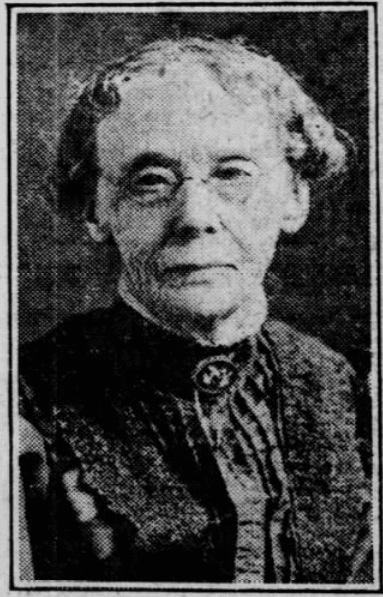
American · Medicine · Science
Susan Hayhurst
December 25, 1820 – August 7, 1909
Early Life and Background
Susan Hayhurst (December 25, 1820 – August 7, 1909) was an American physician, pharmacist, and educator, best known as the first woman to earn a pharmaceutical degree in the United States.[1] She was born on December 25, 1820, in Middletown Township, Bucks County, Pennsylvania.[1] Her parents, Thomas and Martha Hayhurst, were Quakers, a religious community that emphasized education, moral responsibility, and social reform. This background strongly influenced her later commitment to teaching and to opening professional opportunities for women.[1]
Hayhurst attended school in Wilmington, Delaware, where she excelled particularly in mathematics.[1] Her aptitude for quantitative subjects was notable for a girl in the early nineteenth century, when the curriculum available to women was often limited and focused on domestic arts rather than on scientific or mathematical training. Her success in mathematics foreshadowed her later interest in chemistry and physiology, disciplines central to both medicine and pharmacy.
As a young woman, Hayhurst worked as a teacher in country schools in Bucks County, Pennsylvania.[1] Teaching provided her with practical experience in education and reinforced her belief in the importance of structured learning for girls and young women. These early teaching roles also offered her a measure of economic independence and professional identity within the bounds of what Quaker and broader American society considered acceptable for women at the time.
Education and Medical Training
Hayhurst’s interest in scientific subjects led her to pursue advanced study at a time when very few institutions admitted women to professional programs. Taking a growing interest in chemistry and physiology, she enrolled at the Woman’s Medical College of Pennsylvania, one of the pioneering institutions for women’s medical education in the United States.[1] She graduated with a degree in medicine in 1857, according to biographical summaries.[1][7] (Some later sources report 1859, but the majority of reliable accounts, including her encyclopedia entry, give 1857 as the year of graduation.[1][7])
The Woman’s Medical College of Pennsylvania was itself a groundbreaking institution, established to provide women with formal medical training and clinical experience when mainstream medical schools remained closed to them. Hayhurst’s completion of a medical degree there placed her among the early generations of women physicians in the United States. Her education would have included anatomy, physiology, chemistry, and clinical practice, preparing her for both medical work and later teaching in fields related to health and science.
Career Beginnings: Teaching and School Leadership
Following her medical qualification, Hayhurst continued to integrate education and medicine in her professional life. She served as principal of the Friends’ School in Philadelphia from 1857 to 1867, bringing her Quaker upbringing and scientific training into the classroom.[1] As principal, she oversaw curriculum and discipline and likely introduced more rigorous academic standards, including greater attention to science and mathematics for girls.
In addition to her work at the Friends’ School, Hayhurst for a time operated her own school, which was attended by many of her former students.[1] Running a private school allowed her to shape educational content and methods directly and to sustain long-term relationships with her pupils. These experiences underscored her identity as an educator as well as a physician and laid the groundwork for her later mentoring of women in pharmacy.
Her decision to maintain a strong presence in education, even after earning a medical degree, reflected both her commitment to the intellectual development of women and the limited avenues for women physicians in mid-nineteenth-century America. Teaching remained one of the more socially accepted professions for women, and Hayhurst leveraged that acceptance to expand the scope of what women could study and pursue professionally.
Transition to Pharmacy and Hospital Work
In the later part of the nineteenth century, Hayhurst shifted her professional focus toward pharmacy, a field that was becoming more formally organized and scientifically grounded. In 1876, she became the head of the pharmaceutical department at the Woman’s Hospital of Philadelphia, an institution closely connected with efforts to provide medical care for women and training for women health professionals.[1][7]
As head of the pharmaceutical department, Hayhurst was responsible for overseeing the preparation and dispensing of medications within the hospital and for instructing women in the principles and practices of pharmacy. Her dual background in medicine and education positioned her well to shape curriculum, supervise apprentices, and ensure that pharmaceutical work met emerging standards of safety and scientific rigor.
According to later accounts, Hayhurst held this role for 33 years, making her tenure a long and influential one in the history of hospital pharmacy.[7] During this time she mentored at least 65 women pharmacists, helping them to acquire professional skills and qualifications and to take on roles in hospital and community pharmacies.[7] Her work at the Woman’s Hospital demonstrated that pharmacy could be a viable and respected profession for women and created a small but important network of trained female pharmacists.
First Woman to Earn a Pharmacy Degree in the United States
While serving in the pharmaceutical department, Hayhurst sought formal recognition of her expertise through institutional training. She enrolled in the Philadelphia College of Pharmacy, one of the leading pharmacy schools of the time, which had historically been attended only by men.[1] In 1883, at age 63, she graduated from the college, becoming the first woman to graduate from the Philadelphia College of Pharmacy and, by prevailing historical consensus, the first woman in the United States to earn a pharmaceutical degree.[1][3][7]
This milestone came after decades of her work as a teacher and physician and represented both a personal achievement and a broader breakthrough in women’s access to scientific and professional education. Contemporary and later sources emphasize that Hayhurst’s graduation was an important precedent, showing that women could succeed in demanding technical coursework and could claim credentials equal to those of their male peers.[1][3][7]
Histories of women in pharmacy and STEM fields often highlight Hayhurst’s achievement. Institutional and professional organizations, such as pharmacy associations and educational institutions, have cited her as a pioneer during commemorations of Women’s History Month and in posts recognizing women in STEM.[3][7] These narratives stress that she undertook advanced study later in life, challenging assumptions not only about gender but also about age in professional training.
Professional Associations and Civic Engagement
Beyond her direct work in education and pharmacy, Hayhurst participated in a variety of organizations reflective of the intellectual and civic milieu of late nineteenth-century Philadelphia. She was active in the New Century Club and the New Century Guild, organizations that brought together women interested in education, reform, and professional development.[7] These groups provided forums for lectures, discussions, and initiatives related to women’s employment and civic involvement.
Hayhurst was also involved with the American Academy of Political and Social Science, indicating her engagement with broader questions of social policy and reform.[7] Membership in such an academy suggests that she followed developments in economics, sociology, and public policy and contributed, at least intellectually, to debates about the structure of society and the role of education and professionalization.
In addition, she participated in the Woman’s Suffrage Society of Philadelphia, linking her work in professional education to the political struggle for women’s voting rights.[7] Her involvement in suffrage organizations underscores that she saw the advancement of women’s legal and political status as connected to their ability to pursue scientific and professional careers. These activities place her within the broader context of the women’s rights movement of the late nineteenth and early twentieth centuries.
Major Contributions and Impact
Hayhurst’s most notable accomplishments can be grouped into three main areas: medical education, pharmaceutical training, and advocacy for women’s professional advancement.
- Medical education and practice: By earning a medical degree from the Woman’s Medical College of Pennsylvania in 1857, she became part of the pioneering cohort of women physicians in the United States.[1][7] Her medical training enabled her to bring clinical insight to both her teaching and her pharmacy work.
- Pharmacy education and leadership: As head of the pharmaceutical department at the Woman’s Hospital of Philadelphia from 1876, she played a central role in training women pharmacists, overseeing hospital pharmaceutical services, and integrating scientific rigor into medication management.[1][7]
- Barrier-breaking credential: Her 1883 graduation from the Philadelphia College of Pharmacy, as the first woman to earn a pharmaceutical degree in the United States, created a precedent that expanded the possibilities for women in pharmacy and related sciences.[1][3][7]
Through these contributions, Hayhurst influenced both institutional practices and individual careers. The women she trained went on to work in various capacities in pharmacy, carrying forward her emphasis on knowledge, ethics, and professionalism. Her example encouraged other women to seek admission to pharmaceutical colleges and helped to normalize the presence of women in scientific classrooms and hospital laboratories.
Awards, Honors, and Posthumous Recognition
There is limited documentation of formal awards or honors bestowed on Hayhurst during her lifetime, which was common for women professionals of her era. However, her legacy has been recognized in various forms of historical commemoration. Modern accounts of the history of pharmacy and of women in STEM routinely cite her as a pioneering figure, particularly in discussions of first women pharmacists.[1][3][7]
Educational and professional organizations have highlighted her story in articles, blog posts, and social media campaigns during Women’s History Month, portraying her as a symbol of perseverance and intellectual achievement.[3][7] These retrospective recognitions emphasize not only her barrier-breaking pharmacy degree but also her long service in teaching and her role in mentoring generations of women pharmacists.
Personal Life
Reliable sources focus primarily on Hayhurst’s professional and educational activities; detailed information about her personal life, such as marriage or children, is not prominently documented in the standard biographical references.[1][12] Her Quaker background and long-term residence in Pennsylvania are well attested, but existing accounts do not provide confirmed details about family relationships beyond her parents.
This relative silence about her domestic life is itself indicative of the historical record’s emphasis on her public and professional roles. As a woman who devoted decades to teaching, hospital work, and organizational engagement, Hayhurst’s identity in the historical literature is shaped more by her contributions to medicine, pharmacy, and women’s education than by private biography.
Later Life and Death
Hayhurst continued her involvement in pharmacy and education well into old age. Biographical summaries indicate that she remained head of the pharmaceutical department at the Woman’s Hospital for approximately thirty-three years, suggesting that she was active into the early twentieth century.[7] Her long tenure meant that she witnessed significant changes in medical and pharmaceutical practice, including advances in chemistry, the increasing formalization of pharmaceutical education, and the early emergence of regulatory frameworks for drugs.
She died in Philadelphia on August 7, 1909, after an illness lasting four days.[1] At the time of her death, she was eighty-eight years old. Her passing in Philadelphia, the city where she had studied, taught, and worked for much of her life, closed a chapter in the history of women’s participation in the health professions.
Legacy and Historical Significance
Susan Hayhurst occupies a distinctive place in the history of women in science and medicine. Her life illustrates how women navigated and gradually transformed the boundaries of acceptable professional roles in the nineteenth and early twentieth centuries.
Her legacy can be summarized in several key themes:
- Pioneering access to professional credentials: By earning both a medical degree and, later, a pharmacy degree, Hayhurst demonstrated that women could meet and exceed the academic standards set by male-dominated institutions.[1][7]
- Institutional change through leadership: As head of the pharmaceutical department at the Woman’s Hospital and principal of the Friends’ School, she influenced curricula, training practices, and institutional attitudes toward women’s education.[1]
- Mentorship and network-building: Her training of dozens of women pharmacists created a cohort of female professionals whose careers multiplied the impact of her teaching and helped embed women more firmly in the pharmaceutical workforce.[7]
- Connection to broader reform movements: Her participation in organizations such as the New Century Club, New Century Guild, American Academy of Political and Social Science, and the Woman’s Suffrage Society of Philadelphia linked her professional work to broader efforts for women’s rights and social reform.[7]
Historians of pharmacy and women’s history often cite Hayhurst in discussions of "firsts"—specifically, the first woman pharmacy graduate in the United States—yet her significance extends beyond this headline achievement.[1][3][7] She embodied a model of lifelong learning, pursuing advanced study well into her sixties, and used her credentials not simply for personal advancement but to expand opportunities for others.
In contemporary narratives about women in STEM, Hayhurst’s story is invoked as evidence that women have long contributed to scientific fields despite systemic barriers and that their achievements, though sometimes sparsely documented, have been crucial to the development of professions such as pharmacy and medicine.[3][7] As such, she remains an important figure in educational and professional histories, representing both the challenges and the possibilities that confronted women who sought to enter and shape the scientific world in the nineteenth century.
Dated achievements
3 indexed.
- Dec251820Medicine
Birth of Susan Hayhurst
Susan Hayhurst was born on December 25, 1820.
View details Wikipedia - Susan Hayhurst - Jan011883Science
First woman to graduate from Philadelphia College of Pharmacy
Hayhurst became the first woman to graduate from the Philadelphia College of Pharmacy in 1883.
View details