← All women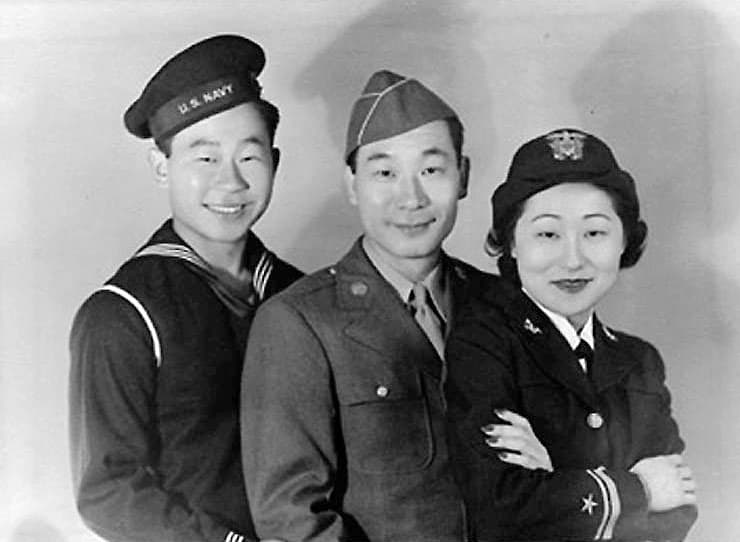
American · Aviation · Activism
Susan Ahn Cudy
January 16, 1915 – June 24, 2015
Early Life and Family Background
Susan Ahn Cuddy (born Susan Ahn) entered the world on January 16, 1915, in Los Angeles, California.[2][3][4] She was the eldest of five children born to Dosan Ahn Chang-ho and Helen (Hye Ryon) Ahn, the first married Korean couple known to have immigrated to the United States, arriving in 1902.[1][4][5][6] Her parents came with the explicit goal of studying Western democracy and using its principles to advance Korea’s struggle for independence from Japanese colonial rule.[1][5]
Her father, Dosan, became a leading figure in the Korean independence movement, founding the Korean National Association, which supported Korean immigrants, mediated labor disputes, and represented Korean American political interests.[1] He spent years imprisoned and abused by Japanese authorities for his activism, a sacrifice that deeply influenced his children’s sense of duty and justice.[1][9] Raised in this atmosphere of resistance and democratic idealism, Susan absorbed the belief that civic participation and education were essential tools for change.
Susan grew up in Los Angeles’s early Korean American community, attending Fremont Avenue Elementary School and Central Junior High School.[1] As the daughter of political exiles, she navigated both the realities of racism in the United States and the transnational concerns of colonized Korea. The family’s commitment to education was strong, and Susan was encouraged to pursue her studies even as she witnessed her parents’ struggles and the difficulties facing Asian immigrants in an often-hostile environment.[1][6]
Education and Formative Influences
After high school, Susan attended San Diego State College (now San Diego State University), where she studied sociology.[1][4][6] Sources note that she was among the first Korean American women to attend university in the United States, highlighting both her family’s emphasis on education and her own determination to move beyond traditional expectations for women.[1] She graduated in 1940, just as global tensions were escalating toward full-scale war.[4][6]
Her academic focus on sociology exposed her to questions of social structure, inequality, and community dynamics, which likely sharpened her awareness of race and gender discrimination in American life. At the same time, her father’s continued activism and eventual death—while engaged in the independence movement—reinforced a personal ethic of service and sacrifice.[5][9] When Japan attacked Pearl Harbor in December 1941 and the United States entered World War II, these formative experiences converged in her decision to serve her adopted country.
Within the United States, Asian Americans faced intense suspicion and hostility after Pearl Harbor, most dramatically manifested in the incarceration of Japanese Americans. As a Korean American, Susan understood both the brutality of Japanese colonial rule and the dangers of racialized fear in wartime America.[9] Against this backdrop, she chose not withdrawal but engagement, seeking to join the military to defend the United States and demonstrate that Asian Americans were loyal, capable citizens.
Entry into the U.S. Navy and WAVES
In 1942, when the U.S. Navy opened the WAVES (Women Accepted for Volunteer Emergency Service) program, Susan decided to enlist.[1][2][4][5] She encountered immediate resistance: her first application was rejected, apparently because of her Asian background.[1][5][6][9] This rejection reflected prevailing prejudices that questioned the loyalty of people of Asian descent and the broader reluctance to accept women—especially women of color—into military roles.
Undeterred, Susan applied again. Her persistence paid off, and she was eventually accepted into WAVES, making her the first Asian American woman to join the U.S. Navy.[2][3][4][5][10] This breakthrough represented a significant step toward diversifying the armed forces and challenged the assumption that Asian Americans could not or should not serve.
Shortly after enlisting, she was assigned to a Link Trainer program, a flight-simulation system used to train pilots. Working in Georgia and later Miami, she taught naval aviators air combat tactics and basic instrument flying, using the simulator to prepare them for the demands of wartime aviation.[1][5] This early assignment already placed her in a technical instructional role, a marked departure from the clerical duties often assigned to women.
Officer Training and Commissioning
Approximately six months after her enlistment, Susan was selected for officer training at Smith College in Massachusetts.[1][3][6] There, she joined other WAVES candidates in an intensive program that combined military discipline, leadership training, and specialized coursework. Her performance led to her commissioning in 1943, and she became the first Asian American woman officer in the U.S. Navy.[3][4][6][9]
This commissioning was a pivotal moment. As an officer, she assumed formal authority within the Navy’s hierarchy at a time when women officers were themselves a new experiment. Her success disproved the idea that leadership positions should be reserved for white men and underscored the value of women and minorities in roles requiring judgment, responsibility, and technical knowledge.[3][4]
In later interviews and recollections, family members emphasized that Susan was keenly aware of being both a woman and an Asian American in a male-dominated, racially stratified institution.[9][10] She understood that her presence and performance would influence perceptions of others like her. Rather than shy away from this pressure, she embraced it, using her position to demonstrate competence and resilience.
First Woman Gunnery Officer
Following her commissioning, Susan’s technical abilities led to her selection as the first woman sent to Pensacola Gunnery School in Florida.[1][5][8] This program trained instructors in the operation and maintenance of aircraft weapons systems, including the .50-caliber machine gun. Upon graduating in 1943, Susan became the Navy’s first female aerial gunnery officer, often described as its first woman gunnery officer.[3][4][5][10]
As a gunnery officer, she taught naval aviators how to handle, fire, and maintain heavy machine guns, and she instructed them in aerial gunnery tactics and dogfighting maneuvers. Many of the pilots she trained were initially skeptical of a woman teaching them weapons skills, but her expertise quickly earned their respect.[1][3][9][10] She demonstrated practical mastery of equipment and a firm command presence, turning an environment of doubt into one of trust.
Her role was highly unusual for the era. Women in the military were largely limited to administrative, medical, or support positions, yet Susan held a combat-related instructional post, directly contributing to the effectiveness of U.S. naval air operations. Her service showed that women could excel in technically demanding, operational roles, even if they were not deployed in formal combat positions.[3][6][7][8]
Service in Naval Intelligence and Wartime Work
By 1943, Susan transferred to Naval Intelligence, becoming one of the earliest Korean Americans in U.S. Naval Intelligence.[1][4] In this clandestine environment, she engaged in tasks that included code-breaking and analysis of communications related to the Pacific theater.[1][4][9][10] Her linguistic and cultural knowledge, combined with her military training, made her a valuable asset in efforts to understand enemy strategies and protect American forces.
Sources indicate that by the mid-1940s she assisted in establishing a Navy intelligence-related department at the Library of Congress, helping organize materials and procedures crucial for wartime research and intelligence work.[4][6] Her intelligence assignments were classified at the time, but later accounts emphasize that she worked on sensitive operations that contributed to Allied success.
Susan served in the Navy until 1946, reaching the rank of lieutenant before leaving active duty.[4][5][6] Her wartime career thus spanned both high-level instruction and intelligence analysis, illustrating the breadth of roles that women—and particularly women of color—could fulfill when given the opportunity.
Postwar Career: Library of Congress and NSA
After World War II, Susan remained in Washington, D.C., continuing her work in the intelligence community as a civilian. She held positions at the Library of Congress, where she helped develop systems and departments linked to military intelligence research.[4][6] Her expertise in organizing information and understanding foreign affairs positioned her well for the emerging Cold War context, in which the United States was reorienting its surveillance and analytical apparatus.
In 1956, she began working at the National Security Agency (NSA), one of the principal organizations responsible for signals intelligence and cryptologic analysis.[1][5] She attended the University of Southern California (USC) through a fellowship connected to her NSA work, further strengthening her analytical and leadership skills.[1] At NSA, she eventually became a section chief overseeing a large team involved in intelligence operations.[9]
Her NSA tenure coincided with crucial phases of the Cold War, including escalating tensions with the Soviet Union and conflicts in Asia. In this period, her background as a Korean American woman who had already served in Naval Intelligence and as a gunnery officer added a unique perspective to the largely male, often insular world of intelligence agencies. She demonstrated that women of color could not only participate but also lead in high-stakes national security work.[5][9]
Entrepreneurship and Community Engagement
In the late 1950s, Susan resigned from NSA and returned to California to join her family in operating the Moongate Restaurant in the San Fernando Valley.[1] The restaurant was a family enterprise that included her brother, actor Philip Ahn, and served as both a business and a community hub for Korean Americans and other local patrons.
Her move from intelligence work to entrepreneurship reflected a broader pattern among immigrants and their descendants, who often balanced professional careers with family-run businesses. At Moongate, she drew on her organizational skills and leadership experience to help manage operations, while also participating in community life and informal mentoring.[1]
Throughout her later years, Susan devoted substantial energy to preserving her family’s historical legacy. She worked with her son, Philip "Flip" Cuddy, and other relatives to archive documents, photographs, and oral histories related to her father’s activism and the experiences of early Korean immigrants in the United States.[1][10] These efforts contributed to a growing body of material on Korean and Korean American history.
Personal Life
In 1947, Susan married Francis (Frank) Cuddy, a Chief Petty Officer and fellow intelligence specialist whom she met in Washington, D.C.[1][4][6] Their marriage was interracial at a time when such unions were still controversial and, in some states, legally restricted. Their partnership underscored Susan’s willingness to defy social norms not only in her professional life but also in her personal choices.
The couple eventually settled in California, raising children, including son Philip. Susan’s family remained closely connected to the Korean American community and to broader networks of veterans and civil rights advocates. Her relationships with her siblings, particularly actor Philip Ahn, and with the extended Ahn family, helped keep alive the memory of Dosan’s independence activism and the sacrifices the family had made.[1][9]
Awards, Honors, and Recognition
Over the decades, Susan’s trailblazing career drew increasing public recognition. On October 5, 2006, she received the American Courage Award from the Asian American Justice Center in Washington, D.C., honoring her as a pioneer who broke barriers for Asian Americans and women in the U.S. military.[6][8] She was also recognized by the South Korean government and various organizations for her contributions and her connection to the independence movement through her father.[6][8]
Veterans’ organizations, museums, and media outlets have highlighted her story. The U.S. Department of Veterans Affairs profiled her as a "Veteran of the Day," emphasizing her role as the first Asian American woman in the Navy and first woman gunnery officer.[2] The Foundation for Women Warriors, the Mariners’ Museum and Park, and the Los Angeles Public Library’s Shades of L.A. exhibits have all featured her as a symbol of courage and innovation.[1][5][6]
Her life has been recounted in oral histories and interviews, including a StoryCorps segment in which her children remembered her toughness, humor, and high expectations.[10] A HERstory Spotlight video from the Military Women’s Memorial further amplified her story, presenting it to new generations interested in women’s contributions to the armed forces.[8]
Legacy and Historical Impact
Susan Ahn Cuddy’s legacy is multifaceted. As the first Asian American woman in the U.S. Navy, the first Asian American woman officer, and the first woman gunnery officer, she opened institutional doors that had long been closed to women of color.[2][3][4][5] Her achievements proved that Asian American women could serve, lead, and excel in roles central to military operations.
Her career also illustrates how wartime necessity can catalyze social change. The urgent demand for personnel during World War II led the military to consider recruits it had previously excluded. Susan seized this opportunity, not only to serve but to redefine expectations for what women could do in uniform. Her success helped normalize the presence of women in technical and tactical positions and contributed indirectly to later policy changes that expanded women’s roles in the armed forces.[3][6][7]
For the Korean American community, Susan embodied a bridge between her father’s generation of independence activists and a newer generation of Americans of Korean descent asserting their place in U.S. society. She remained known as "Dosan’s daughter," yet she also forged her own path, demonstrating that the children of political exiles could become leaders in their adopted country.[7][9]
Her work in intelligence at Naval Intelligence, the Library of Congress, and NSA highlights another dimension of her impact: the integration of women into the secretive, high-stakes world of national security. She showed that women of color could navigate classification systems, analytical responsibilities, and management roles in agencies that were historically dominated by men.[4][5][9]
Today, scholars of women’s history, military studies, and Asian American studies cite her as a crucial figure in the story of intersectional inclusion in the U.S. armed forces. Exhibits, articles, and educational programs continue to draw on her life as an example of perseverance, patriotism, and cross-cultural leadership.[1][2][6][8][10]
Later Life and Death
In her later decades, Susan remained active in documenting her family’s history and engaging with community organizations. She shared her experiences with students, researchers, and audiences interested in the evolution of women’s roles in the military and the history of Korean immigration to the United States.[1][10]
On June 24, 2015, Susan Ahn Cuddy died in her sleep at her home in Northridge, California, at the age of 100.[3][4][5] Obituaries and tributes from media outlets, veterans’ groups, and community organizations emphasized her pioneering status and celebrated her century-long life of service and resilience. Her passing prompted renewed efforts to preserve her story and those of other early women veterans.
Today, her name appears in museum exhibits, educational materials, and commemorative events, ensuring that her contributions remain part of the broader narrative of American history. Her life stands as a testament to the power of individual courage in transforming institutions and expanding the possibilities for those who follow.
Dated achievements
5 indexed.
- Jan161915Aviation
Birth of Susan Ahn Cuddy
Susan Ahn was born in Los Angeles, California, to Korean independence activists.
View details Susan Ahn Cuddy - Wikipedia - Jan011942Aviation
First Asian American woman to join U.S. Navy
Susan Ahn became the first Asian American woman to join the U.S. Navy's WAVES program.
View details