← All women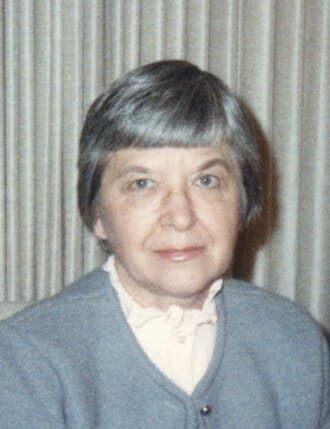
American · Science
Stephanie Kwolek
July 31, 1923 – June 18, 2014
Early life and education
Stephanie Louise Kwolek was born on July 31, 1923, in New Kensington, Pennsylvania, and grew up in a Polish-American family. Her father encouraged her curiosity about the natural world, and her mother’s interest in sewing and fabrics also shaped her early sense of materials and texture. She later became known as an American chemist whose work revolutionized synthetic fibers, but her formative years were grounded in a practical, working-class environment that valued persistence and ingenuity.
Kwolek studied chemistry at Margaret Morrison Carnegie College, the women’s college connected to Carnegie Institute of Technology, and graduated in 1946. She originally considered medical school, but she took a job with DuPont after graduation and remained in industrial research. Her education gave her a strong foundation in chemistry at a time when women were still underrepresented in technical professions, especially in industrial laboratories.
Her early life reflected the experiences of many talented women of her generation: strong academic ability, limited professional options, and the need to navigate male-dominated institutions. Those constraints mattered because they shaped the path she took into research and the way her career unfolded. Rather than entering medicine, she found a place in chemistry that allowed her to combine experimental skill with practical problem-solving.
Career at DuPont
Kwolek joined DuPont in 1946 and began work in polymer research, eventually moving in 1950 to the company’s Pioneering Research Laboratory in Wilmington, Delaware. There she specialized in low-temperature polymer processes and the search for strong, lightweight fibers. DuPont’s research agenda reflected the postwar expansion of synthetic materials, and Kwolek worked in a field that was becoming increasingly important to transportation, textiles, and industrial design.
Her career developed in a research culture that was highly technical but not especially welcoming to women. Kwolek nevertheless earned a reputation for careful experimentation, patience, and a willingness to investigate unusual results. She stayed with DuPont for decades and retired in 1986, later continuing to consult and to serve in scientific advisory roles. Her long tenure at one company helped give her the continuity needed to pursue difficult materials research over time.
At DuPont she was part of the team that pursued stronger synthetic fibers for demanding applications. The work involved polymer chemistry, solution behavior, and fiber formation, and it was aimed at creating materials that could outperform existing products. Kwolek’s contribution came not from a grand theoretical program but from the ability to recognize the importance of an unexpected experiment and insist that it be pursued further.
The discovery of Kevlar
Kwolek’s most famous achievement came in 1965, when she observed an unusual, cloudy polymer solution while working on new fiber materials. Instead of dismissing it, she recognized that the solution displayed properties suggesting a different and potentially revolutionary structure. When the material was spun into fiber, it proved extraordinarily strong and stiff. This discovery led to Kevlar, the aramid fiber that would become one of the most important industrial materials of the twentieth century.
Kevlar was significant because it combined an unusually high strength-to-weight ratio with heat resistance and rigidity. Those properties made it valuable in many fields, including body armor, helmets, ropes, cables, aircraft components, sporting goods, and composite materials. The invention helped reshape the possibilities of modern engineering by showing that synthetic polymers could be designed to meet extreme performance requirements.
The discovery also carried broader scientific importance. Kwolek’s work helped illuminate the behavior of liquid-crystalline polymer solutions and opened a path for further research in high-performance fibers. Her insight had an industrial impact that extended far beyond DuPont, influencing materials science and protective technology for decades.
Patents and industrial recognition
Patents played an important role in formalizing Kwolek’s discovery. On June 25, 1974, U.S. Patent 3,819,587, “Fiber having high modulus and tensile strength,” was issued, naming Kwolek among the inventors. The patent helped secure the intellectual property behind Kevlar and marked a key stage in the material’s transition from laboratory research to widespread commercial use.
Her contribution to Kevlar is sometimes summarized in different ways, with sources differing on the total number of patents associated with her name. What is clear is that she was a highly productive inventor whose work produced a substantial patent record and one of the most commercially and socially important synthetic fibers ever developed. Her patents reflect not only discovery but also sustained applied research.
As Kevlar entered the market, its importance became more visible. The material’s use in bullet-resistant vests made Kwolek’s work especially famous, but its broader role in industrial and consumer applications proved equally important. The fiber became a symbol of how chemistry could directly save lives and improve performance in everyday and high-risk environments.
Awards and honors
As the significance of Kevlar became clear, Kwolek received a succession of major honors. She was awarded the Howard N. Potts Medal by the Franklin Institute in 1976, the Chemical Pioneer Award in 1980, and the ACS Award for Creative Invention later that year. These awards recognized her scientific originality and her influence on polymer chemistry.
Her honors continued through the 1990s and early 2000s. She received the Kilby International Award in 1994, the USPTO American Innovator Award in 1995, and was inducted into the National Inventors Hall of Fame in 1995 as only the fourth woman to be so honored. Also in 1995, DuPont presented her with the Lavoisier Medal, making her the first woman recipient.
In 1996, President Bill Clinton presented her with the National Medal of Technology. She later received the Perkin Medal in 1997, the IRI Achievement Award the same year, the Lemelson-MIT Lifetime Achievement Award in 1999, and induction into the National Women’s Hall of Fame in 2003. Together, these honors documented her place in the history of science, technology, and women’s achievement.
Personal life
Kwolek was not widely known for a public family life, and the most consistently documented details of her personal biography concern her education, career, and public service. She did not become known through a private life of celebrity, but through research, invention, and later mentorship. After retirement from DuPont in 1986, she spent time speaking to students and encouraging interest in science, especially among young women.
Her life illustrates the experience of a woman who achieved distinction largely through sustained professional work rather than through public activism or media attention. That relative privacy is itself historically notable, since many women scientists of her generation were remembered only through institutional records and award citations. Kwolek’s story survived because her invention became indispensable and because major scientific organizations preserved her legacy.
Legacy
Stephanie Kwolek’s legacy rests above all on Kevlar, one of the most important materials in modern engineering. The fiber’s role in protective vests is widely known, but its wider influence reaches into aerospace, transportation, marine equipment, industrial cables, and composite structures. Her discovery helped redefine what synthetic polymers could do and inspired further research in high-strength materials.
Her importance also lies in the history of women in science. Kwolek built her career in a period when women were often excluded from the most visible levels of industrial chemistry, yet she became one of the most honored inventors of her time. Her professional recognition challenged assumptions about who could make foundational scientific breakthroughs and helped expand the public image of the inventor.
For later generations, Kwolek remains a model of intellectual discipline and open-minded experimentation. She saw value in an unusual result that others might have ignored, and that decision changed science and technology in lasting ways. Her career demonstrates how careful observation, persistence, and technical courage can lead to discoveries with global consequences.
Later life and death
Kwolek lived long enough to see her invention become a standard part of modern safety and materials engineering. She died on June 18, 2014, in Wilmington, Delaware, at the age of 90. Obituaries and institutional tributes emphasized both her role as the inventor of Kevlar and her exceptional place in the history of American chemistry.
Her death did not diminish the visibility of her contributions. Instead, it renewed attention to her status as a pioneering woman scientist whose work had broad practical effects and deep historical significance. She remains remembered as a chemist whose research changed the way the world builds, protects, and equips itself, and as a figure whose achievements continue to matter in the history of women in science.
Dated achievements
15 indexed.
- Jul311923Science
Birth of Stephanie Kwolek
Stephanie Louise Kwolek was born in New Kensington, Pennsylvania, United States.
View details Stephanie Kwolek - Wikipedia - Jun251974Science
U.S. Kevlar fiber patent issued
U.S. Patent 3,819,587 for Kevlar was issued to DuPont with Kwolek as an inventor.
View details