← All women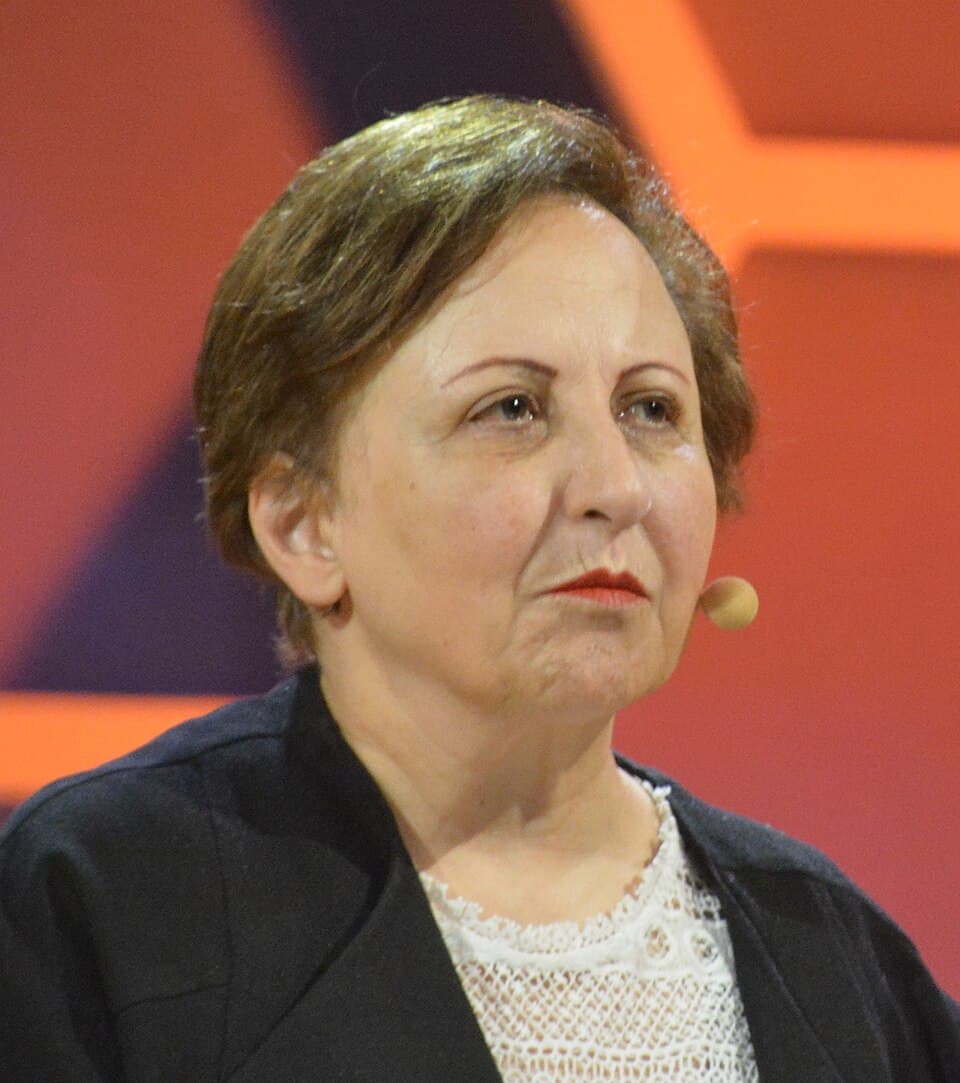
Iranian · Law · Activism
Shirin Ebadi
June 21, 1947 – present
Early Life and Background
Shirin Ebadi was born on 21 June 1947 in Hamadan, Iran, a city with a rich cultural and intellectual heritage.[3][7][10] Her father, Mohammad Ali Ebadi, was a lawyer and a professor of commercial law, and later served as president of the Bar Association in Hamadan.[7] Her mother, Minou Yamini, supported education for her daughters at a time when many Iranian families placed greater emphasis on schooling for boys.[7] Growing up in a household where legal issues and public service were part of daily conversation instilled in Ebadi an early respect for the rule of law and a sensitivity to social injustice.
The Iran of Ebadi’s childhood was experiencing the complex legacies of Reza Shah’s modernizing project and the political turbulence surrounding the post‑war period. These dynamics framed her understanding of the state, religion, and society. She has described having a strong sense of justice from a young age, shaped by seeing both the possibilities and limitations of legal institutions in protecting ordinary citizens.[2][9]
When the family later moved to Tehran, Ebadi attended local schools and proved an excellent student. In 1965 she entered the Faculty of Law at the University of Tehran, then the leading institution for legal education in Iran.[4][7] The university environment exposed her to debates about constitutionalism, the role of the judiciary, and the status of women under Iranian law, all of which would become central themes in her later work.
Education and Early Career in the Judiciary
Ebadi completed her bachelor’s degree in law at the University of Tehran in 1969.[1][3][7] She continued her studies and earned a doctorate in law from the same university in 1971, focusing on areas of civil and commercial law that were crucial to Iran’s rapidly modernizing economy.[1][7] Her academic success and performance in judicial examinations qualified her for appointment to the bench.
In March 1969, following her graduation and internship, Ebadi was appointed a judge and became one of Iran’s first female judges.[7][10] Some institutional biographies date her appointment to 1970, but major sources—including the Nobel Prize facts and multiple biographical summaries—emphasize that she entered the judiciary in 1969, at the age of 22 or 23.[1][4][7][10] At that time, the Iranian judiciary was overwhelmingly male, and the notion of women issuing binding legal judgments was still controversial. Her appointment reflected both her merit and the limited opening created by the Shah’s modernization policies, which encouraged women’s education and professional participation but left many patriarchal norms intact.
Ebadi’s early work as a judge was in Tehran’s civil courts, where she handled disputes involving family law, commercial contracts, and property. She quickly gained a reputation for diligence and integrity. Her career progressed rapidly: in the mid‑1970s she was appointed president of Bench 24 of the Tehran city court, a position she held until the 1979 Islamic Revolution.[1][2][3][9][13] She has been described as the first woman to preside over a court in Iran, and one of the youngest judges to attain such a role.[1][2][6][14]
Professional Ascendancy and the Pre‑Revolution Judiciary
As president of Bench 24 from approximately 1975 to 1979, Ebadi exercised significant authority within the Tehran judiciary.[2][9][13] She supervised other judges, managed court administration, and presided over complex cases in a city undergoing rapid urbanization and social change. Her position symbolized the high point of women’s participation in the pre‑revolutionary legal system. Under the Pahlavi monarchy, reforms such as the Family Protection Law had expanded women’s rights in marriage and divorce and opened limited pathways for women into legal and judicial careers.
Within this context, Ebadi’s trajectory demonstrated that women could not only enter the legal profession but also rise to its most senior ranks. She later recalled this period as one in which she believed that rule of law and incremental reform could secure justice for Iranian citizens, particularly women and children.
However, the pre‑revolutionary judiciary also faced criticism for its relationship to state power and for the persistence of inequality and corruption. Ebadi’s later work suggests that she recognized these limitations and came to see human‑rights advocacy as a necessary complement to judicial office. The impending revolution would transform the institutional environment in ways she could not yet foresee.
The 1979 Islamic Revolution and Exclusion from the Bench
The Islamic Revolution of 1979 fundamentally altered Iran’s political and legal structures. As the new Islamic Republic consolidated power under Ayatollah Ruhollah Khomeini, it reorganized the judiciary along Islamic lines and reevaluated the role of women in legal decision‑making. Under the new system, women were deemed unsuitable to serve as judges, based on interpretations of Islamic jurisprudence that restricted women’s authority in issuing legal rulings.
Ebadi, along with all other women judges, was removed from the bench in 1979.[2][10][13] The new authorities offered her clerical positions such as a legal assistant or secretary, but these posts carried none of the judicial authority she had previously exercised.[2] Viewing the demotion as incompatible with her qualifications and principles, she refused and effectively resigned from the judiciary.
This abrupt exclusion was a personal and professional shock. In interviews and writings, Ebadi has described the profound sense of injustice she felt at being denied the ability to perform the role for which she had trained and served for a decade. The decision also symbolized a broader rollback of women’s rights in post‑revolutionary Iran, as new laws on marriage, divorce, and child custody reasserted male guardianship and diminished the legal gains women had achieved in the preceding decades.[2][10]
For several years after her removal, Ebadi struggled with the constraints placed on her career. She devoted time to raising her two daughters, Nargess and Negar, born from her marriage to Javad Tavassolian, whom she had wed in 1975.[7] Yet she never abandoned her commitment to law. Her experience of exclusion became a driving force behind her later decision to focus on human‑rights work, especially in areas where women and children were most affected by discriminatory legislation.
Requalification as a Lawyer and Turn to Human‑Rights Advocacy
In the early 1980s and 1990s, Ebadi sought ways to return to legal practice despite the prohibition on women judges. After prolonged efforts, she successfully requalified and obtained a license to work as a practicing lawyer in 1992.[3][11] This milestone allowed her to open a private law office in Tehran and represent clients in civil and criminal matters.
Rather than focusing on lucrative commercial work, Ebadi chose to specialize in human‑rights cases. She represented political dissidents, journalists, student activists, and families of individuals killed or persecuted by the authorities.[3][10][13] Among her notable cases was that of 9‑year‑old Arian Golshani, a girl killed by her father and stepmother; the case exposed gaps in legal protections for children and led Ebadi to advocate reforms to custody and guardianship laws that discriminated against mothers.[7][10]
Ebadi also defended victims of serial murders of intellectuals and journalists attributed to elements within Iran’s security apparatus. By bringing such cases to court, she sought to hold state actors accountable and to demonstrate that Iranian law, if applied impartially, could serve as a tool for justice rather than repression. Her work required considerable courage: lawyers who took on politically sensitive cases risked professional sanctions, surveillance, and imprisonment.[10][12]
During this period, Ebadi began to write extensively on legal and human‑rights issues. She authored books and articles in Persian that analyzed Iranian family law, succession, and the legal status of women and children, and proposed amendments to align domestic legislation with international human‑rights standards.[10] Her writings helped to articulate a reformist Islamic legal discourse that emphasized justice, equality, and the adaptability of religious law to contemporary needs.
Building Civil Society: NGOs and Children’s Rights
Recognizing that legal work alone could not transform societal attitudes, Ebadi became deeply involved in building civil society organizations. In 1994, she helped found the Society for Protecting the Rights of the Child (also known as the Society for the Protection of Children), one of Iran’s earliest non‑governmental organizations dedicated to children’s rights.[3][11] The group campaigned against child labor, advocated for access to education, and sought reforms to laws that allowed harsh punishment or execution of minors under certain interpretations of Islamic criminal law.
In 2001, Ebadi was instrumental in establishing the Defenders of Human Rights Center (DHRC) in Tehran.[1][3][11] The center provided legal assistance to political prisoners, documented human‑rights abuses, and offered a forum for lawyers and activists committed to non‑violent reform. Ebadi served as its president, and the organization soon became a focal point for Iran’s human‑rights community.
The authorities viewed these NGOs with suspicion. The DHRC in particular was subjected to intimidation and periodic closure, and its members were harassed or detained. Nonetheless, the center played a crucial role in linking individual legal cases to broader structural critiques of Iran’s legal system, and in connecting domestic activism to international human‑rights networks.
Imprisonment in 1999 and Escalating Repression
Ebadi’s human‑rights work exposed her to direct repression. In 1999, after student protests at Tehran University were violently suppressed, she became involved in efforts to document and publicize the killings and abuses.[7] Her role in preparing a video that showed the death of a protesting student was particularly sensitive.
That year she was arrested and spent 25 days in solitary confinement in Evin prison.[7] The detention highlighted the authorities’ determination to deter independent investigation into state violence. Although she was eventually released on bail and later given a suspended sentence, the experience underscored the personal risks facing human‑rights lawyers in Iran.
International attention to her case increased as organizations such as Amnesty International and Reporters Without Borders drew attention to her imprisonment. The incident deepened her resolve to continue defending victims of abuse and reinforced the perception among global observers that Iran’s judiciary was being used as an instrument of political control rather than impartial justice.[10][12]
International Recognition: The Rafto Prize and Nobel Peace Prize
Ebadi’s work began to receive significant international recognition in the early 2000s. In 2001, she was awarded the Thorolf Rafto Memorial Prize for Human Rights in Norway, honoring her "personal courage and commitment to the fight for human rights" in Iran.[3][7] The Rafto Prize, often seen as a precursor to the Nobel Peace Prize, drew attention to her advocacy for democracy, women’s rights, and children’s rights under difficult conditions.
On 10 October 2003, the Nobel Committee announced that Ebadi would receive the Nobel Peace Prize "for her efforts for democracy and human rights" with a particular focus on the rights of women and children.[3][8][10][12] She thus became the first Iranian and the first Muslim woman to be awarded the Nobel Peace Prize.[3][6][8][12] The committee emphasized that she had "stood up as a brave person" who, despite threats, had refused to abandon her work.
Ebadi’s selection was notable in several respects. It highlighted the centrality of women’s rights in broader struggles for democracy and peace, and it signaled support for indigenous, non‑violent reform movements within Islamic societies. The award also challenged common assumptions by showing that a practicing Muslim woman could be a leading global advocate for universal human rights.
On 10 December 2003, Ebadi formally received the Nobel Peace Prize in Oslo City Hall and delivered her Nobel lecture.[10] In the speech, she underscored that peace required respect for human rights, and that democracy could not be sustained without equality and the rule of law. She criticized both Western double standards and domestic authoritarianism, calling for an end to violence, discrimination, and the politicization of religion. Her lecture has been widely cited for its articulation of an Islamic‑based argument for human rights and gender equality.
Following the Nobel award, Ebadi used part of the prize money to strengthen the Defenders of Human Rights Center and to support the families of political prisoners.[4] She also took on an expanded international speaking role, addressing audiences at universities, human‑rights forums, and institutions such as the Asia Society and World Justice Project.[9][4]
Books, Writings, and Legal Thought
Beyond her courtroom work, Ebadi has made significant contributions as a writer and public intellectual. She has authored numerous books and articles in Persian on topics such as family law, succession, children’s rights, and the relationship between Islam and human rights.[10][13] Several of her works have been translated into English and other languages, including memoirs that recount her experiences as a judge, lawyer, and activist.
Her legal thought emphasizes that Islamic law is not inherently incompatible with human rights, but that interpretations must be grounded in justice and the evolving needs of society. She argues for reforms to Iran’s legal codes to eliminate gender discrimination, abolish the death penalty for minors, and protect freedom of expression and association. Ebadi frequently cites both Islamic sources and international instruments such as the Universal Declaration of Human Rights, demonstrating a hybrid approach that seeks legitimacy in both religious and universal frameworks.
Through her writings, she has helped shape a discourse of Islamic feminism and rights‑based reform that has influenced activists and scholars in Iran and beyond. Her books also serve as educational tools, explaining complex legal concepts to lay readers and empowering citizens to understand and claim their rights.
Later Repression and Exile
Despite her global recognition, Ebadi’s position in Iran became increasingly precarious after the Nobel award. The Defenders of Human Rights Center was repeatedly targeted: in 2008, authorities closed its offices on the eve of an event, alleging lack of proper permits, and the center faced ongoing pressure.[3][11] Ebadi and her colleagues were subject to surveillance and harassment.
The situation worsened in the context of the 2009 presidential election and the subsequent Green Movement protests. During this period, Ebadi was abroad on a lecture tour when protests erupted, and the authorities seized the opportunity to intensify actions against her associates and assets. Her bank accounts were frozen, her husband was arrested and pressured into divorcing her, and her sister was detained.[3][12][14]
Facing the likelihood of arrest if she returned, Ebadi remained outside Iran. By late 2009, she had effectively entered exile in the United Kingdom, settling in London.[6][14] From there, she continued her advocacy, working with international NGOs, writing, and speaking about the situation in Iran. She has been explicit that exile, though painful, allows her to speak more freely and to mobilize global support for Iranian activists.
International Advocacy and the "Women, Life, Freedom" Movement
In exile, Ebadi has remained deeply engaged with Iranian affairs. She has commented on major developments, including the crackdown on the Green Movement, ongoing imprisonment of journalists and lawyers, and, more recently, the protests following the 2022 death of Mahsa Amini. In articles and interviews, including pieces for organizations such as the Atlantic Council and the Nobel Peace Prize outreach platform, she has described these protests as part of a larger "revolution" for women’s rights and democracy in Iran.[12][14]
Ebadi supports the "Women, Life, Freedom" movement, which foregrounds women’s autonomy and opposes compulsory veiling and gender discrimination.[14] She argues that the energy and leadership of women are central to any future democratic transition in Iran, and she calls on the international community to avoid legitimizing repressive authorities while supporting civil society.
Her work in exile includes collaboration with organizations such as Reporters Without Borders, the Nuclear Age Peace Foundation, and various women’s and human‑rights initiatives.[12][13][14] She continues to write and speak, emphasizing non‑violent methods, legal reform, and international solidarity.
Awards, Honors, and Recognition
In addition to the Rafto Prize and Nobel Peace Prize, Ebadi has received numerous honors from academic institutions, governments, and NGOs. Among them are the JPM Interfaith Award (2004) and the Legion of Honour (France, 2006).[3][8] She has been recognized by the World Justice Project as a leading figure in advancing the rule of law, and by the Asia Society for her "certain commitment to justice".[4][9]
These honors reflect not only her personal achievements but also the symbolic weight of her work as a Muslim woman advocating for universal human rights. They have helped sustain her profile and provide institutional support for her continued activism.
Personal Life
Ebadi’s personal life has been closely intertwined with her professional struggles. She married Javad Tavassolian in 1975, and the couple had two daughters, Nargess and Negar.[7] Balancing motherhood with judicial and later legal duties required considerable effort, particularly in an environment where social expectations often assumed that women would prioritize domestic responsibilities.
Her family has also been directly affected by state repression. In the late 2000s, Iranian authorities targeted her relatives as part of the broader campaign against her human‑rights work. Her husband was arrested and reportedly pressured to divorce her, and her sister faced detention.[3][12] These tactics exemplify the ways authoritarian regimes attempt to fracture the personal lives of prominent dissidents. Despite these pressures, Ebadi’s public statements consistently emphasize her commitment to non‑violence and legal means of change.
Legacy and Historical Impact
Shirin Ebadi’s legacy can be understood along several dimensions. As a legal pioneer, she broke barriers by becoming one of Iran’s first female judges and the first woman to preside over an Iranian court.[1][3][6][10] Her removal from the bench after the revolution and subsequent reinvention as a human‑rights lawyer illustrate both the fragility of institutional gains and the resilience of individual commitment.
As a human‑rights advocate, Ebadi has devoted her career to defending those most vulnerable to state violence and discriminatory laws: political prisoners, women facing unequal divorce and custody rules, and children subject to harsh criminal penalties or neglect. Her strategic use of law and courts, even in a politicized judicial system, has demonstrated the possibilities of rights‑based advocacy in authoritarian contexts.[3][10][13]
Internationally, her Nobel Peace Prize in 2003 marked a turning point in the recognition of grassroots human‑rights work in Muslim‑majority countries and underscored the central role of women in these struggles.[3][6][8][12] She helped reshape global perceptions by showing that demands for democracy and gender equality were deeply rooted within Iranian and Islamic traditions, not merely imported from outside.
Ebadi’s intellectual contributions—through books, lectures, and legal analysis—have influenced debates on the relationship between Islam and human rights, the nature of Islamic feminism, and the role of civil society in legal reform. Her example has inspired many younger Iranian lawyers and activists, as well as women’s‑rights defenders across the Middle East and beyond.
Later Life and Continuing Work
Now living in exile in the United Kingdom, Ebadi continues to work as a lawyer, writer, and lecturer.[6][14] She participates in international conferences, supports campaigns for imprisoned Iranian activists, and serves on advisory boards of human‑rights organizations. Her commentary on recent events in Iran, including student protests, women’s movements, and crackdowns on dissent, is widely sought.
Although she no longer practices law inside Iran, her influence on Iranian legal thought and activism remains significant. Many of the organizations she helped establish, such as the Society for Protecting the Rights of the Child and the Defenders of Human Rights Center, continue to shape discourse and action, even under intense pressure.
Ebadi has stated that she will return to Iran when conditions allow her to work freely and safely. Until then, she maintains that exile is a platform from which she can better advocate for her compatriots and keep Iran’s human‑rights situation on the international agenda. Her life’s work—spanning judicial office, legal defense, NGO building, writing, and global advocacy—secures her place as one of the most important figures in contemporary women’s and human‑rights history.
Dated achievements
9 indexed.
- Jun211947Activism
Birth of Shirin Ebadi
Shirin Ebadi was born in Hamadan, Iran, and later became a pioneering Iranian lawyer, judge, and human rights advocate.
View details The Nobel Prize: Shirin Ebadi Facts - Mar011969Law
Appointed judge as one of Iran’s first female judges
In March 1969, Ebadi made history by being appointed a judge, becoming one of Iran’s first female judges.