← All women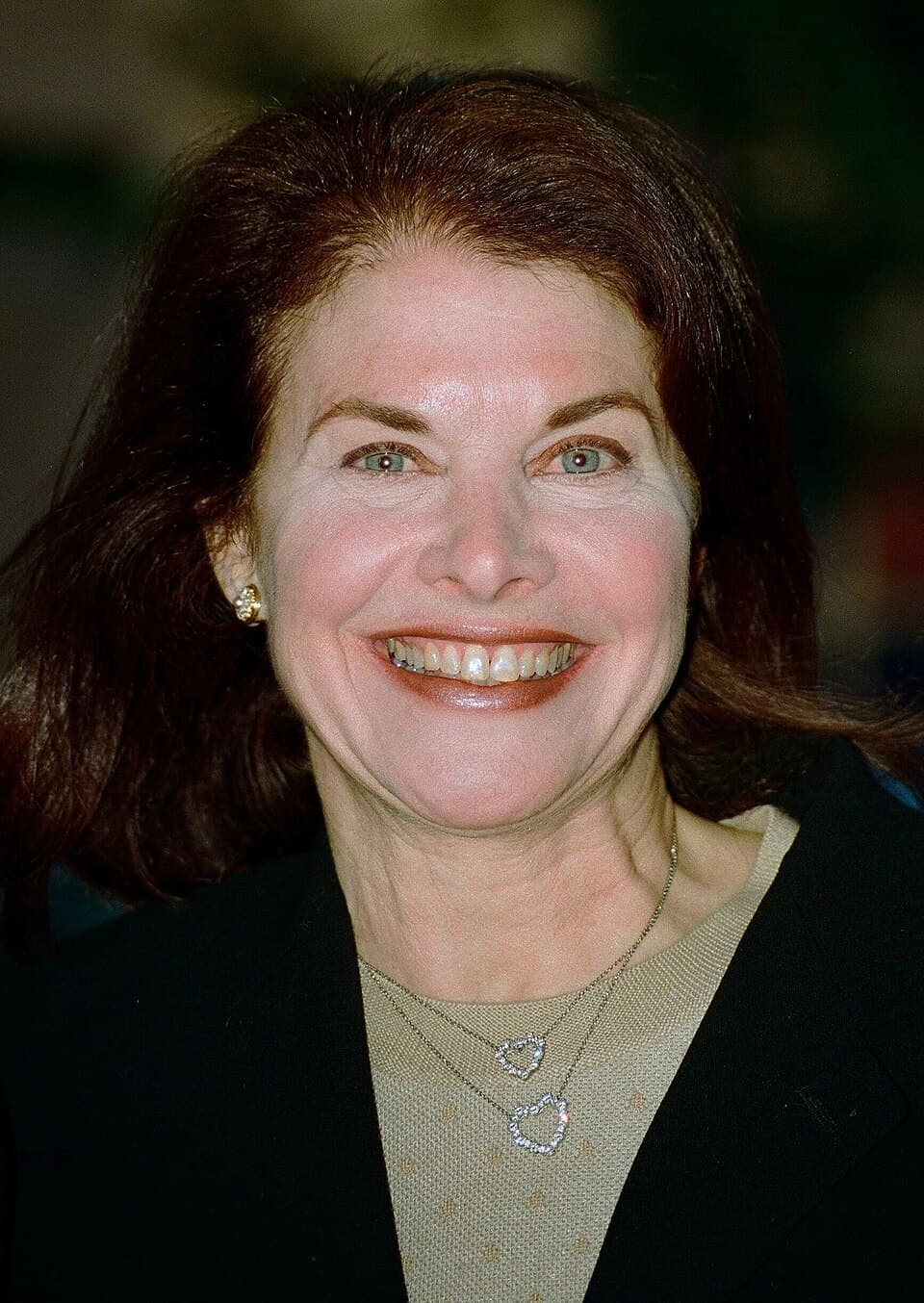
American · Arts
Sherry Lansing
July 31, 1944 – present
Early Life and Background
Sherry Lansing, born Sherry Lee Lansing (also documented as Sherry Lee Duhl/Heimann) on July 31, 1944, in Chicago, Illinois, is an American film studio executive and philanthropist whose career reshaped Hollywood’s power dynamics and expanded possibilities for women in executive leadership.[1][9]
She grew up in a Jewish family in Chicago. Several biographical sources note that her father died when she was young, a formative loss that contributed to her sense of responsibility and resilience.[11][9] Lansing attended public schools in Chicago and displayed strong academic abilities, particularly in mathematics and the arts. She went on to study at Northwestern University, where she earned a B.S. in theatre, graduating summa cum laude in 1966.[9][2] Her studies in theatre, English, and related disciplines gave her a foundation in storytelling and performance that later informed her work as a script reader, story editor, and studio executive.
Lansing’s Midwestern upbringing and rigorous academic training combined with her early exposure to responsibility at home to foster an analytical yet empathetic style of leadership. These traits would distinguish her from many of her contemporaries once she ascended to high‑level studio positions in Hollywood.
Early Career and Entry into Hollywood
After college, Lansing moved into the entertainment industry, initially pursuing work as an actress. She appeared in the films Loving (1970) and Rio Lobo (1970), experiences that gave her firsthand insight into film production and the working lives of performers.[7][6] However, she soon concluded that her strengths lay behind the camera, in reading scripts and evaluating projects.
In 1974, Lansing joined Talent Associates as an executive in charge of development, marking her transition into the business side of the industry.[7][9] In 1975, she moved to MGM, where she served as an executive story editor and later became head of the story department.[11][9] In these roles, she honed her capacity to identify strong material, assess commercial potential, and collaborate with writers and directors.
Lansing’s work on high‑profile projects such as The China Syndrome and Kramer vs. Kramer as a script reader and development executive helped establish her reputation as someone who could recognize quality stories and anticipate audience response.[11] Her success led to a major promotion in 1977–1978, when she was appointed vice president in charge of production at Columbia Pictures
These accomplishments laid the groundwork for her historic appointment at 20th Century-Fox, positioning her as one of the most respected female executives in Hollywood at a time when very few women held comparable power. On January 2, 1980, Sherry Lansing was appointed president of production at 20th Century-Fox, becoming the first woman to head a major Hollywood film studio.[5][1] Contemporary accounts in trade publications and later retrospectives emphasize that no woman before her had held such a senior production post at a major studio, making her appointment a landmark in both industry and women’s history. Her responsibilities included overseeing the studio’s entire slate of films, managing budgets, selecting projects, and coordinating with producers, directors, and marketing teams. According to biographical sources, Lansing’s tenure at Fox demonstrated her ability to balance creative risk with commercial strategy, helping the studio navigate the evolving blockbuster landscape of the early 1980s.[5][9] The Jewish Women’s Archive highlights February 2, 1980 as the date by which Lansing was widely recognized as the first woman to head a major movie studio, underscoring the rapid public acknowledgment of her barrier‑breaking role.[11] This recognition framed her appointment within broader feminist narratives, linking her achievement to the second‑wave movement’s efforts to secure professional equality. Lansing remained at 20th Century-Fox until 1982, when she resigned to pursue independent production work.[1][11] Her departure did not diminish the symbolic power of her tenure; instead, her time at Fox became a reference point for later discussions of women’s access to corporate power in film. In 1984, Lansing formed the production company Jaffe-Lansing with producer Stanley R. Jaffe
As a producer, Lansing was responsible for a string of successful and influential films, including: These films reinforced Lansing’s status as a creative and commercial force, demonstrating that she could not only run studios but also originate and shepherd projects that shaped cultural debates. Her producing success helped erode lingering skepticism about women’s ability to handle both artistic and financial responsibilities in high‑stakes film production. Lansing returned to the executive ranks at Paramount Pictures in the early 1990s. In 1990, after Stanley Jaffe became president of Paramount Communications, she was appointed chairman of Paramount Pictures’ Motion Picture Group1992, Lansing became chairman and CEO of Paramount Pictures
Her tenure at Paramount, which lasted for roughly twelve years, is widely described as an "unprecedented" period of creative and financial success.[5][10] Under her leadership, Paramount released and/or oversaw the production of major films including Forrest Gump (1994), Braveheart (1995), and Titanic (1997), among many others.[5][11] Each of these films achieved significant box‑office returns and earned multiple Academy Awards, cementing Paramount’s position as a dominant studio in the 1990s. Lansing’s approach to leadership integrated careful risk assessment with a willingness to back unconventional projects, trusting strong scripts and visionary filmmakers. She developed a reputation for taking meetings with writers and directors herself, listening closely to pitches, and encouraging diverse voices. Her management style emphasized collaboration, accountability, and respect, helping to foster loyalty among staff and creative partners.[9][11] In 2003, The Hollywood Reporter ranked Lansing fourth on its "Power 100" list, a measure of her influence within the global entertainment industry.[11][4] She retired from her role at Paramount in 2005, closing a chapter that had firmly established her as one of the most powerful and enduring studio executives of her generation.[1][5] Following her retirement from studio leadership, Lansing focused on philanthropy and public service. In 2005, she founded the Sherry Lansing Foundation (SLF), a nonprofit organization dedicated to supporting cancer research, health initiatives, public education, and encore career opportunities for professionals seeking new paths in service sectors.[5][11] The foundation’s initiatives include the EnCorps STEM Teachers Program, which Lansing founded to retrain retired and mid‑career professionals from the technology sector to serve as math and science teachers in California public schools.[5][10] This program reflects her belief that improving STEM education is critical to the state’s and nation’s future, and that experienced professionals can play a vital role in classrooms. Lansing also co‑founded Stand Up To Cancer, a philanthropic initiative that has raised hundreds of millions of dollars for collaborative, translational cancer research.[5] As of the late 2010s, the organization had generated more than $700 million to accelerate development of new treatments, emphasizing multidisciplinary "Dream Teams" of scientists and clinicians. Lansing’s leadership in this space linked her Hollywood network to scientific and medical communities, leveraging celebrity platforms to support rigorous research. In addition to SLF and Stand Up To Cancer, Lansing serves or has served on boards of organizations such as the American Association for Cancer Research, Friends of Cancer Research, and the Lasker Foundation, further integrating her philanthropic work with major institutions in biomedical science.[10] Lansing’s commitment to public education is reflected in her long service on the University of California Board of Regents. She was first appointed as a Regent in March 1999 by Governor Gray Davis, to a term expiring in 2010, and was reappointed in 2010 by Governor Arnold Schwarzenegger to a term expiring in 2022.[10] From July 2011 to June 2013, Lansing served as Chairman of the Regents, playing a central role in governance, budget decisions, and policy oversight for one of the largest public university systems in the United States.[10] Her leadership on the board emphasized access, affordability, and support for research, aligning with her broader philanthropic interests. As a Regent, Lansing also worked to strengthen ties between the University of California system and external partners in industry and philanthropy, helping to create opportunities for students and faculty and advocating for the value of public higher education in California’s economic and civic life. Over the course of her career, Lansing has received numerous awards recognizing both her professional achievements and her humanitarian contributions. Among the most notable honors are: Many of these honors explicitly reference Lansing’s trailblazing status as the first woman to head a major film studio, underscoring the enduring symbolic power of her 1980 appointment at 20th Century-Fox. Sherry Lansing’s personal life, while more private than her public career, is documented in several biographies. She has been married to director William Friedkin, known for films such as The Exorcist, and to Michael L. Brownstein
Biographical sources generally focus more on Lansing’s career and philanthropic work than on details of her family life, emphasizing her role as a mentor to younger executives and filmmakers. She is frequently described as generous with her time and advice, particularly to women navigating studio hierarchies and production careers.[9][11] Her Jewish identity and Midwestern background are also noted as important dimensions of her perspective, informing both her sense of community responsibility and her commitment to education and social justice.[11] Sherry Lansing’s legacy rests on several intertwined achievements: breaking through Hollywood’s executive glass ceiling, overseeing an era of remarkable studio success, and leveraging her influence to advance cancer research and public education. Her 1980 appointment as the first woman to head a major film studio is widely cited as a turning point in the industry.[1][5][11] It demonstrated that women could lead large, complex entertainment corporations and manage high‑stakes creative and financial decisions. This breakthrough has inspired subsequent generations of women executives, producers, and filmmakers, who often reference Lansing as a path‑breaking predecessor. During her years at Paramount Pictures, Lansing’s leadership helped bring to audiences some of the most iconic films of the late twentieth century, reinforcing the idea that studio heads play a crucial role in shaping cultural narratives. Her willingness to support ambitious projects, including those tackling complex social issues, broadened the range of stories mainstream studios were willing to tell. In philanthropy, Lansing’s work through the Sherry Lansing Foundation and Stand Up To Cancer has made her a key figure in the movement to align celebrity influence with rigorous scientific research. By focusing on collaborative, translational cancer research and STEM education, she has helped to create structures that may yield long‑term benefits for patients, students, and communities.[5][10] Her service on the University of California Board of Regents further extends her impact into public governance and higher education, illustrating how leaders from the entertainment industry can contribute to broader civic institutions.[10] The range of honors she has received—from Academy recognition to state and national halls of fame—attests to the breadth of her influence. Lansing is now routinely included in histories of women in business, film, and philanthropy, cementing her status as a central figure in late twentieth‑century and early twenty‑first‑century American cultural history. In the decades since her retirement from studio leadership, Sherry Lansing has remained highly active in public life. She continues to oversee and support the work of the Sherry Lansing Foundation and participates in Stand Up To Cancer initiatives.[5] She serves on boards and advisory committees for cancer research organizations and educational institutions, contributing her experience and networks to ongoing projects.[10] According to recent profiles, Lansing has also taken on corporate governance roles beyond film, including serving as chairwoman of the board of Universal Music Group and as a director on the board of Paramount Skydance Corporation, reflecting a continued presence in global media and entertainment.[1] These roles suggest that Lansing’s expertise remains highly valued in the evolving landscape of digital and recorded entertainment. As of the mid‑2020s, Lansing is widely regarded as both a pioneering figure and an active elder stateswoman of Hollywood, someone whose career exemplifies the possibilities of combining creative vision, business acumen, and sustained commitment to public good.Breaking Barriers at 20th Century-Fox
Independent Producer and Hit Films
Leadership at Paramount Pictures
Philanthropy and the Sherry Lansing Foundation
Service on the University of California Board of Regents
Awards, Honors, and Recognition
Personal Life
Legacy and Historical Impact
Later Life
Dated achievements
8 indexed.
- Jul311944Arts
Birth of Sherry Lansing
Sherry Lansing was born on July 31, 1944, in Chicago, Illinois.
View details Sherry Lansing Biography on IMDb - Jan021980Arts
First woman to head a major film studio
On January 2, 1980, Sherry Lansing became the first woman to head a major Hollywood studio, 20th Century-Fox Productions.