← All women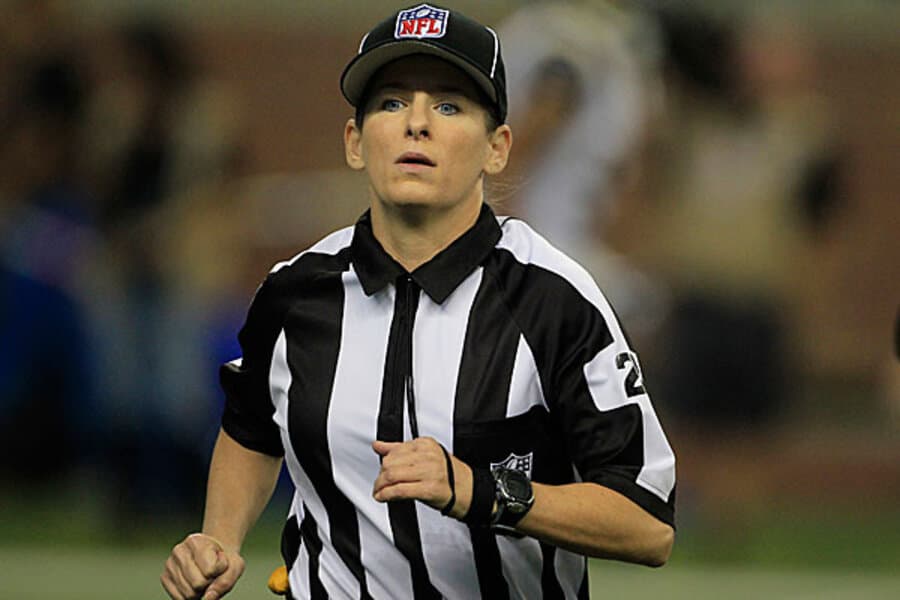
American · Sports
Shannon Eastin
1970 – present
Early Life and Background
Shannon Eastin was born in 1970 and grew up in the United States; biographical reports describe her as originally from Worcester, Massachusetts before later settling in Arizona.[11][1] As a child and teenager, Eastin developed an intense commitment to sport and competition. She became a multiple national judo champion, winning titles at a time when women’s participation in the sport was still gaining recognition and occurred before women’s judo was added to the Olympic program.[11][13] This early success in a physically demanding, combat‑based discipline shaped her resilience, confidence, and willingness to enter male‑dominated athletic spaces.
Details of Eastin’s formal education, family background, and specific schools attended are not extensively documented in publicly available sources, but interviews and profiles consistently portray her as an athlete and competitor from a young age who translated her competitive drive into a career in sports officiating.[3][11] Moving from the Northeast to the Southwest, she eventually based her professional life in Tempe, Arizona, where she continued to develop her officiating career and later launched her own officiating business.[11][2]
Career Beginnings in Officiating
Eastin’s path into football officiating began at the high school level. After her judo career, she sought out opportunities that kept her close to competitive sport while leveraging her knowledge of rules, discipline, and focus.[11] She started officiating high school football games, gaining practical experience and learning the mechanics and positioning required of referees and line judges.[5][11] Over time, she advanced through local and regional assignments, building a reputation for professionalism and competence.
Her progression eventually brought her into NCAA Division I Football Championship Subdivision (FCS) work. Eastin served for several seasons in the Mid‑Eastern Athletic Conference (MEAC), a Division I FCS conference, where she worked as a referee and, according to multiple interviews, ultimately became the first woman to lead a crew at the Division I level.[5][6][13] One ESPN profile described her as a referee crew chief in the MEAC with approximately 17 years of officiating experience, noting that most of that time had been in the high school ranks but that she had established herself as a capable official in college football as well.[5]
Sources referring to her as the first female Division I football referee place this breakthrough prior to her NFL work but do not provide a specific month and day.[6][13] Nonetheless, this status is repeatedly acknowledged in coverage of her later NFL role, indicating that Eastin had already crossed one important gender barrier within college football officiating before she became known to the wider public.
Rise to National Prominence: The 2012 NFL Officials Lockout
Eastin’s national profile emerged in the context of the 2012 NFL officials lockout. In June 2012, the National Football League and its regular officiating staff entered a labor dispute over a new collective bargaining agreement, leading the league to lock out its full‑time referees.[1][3][12] To ensure that preseason and early regular‑season games could proceed, the NFL began recruiting replacement officials from college conferences and other ranks.
According to ESPN reporting and Eastin’s own accounts, she responded to an email sent by the NFL to potential replacement candidates and was selected as part of the league’s temporary officiating pool.[5][3] The NFL emphasized that all replacement officials, including Eastin, had passed its screening and training processes; the league publicly defended her qualifications when questions were raised about past participation in a poker tournament and the depth of her college officiating résumé.[3][12]
By this time, Eastin had more than 16 years of football officiating experience across high school and college games.[3][11] Her background as a MEAC referee and crew chief, combined with her longtime involvement in officiating, positioned her as a candidate for the replacement program despite critiques from some members of the NFL Referees Association about the overall experience level of the replacement group.[12]
Historic NFL Preseason Debut, 9 August 2012
On 9 August 2012, Eastin became the first woman to officiate an NFL game when she served as the line judge during a preseason opener between the Green Bay Packers and the San Diego Chargers at Qualcomm Stadium in San Diego.[1][3][7][9] The game was one of several preseason contests scheduled as the NFL’s replacement officials took the field in place of locked‑out regular referees. Wearing jersey number 27, Eastin joined a seven‑official crew on the nationally televised broadcast.[3][7]
Her assignment placed her visibly at the line of scrimmage, where she was responsible for key duties such as monitoring offsides and encroachment, spotting the ball after plays, and helping enforce penalties. Media outlets widely highlighted her presence as a historic event: ESPN noted that she became the first female official ever in the NFL, while local and national coverage described her as breaking a gender barrier in professional football.[3][7] Chargers head coach Norv Turner referred to the evening as “historic” and posed for a photograph with Eastin discussing the significance of having a woman in an NFL officiating role.[3][9]
The broader context of the lockout complicated public discussion of her achievement. Some commentators suggested that the NFL was using Eastin’s historic status to deflect criticism regarding the quality and readiness of replacement officials.[5][12] Nonetheless, others stressed that she had successfully completed the NFL’s training and evaluation, and that her work in the game demonstrated the capability of women to perform demanding officiating roles at the highest level of American football.[3] The event’s importance was later underscored when her cap and whistle from the game were placed in the archives of the Pro Football Hall of Fame as artifacts of the first NFL game officiated by a woman.[7][13]
First Woman to Officiate an NFL Regular-Season Game, 9 September 2012
Eastin’s involvement in the NFL continued into the 2012 regular season. On 9 September 2012, she worked as the line judge in the game between the St. Louis Rams and the Detroit Lions, becoming the first woman to be an official in an NFL regular‑season game.[1][11] The Christian Science Monitor reported that she had 16 years of officiating experience at the time and emphasized that the game marked her regular‑season debut in the league.[11]
During this matchup, Eastin once again performed full officiating duties, rather than serving in a ceremonial capacity. Her assignment demonstrated that the NFL was willing, at least during the replacement period, to integrate a woman into the standard officiating structure. According to later accounts, she went on to work a total of three regular‑season games before the labor dispute was resolved and the league’s regular officials returned in Week Four.[7]
As with her preseason debut, reactions to Eastin’s presence in the regular season were mixed but generally recognized the historic nature of the moment. Some critics questioned whether replacement officials—including Eastin—had sufficient top‑level experience, while others argued that her performance helped prove that women could officiate NFL games.[12][11] Her sustained role in multiple regular‑season contests broadened her impact beyond a single symbolic appearance and further challenged longstanding gender norms in professional football.
Post‑NFL Roles: Clock Operations and Officiating Leadership
Following the conclusion of the 2012 lockout and the return of the NFL’s regular officiating staff, Eastin did not remain on the field as a league referee. However, she continued to work in official capacities for the NFL and in the wider officiating community. Her official website notes that she served as a Play Clock Operator for the NFL from 2013 to 2018, including assignments in Super Bowl XLIX and the 2015 Pro Bowl.[2] In these roles, she handled the critical timing functions that govern play, such as managing the game and play clocks—tasks essential to the integrity and flow of each contest.
Beyond the NFL, Eastin became the owner of SE Sports Officiating, a company that trains and mentors sports officials in football and basketball.[2][3][11] Through SE Sports Officiating, she has worked to develop the next generation of referees, sharing both technical knowledge and lessons about navigating male‑dominated professional environments. Interviews describe her as the Director of Officials for the Canyon Athletic Association, a role in which she assigns officials to games and oversees their development and performance.[6] These positions reflect a shift from on‑field officiating to broader leadership within the officiating ecosystem.
Authorship and Public Speaking
Eastin expanded her public profile by authoring the memoir "Lady Ref: Making Calls in a Man’s World", an account of her life and career as the NFL’s first female official.[10][13] Promotional materials for the book describe it as an "eye‑opening and inspiring memoir" that traces her journey from a six‑time national judo champion to a trailblazer as the first female Division I football referee and ultimately the first woman to officiate an NFL game.[13] The book highlights the sacrifices, determination, and resilience required to move up the officiating ranks and break gender barriers.
In conjunction with the book and her historic status, Eastin has engaged in public speaking and media appearances. She has been interviewed on programs such as the Eliances Heroes Show, where she discusses her experiences in the NFL, her work mentoring officials, and the challenges of making "calls in a man’s world."[6] She has also participated in video features and online interviews that explore her role in NFL history and her perspectives on opportunities for women in sports officiating.[4][10] Through these activities, she positions herself not only as a practitioner but also as an advocate for women seeking to enter and advance in officiating careers.
Awards, Honors, and Recognition
While formal awards lists are limited in publicly accessible sources, Eastin’s most significant recognition lies in the institutional acknowledgement of her pioneering status. The placement of her officiating cap and whistle from the 9 August 2012 Packers–Chargers game in the Pro Football Hall of Fame represents a major symbolic honor, marking her as a figure of lasting importance in NFL history.[7][13] Hall of Fame inclusion of an official’s equipment is comparatively rare and is usually reserved for items associated with major milestones.
In addition, widespread media coverage from outlets such as ESPN, Forbes, the Christian Science Monitor, and local television stations documented her barrier‑breaking role in 2012, effectively serving as public recognition of her achievements.[3][5][11][12] Articles and profiles frequently refer to her as a "trailblazer" and underscore her impact on perceptions of women in professional football.
Her later participation in high‑profile events as an NFL Play Clock Operator, including work at Super Bowl XLIX, also constitutes professional recognition of her competence and reliability, even if not framed as a traditional award.[2] Collectively, these honors reinforce her status as an important figure in the evolution of sports officiating.
Personal Life
Public sources about Eastin’s personal life focus primarily on her athletic and professional identity rather than family or private details. It is known that she has lived in Tempe, Arizona, where she bases her officiating and business activities.[11][2] Profiles and interviews emphasize her longstanding passion for sport, her competitive background in judo, and her commitment to mentoring officials, but they do not provide verifiable information about marital status, children, or other intimate aspects of her personal life.
This relative privacy is consistent with the way many sports officials are covered in the media, where attention centers on professional roles, decisions made on the field, and broader symbolic significance rather than personal biography. Eastin’s public narrative thus remains primarily that of an athlete, official, business owner, and author.
Legacy and Historical Impact
Eastin’s legacy rests on her role as the first female official in NFL history and the first woman to work an NFL regular‑season game.[1][3][11] Her 2012 appearances occurred during a controversial and temporary period of replacement officiating, which has led some commentators to qualify the milestone. Nevertheless, historians of pro football and officiating organizations acknowledge that the first woman to work an NFL game was indeed Shannon Eastin, and this recognition has become an accepted part of league history.[7]
By stepping onto the field in a position of authority—responsible for enforcing rules and helping determine outcomes—Eastin challenged assumptions about who could occupy officiating roles at the sport’s highest level. Her visibility inspired discussions about the inclusion of women not only as players or fans but as officials, coaches, and administrators in professional sports. Subsequent female officials, who have joined the NFL in permanent roles, operate in a landscape shaped in part by the precedent she set in 2012.[7][10]
Eastin’s ongoing work in training and mentoring officials through SE Sports Officiating and her leadership positions in officiating organizations extend her impact beyond her own career. By helping others enter and navigate the profession, she contributes to a gradual diversification of the officiating community. Her memoir and public speaking engagements also preserve her experiences for future generations, enabling researchers, fans, and aspiring officials to understand both the opportunities and challenges involved in being a "lady ref" in a traditionally male domain.[10][13]
Later Career and Current Activities
After her on‑field NFL officiating tenure ended with the resolution of the 2012 lockout, Eastin continued to engage deeply with football and officiating. Her work as an NFL Play Clock Operator from 2013 to 2018 kept her connected to the league and maintained her role in ensuring fair and orderly competition.[2] At the same time, she expanded her influence through SE Sports Officiating, mentoring officials in multiple sports and helping assign and supervise officials through her role with the Canyon Athletic Association.[2][6]
As of the mid‑2020s, available sources depict Eastin as an active figure in officiating education and advocacy. She remains a reference point in discussions about women in the NFL and is frequently cited in articles and interviews highlighting the progress of female officials and the barriers that remain.[7][10] Though precise details of her current day‑to‑day activities are limited in public documentation, her historical significance as a trailblazer in professional football officiating is firmly established.
Uncertainties and Documentation Limits
While Eastin’s 2012 NFL milestones are well documented with specific dates—9 August 2012 for her first preseason game and 9 September 2012 for her first regular‑season game—other aspects of her biography are less precisely recorded in accessible sources. Her full birth date (month and day) is not publicly confirmed; available references list only the year, 1970.[1] Similarly, although interviews and promotional materials identify her as the first woman Division I football referee and a six‑time national judo champion, they do not supply exact dates for those achievements.[6][11][13]
These gaps reflect broader patterns in sports coverage, where the careers of officials—particularly women and those working outside major professional leagues—have often received limited archival attention. Nonetheless, the existing documentation is sufficient to establish Eastin’s central place in NFL and officiating history, even if certain biographical details remain approximate or incomplete.
Dated achievements
2 indexed.
- Aug092012Sports
First woman to officiate an NFL game
On August 9, 2012, Shannon Eastin became the first woman to officiate an NFL game.
View details Shannon Eastin officially becomes first female referee for NFL game - Sep092012Sports
First woman to officiate an NFL regular-season game
On September 9, 2012, Shannon Eastin officiated her first NFL regular-season game.