← All women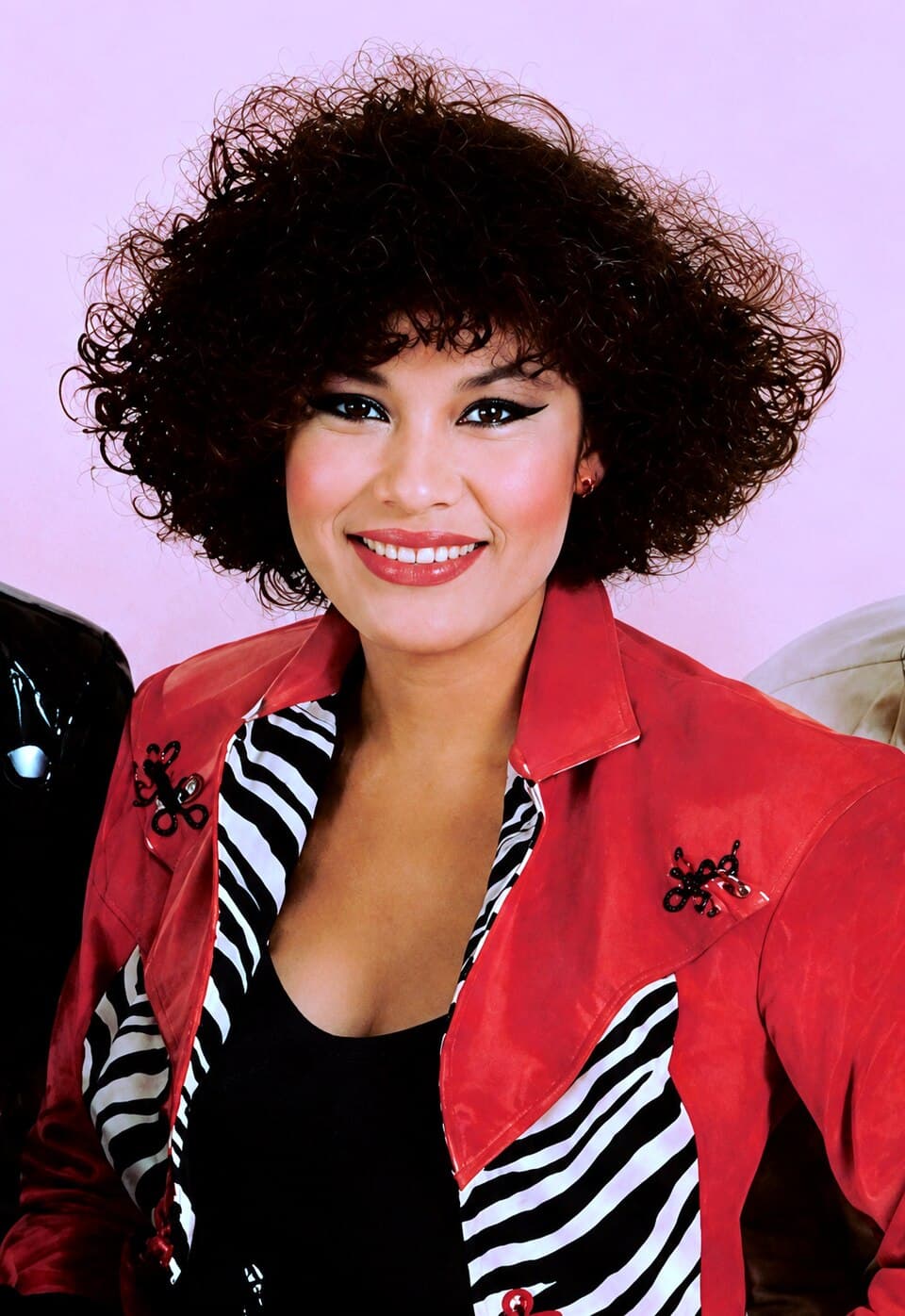
American · Arts
Selena
April 16, 1971 – March 31, 1995
Early Life and Background
Selena Quintanilla-Pérez, known professionally as Selena, was born on April 16, 1971, in Lake Jackson, Texas, a small city near Houston.[1][3][10] She was the youngest child of Abraham Quintanilla Jr. and Marcella (Perez) Quintanilla, Mexican-American parents whose own experiences of migration and music deeply shaped her upbringing.[1][3] Abraham, a former musician who had performed with the group Los Dinos in the 1950s and 1960s, recognized his daughter’s talent early and became a central figure in her artistic development.[1][6]
Selena grew up in a bilingual household but initially spoke more English than Spanish, a common pattern among second-generation Mexican Americans in South Texas.[1][3] Her father taught her Spanish phonetically so she could perform in Spanish-language genres, a process that later allowed her to connect authentically with Spanish-speaking audiences.[1][6] The family’s economic struggles, including the failure of Abraham’s restaurant Papagayo, pushed them to rely on music as both passion and livelihood, setting the stage for Selena’s intensive performance schedule as a child.[1][15]
Relocating to Corpus Christi after the restaurant closed, the Quintanillas focused on building a family band. Selena’s early life therefore blended school, rehearsals, and performances at fairs, weddings, and small venues, immersing her in the world of Tejano and regional Mexican music while instilling values of discipline and collective effort.[1][10]
Career Beginnings and Development
In the early 1980s, Abraham officially formed the band Selena y Los Dinos, with Selena on lead vocals, her brother A.B. Quintanilla on bass, and her sister Suzette Quintanilla on drums.[1][5][10] By 1981, the group was performing around South Texas, and in 1983 they began releasing independently produced recordings, building a regional following in the Tejano scene.[1][5][10] Tejano music—a fusion of Mexican, European, country, and rock elements—was heavily male-dominated; Selena’s presence as a young female lead singer was still unusual and sometimes met with skepticism.[3][10]
Despite industry doubts, Selena’s powerful voice and charismatic stage presence quickly distinguished her. Her father managed the group, arranging constant gigs that often required long hours of travel. This period honed Selena’s performance skills but also meant that her formal schooling was disrupted; she eventually continued her education through correspondence and later earned a high-school equivalency diploma.[1][6]
Selena’s breakthrough within Tejano music came through awards and recognition at genre-specific events. In 1987, she won Female Vocalist of the Year at the Tejano Music Awards, initiating a run of multiple consecutive wins in that category.[10][15] On March 1, 1986, at age fifteen, she had already been honored with a Tejano Music Award for Female Vocalist of the Year, signaling her rise as a leading female voice in a field largely populated by male bands.[5][10]
Her growing prominence attracted the attention of record labels. In 1989, Selena signed with EMI Latin, reportedly becoming one of the first Latina artists signed to the label as it built a U.S. Latin roster.[1][6] The deal reflected EMI’s belief that Selena could help expand the market for Spanish-language recordings in the United States, and it provided professional resources for higher-quality production and marketing.
Major Works and Artistic Breakthroughs
Selena’s major-label career began with the release of her self-titled debut studio album, "Selena", on October 17, 1989.[1][18] The album explored a range of Tejano and pop styles and helped introduce her to broader audiences beyond Texas and the border region. While it did not yet achieve the blockbuster status of her later work, it established her as a central figure in EMI Latin’s lineup and laid the foundation for subsequent successes.[1][6]
Her second EMI Latin studio album, "Ven Conmigo", released on October 9, 1990, represented a critical step forward artistically and commercially.[4][18] The record combined Tejano, cumbia, and pop influences and featured tighter arrangements and production. Over time, "Ven Conmigo" gained traction on radio and in sales; on November 1, 1994, it became the first Tejano album by a female artist to be certified gold by the RIAA, confirming that Selena had surpassed significant commercial barriers in a genre historically dominated by men.[4][18]
Selena’s true breakthrough came with the release of "Entre a Mi Mundo" on May 12, 1992.[18] Anchored by the hit single "Como La Flor", the album sold over 300,000 copies and significantly expanded her audience in both the United States and Mexico.[18] By blending emotional ballads with danceable tracks, Selena and her team crafted a sound that resonated across borders, demonstrating that Tejano music could succeed in mainstream Latin markets.[1][3]
In addition to studio albums, Selena’s live performances were central to her artistic identity. On May 4, 1993, she released the concert album "Selena Live!", which documented the energy and precision of her stage shows.[1][8] The album would later earn her a Grammy Award for Best Mexican-American Album, awarded on February 23, 1994 at the 36th Annual Grammy Awards.[8][2] This win made her the first Tejano artist—and the first female Tejano artist—to receive a Grammy, marking a historic recognition of both her talent and the genre itself.[8][2]
Selena reached a new artistic and commercial peak with the release of "Amor Prohibido" on March 13, 1994.[18] The album produced multiple enduring hits—"Amor Prohibido," "No Me Queda Más," and "Fotos y Recuerdos"—and spent 97 weeks at No. 1 on Billboard’s Regional Mexican Albums chart, earning later recognition from Guinness World Records for its chart longevity.[18] The record’s themes of forbidden love, longing, and resilience, combined with a polished Tejano-pop sound, cemented Selena’s status as one of the most important Latin artists of the decade.[1][3]
On February 26, 1995, Selena performed a landmark concert at the Houston Astrodome, drawing tens of thousands of fans and demonstrating her capacity to headline large-scale arenas.[1][10] The show, now iconic, showcased her crossover potential and remains one of the most celebrated performances in her career.
At the time of her death, Selena was working on an English-language crossover album. After her murder, EMI completed and released "Dreaming of You" on July 18, 1995, combining English-language tracks with Spanish-language material.[8] The album debuted at No. 1 on the Billboard 200 chart, making Selena one of the very few Latin artists to top the main U.S. albums chart.[8] In the wake of its success, she became the first music artist to have five Spanish-language albums simultaneously on the Billboard 200, underscoring the depth of her posthumous influence.[8]
Awards, Honors, and Recognition
Throughout her career, Selena amassed numerous awards in the Tejano and Latin music industries. Beginning with her early Tejano Music Awards for Female Vocalist of the Year in the late 1980s, she maintained a near-continuous presence among winners in key categories.[10] Her dominance of these awards reflected both her popularity and the respect she commanded among musicians and fans.
The most widely recognized honor of her lifetime was the Grammy Award for Best Mexican-American Album, received on February 23, 1994 for "Selena Live!".[8][2] This award broke new ground by recognizing a Tejano performer in a mainstream U.S. institution, thereby boosting the profile of Tejano music as a serious artistic form.
Beyond industry awards, Selena has been the subject of extensive posthumous recognition. In 2011, she was inducted into the Texas Women’s Hall of Fame, and on June 16, 2011, the Texas Legislature and Governor formally declared April 16 "Selena Quintanilla-Pérez Day", honoring her contributions to the state’s culture.[7][10] On November 3, 2017, she received a star on the Hollywood Walk of Fame, commemorating her impact on entertainment and Latino representation.[1][7]
Her image has also appeared on U.S. postage stamps and other institutional tributes, such as the Smithsonian’s "Latin Music Legends" series, which highlights her role in expanding the audience for Texan-Mexican music and Latin sounds across the United States.[8]
Entrepreneurship, Fashion, and Cultural Influence
Selena was not only a singer but also a fashion designer and business owner. On August 1, 1993, she opened her first Selena Etc. boutique-salon in Corpus Christi, Texas.[1][10] The shop combined clothing retail, a beauty salon, and merchandising, allowing Selena to exercise creative control over her public image and to share her sense of style with fans.
In 1993, she expanded this venture by opening an additional Selena Etc. boutique in San Antonio, extending her entrepreneurial footprint.[1] Her designs often fused glamorous stage wear—with sequins, bold colors, and fitted silhouettes—with elements drawn from everyday borderlands fashion. Through these businesses, Selena modeled a form of Latina entrepreneurship that combined artistry, commerce, and community engagement.[1][3]
Her influence on fashion can be seen in the widespread emulation of her performance outfits and hairstyles among fans in the 1990s and beyond. As a young, bilingual Mexican-American woman, Selena offered an alternative to more Eurocentric standards of beauty and style prevalent in mainstream media, helping many Latinas see themselves reflected in popular culture.[3][13]
Personal Life
Selena’s personal life, though often overshadowed by her professional achievements, played a crucial role in her story. She met guitarist Chris Pérez after he joined her band, and the two developed a romantic relationship despite concerns from her father and manager.[1][3] Fearful that a romance might disrupt the band’s cohesion and Selena’s image, Abraham initially opposed their relationship.
Nevertheless, Selena and Pérez persisted. On April 2, 1992, they married in Nueces County, Texas.[1][3] The couple’s marriage, initially conducted in secret, was later accepted by the Quintanilla family. Selena and Chris shared a supportive partnership, with Pérez deeply involved in her musical projects and performance life.[1]
Selena was known for her close ties to her family and to children and fans. She participated in charity events, visited schools, and frequently emphasized the importance of education and perseverance when speaking publicly.[6][20] Her humble demeanor and accessibility endeared her to audiences, distinguishing her from more distant celebrity archetypes.
Later Life and Death
By the mid-1990s, Selena stood on the verge of full mainstream crossover. With "Amor Prohibido" enjoying extraordinary chart success and plans underway for an English-language album, industry observers viewed her as a likely breakout star in the broader U.S. pop market.[1][3] Her schedule included major concerts, studio sessions, and management responsibilities for her boutiques and fan club.
However, tensions began to surface around her business dealings. Yolanda Saldívar, originally president of Selena’s fan club and later manager of her Selena Etc. boutiques, came under suspicion for financial irregularities and mismanagement.[1][2] The Quintanilla family confronted Saldívar, and Selena attempted to resolve the situation personally.
On the morning of March 31, 1995, Selena met Saldívar at a Days Inn motel in Corpus Christi to discuss missing financial records.[1][2] During this encounter, Saldívar shot Selena once, severing an artery and causing catastrophic blood loss.[1][14] Selena managed to run to the lobby to identify her assailant before collapsing. She was transported to a local hospital, where doctors attempted resuscitation, but she was pronounced dead later that day.[1][2]
Selena was 23 years old at the time of her death. The news struck fans and communities across the Americas, leading to spontaneous memorials, vigils, and a massive outpouring of grief. Her funeral, attended by thousands, underscored the extent to which she had become a symbol of Mexican-American pride and Latina possibility.[1][3]
Saldívar was arrested and later convicted of murder, receiving a long prison sentence. The case, widely covered by the media, raised questions about celebrity security, trust within fan organizations, and the specific vulnerabilities faced by young female stars.[1][2]
Posthumous Releases, Film Portrayals, and Cultural Legacy
Immediately after her death, work continued on Selena’s English-language crossover project. EMI released "Dreaming of You" on July 18, 1995, combining completed English tracks with Spanish songs from her catalog.[8] The album’s debut at No. 1 on the Billboard 200 demonstrated the magnitude of the audience she had built and the strength of interest in her crossover potential.[8]
Selena’s life and career have been dramatized and revisited in multiple media. The 1997 biographical film "Selena", starring Jennifer Lopez, introduced her story to a wider audience and played a key role in defining popular memory of her life.[1] Decades later, "Selena: The Series", released on streaming platforms, offered a multi-episode portrayal of her family, career development, and business ventures, emphasizing the collective nature of the Quintanilla enterprise.[1]
Her influence extends into contemporary Latin music and pop culture. Artists frequently cite Selena as a foundational inspiration, and her songs remain staples of Latin radio and community events.[8][20] Academic and journalistic works analyze her as a lens for understanding Mexican-American identity, borderlands culture, gender, and representation in the late twentieth century.[6][20]
In addition to the 2011 declaration of Selena Day in Texas and the Hollywood Walk of Fame star granted on November 3, 2017, her legacy is preserved in museums and institutional exhibits. The Smithsonian’s "Latin Music Legends" initiative, for instance, highlights her role in expanding Latin music’s audience in the United States and underscores her impact on fashion and performance.[8]
Historical Impact and Significance
Selena occupies a central place in women’s and Latinx history. As a Mexican-American woman from South Texas, she navigated a male-dominated genre, systemic industry biases, and the expectations of both U.S. and Mexican audiences. Her success in Tejano music opened doors for other women to perform, record, and seek recognition within regional and Latin genres.[3][10]
Her Grammy win in 1994 and the gold certification of "Ven Conmigo" as the first female-led Tejano album to reach that milestone mark critical breakthroughs in the institutional recognition of Latina artists.[4][8] These achievements demonstrated that Spanish-language music performed by women could reach high levels of artistic prestige and commercial success in the U.S. market.
Selena’s bilingual and bicultural identity also made her a powerful symbol for Mexican-American youth. She moved fluidly between English and Spanish, U.S. and Mexican cultural references, and local and mainstream stages, reflecting the hybrid realities of her fan base.[1][13] Her story continues to inspire discussions about representation, body image, and the possibilities of Latina success in industries that remain unevenly accessible.
Her tragic death intensified her symbolic role, but it did not halt her influence. Posthumous releases, ongoing tributes, and institutional recognitions have ensured that Selena remains a touchstone in conversations about Latin music’s evolution, women’s achievements, and the cultural history of Texas and the United States.
In sum, Selena’s life—from her birth in Lake Jackson in 1971 to her murder in Corpus Christi in 1995—traces a path of remarkable artistic innovation, entrepreneurial initiative, and barrier-breaking accomplishment. Her music and image continue to resonate, making her one of the most significant women in the history of American and Latin popular music.[1][3][8]
Dated achievements
16 indexed.
- Apr161971Arts
Birth of Selena Quintanilla-Pérez
Birth of Selena Quintanilla-Pérez in Lake Jackson, Texas, to Abraham and Marcella Quintanilla.
View details Selena - Wikipedia - Mar011986Arts
First Tejano Music Award for Female Vocalist of the Year
At age 15, Selena wins her first Tejano Music Award for Female Vocalist of the Year, marking her rise in a male-dominated genre.