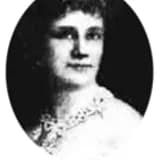
On February 21, 1864, Sarah P. Mather is granted U.S. Patent No. 36,351 for an “Improvement in Submarine Telescopes,” her second submarine optics patent.
On February 21, 1864, Sarah P. Mather secured a second United States patent, U.S. Patent No. 36,351, for an "Improvement in Submarine Telescopes."[1][10][14] This patent refined the design of her earlier 1845 submarine telescope and lamp, enhancing its optical performance and practical utility for underwater observation. The improvement focused on better illumination and clearer viewing of submerged objects, addressing limitations encountered in early use of the device.
The timing of this patent is especially important. By 1864, the American Civil War was at its height, and naval warfare—particularly the deployment of ironclads and emerging submarine technologies—had made underwater hazards, mines, and hull damage critical tactical concerns. Mather’s improved instrument offered a way to inspect ships and underwater structures without costly dry‑docking or dangerous dives, aligning her work with the broader modernization of naval logistics and safety.[1][14]
Some secondary accounts have mistakenly attributed the 1864 patent to one of her children, reflecting confusion over family inventorship. However, the National Archives’ "Today’s Document" feature and English‑language encyclopedic entries clearly identify Sarah P. Mather herself as the named patentee on No. 36,351.[1][10][14] This clarification matters for women’s history: she was not only a single‑patent inventor, but one of the earliest American women to hold multiple patents for technological instruments.
Securing a second patent nearly twenty years after her first demonstrates sustained engagement with technical problem‑solving and the patent system. In a period when married women’s legal and economic rights were heavily constrained, Mather’s persistence in refining and legally protecting her invention underscores her determination and agency. The February 21, 1864 grant therefore stands as a sentinel moment in both maritime technology and the history of women inventors, showing how a woman working largely outside formal scientific institutions could nonetheless influence the development of underwater optics and naval practice.