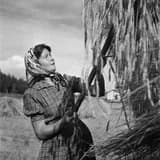
Salminen's debut novel Katrina won a major Scandinavian publishers' novel competition, propelling a former housemaid to sudden international literary stardom.
In 1936, Sally Salminen, then working as a domestic maid in New York City, achieved a stunning literary breakthrough when her debut novel Katrina won a prestigious joint Scandinavian publishers' prize contest. The novel, written in Swedish during her limited free time while employed in domestic service, told the story of a poor woman's life of hardship and endurance on the Åland Islands.
The win was widely reported internationally; a notable account appeared in The New York Times on 16 October 1936, highlighting the remarkable story of a maid who had spent roughly a year writing the prize-winning book in her spare time, a narrative that captured public imagination amid the Great Depression as a story of working-class perseverance and unexpected triumph.
Katrina was subsequently translated into numerous languages and became a bestseller across Scandinavia and internationally, establishing Salminen as one of the most significant Finnish-Swedish authors of the 20th century. Her success was historically notable because it defied class barriers in the literary world: an uneducated domestic worker from a poor, remote island community rose to literary celebrity through sheer talent and determination, at a time when access to publishing and literary recognition was overwhelmingly dominated by educated elites.
The novel's success also brought international attention to the Åland Islands and Finnish-Swedish literature, cementing Salminen's legacy as a pioneering realist voice for the rural poor and for women's working-class experience.