← All women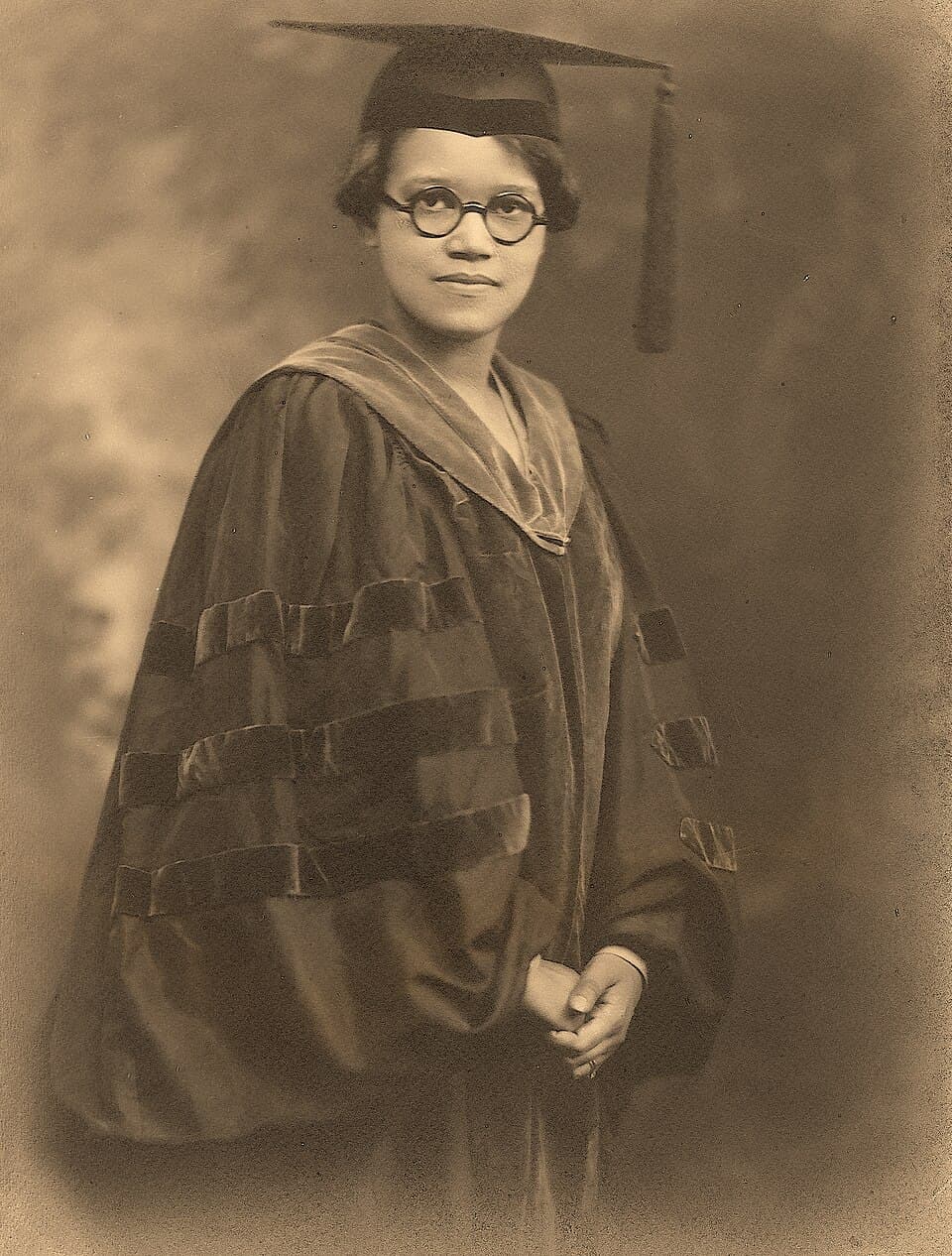
American · Law · Science · Activism · Politics
Sadie Tanner Mossell
January 2, 1898 – November 1, 1989
Early Life and Family Background
Sadie Tanner Mossell was born on January 2, 1898, in Philadelphia, Pennsylvania, into a family whose achievements had already made history for African Americans. Her father, Aaron Albert Mossell II, was the first Black man to earn a law degree from the University of Pennsylvania (1888), and her mother, Mary Louisa Tanner, came from the illustrious Tanner family. Her great-uncle was the internationally renowned painter Henry Ossawa Tanner, and her uncle, Lewis Baxter Moore, was among the first African Americans to earn a PhD and later became a dean at Howard University. This extraordinary family of "firsts" instilled in Sadie both the expectation and the tools for exceptional achievement despite the entrenched racism of turn-of-the-century America.
Sadie's parents separated when she was young, and she and her mother moved to Washington, D.C., where she was raised for a period among the family of her uncle Lewis Moore, absorbing the intellectual culture of Howard University's academic community. She eventually returned to Philadelphia to complete her education, attending the M Street High School (later Dunbar High School) in Washington, D.C., before enrolling at the University of Pennsylvania.
Education and Academic Trailblazing
Mossell entered the University of Pennsylvania in 1915, initially studying education. She earned her bachelor's degree in 1918 and a master's degree in economics in 1919. She continued her doctoral studies at Penn, and on June 15, 1921, she was awarded a PhD in Economics, becoming the first African American woman in the United States to earn a doctorate in that field. Her dissertation, "The Standard of Living Among One Hundred Negro Migrant Families in Philadelphia," was a pioneering empirical study of the economic and social conditions faced by Black families who had relocated to Philadelphia during the Great Migration. The work combined rigorous quantitative analysis with a deep concern for social welfare, foreshadowing her lifelong dedication to economic justice for African Americans.
Despite this historic accomplishment, Mossell found that no employer—academic or corporate—was willing to hire a Black woman economist. The economics profession, dominated entirely by white men, offered her no viable career path. This stark rejection, a product of both racism and sexism, led her to pivot toward law, a field she hoped might provide more tangible opportunities for professional practice and social impact.
She enrolled at the University of Pennsylvania Law School in 1924. There, she distinguished herself academically, becoming the first woman of any race to serve on the editorial board of the University of Pennsylvania Law Review. She graduated in 1927, becoming the first African American woman to earn a law degree from Penn Law. Later that year, she passed the Pennsylvania Bar Examination, becoming the first African American woman admitted to practice law in the Commonwealth of Pennsylvania.
Legal Career and Civil Rights Advocacy
Alexander practiced law for three decades, largely in partnership with her husband, Raymond Pace Alexander, whom she had married in 1923. Raymond Pace Alexander was himself a prominent attorney and later became the first African American appointed to a judgeship in Pennsylvania, serving on the Philadelphia Court of Common Pleas. The couple's firm, Alexander & Alexander, focused substantially on family law, estate matters, and civil rights litigation, and Sadie became known for her meticulous, principled approach to legal practice.
Beyond private practice, Alexander was deeply engaged in civil rights activism throughout her career. She served as national president of Delta Sigma Theta Sorority (1919–1923), using the organization as a platform for advocacy and mutual support among Black professional women. She was active in the National Urban League and the National Association for the Advancement of Colored People (NAACP), lending her legal expertise to the fight against segregation and racial discrimination in housing, employment, and public accommodations.
Her most prominent national role came in 1946, when President Harry S. Truman appointed her to the President's Committee on Civil Rights. The committee's landmark 1947 report, To Secure These Rights, laid much of the intellectual and policy groundwork for the postwar civil rights movement, addressing issues including lynching, voting rights, employment discrimination, and desegregation of the armed forces. Alexander's contributions to the committee reflected her decades of combined legal and economic expertise, bringing data-driven rigor to the moral and political arguments for civil rights reform.
Later Career and Continued Public Service
Alexander continued practicing law into the 1970s and remained active in public policy debates concerning race, poverty, and aging throughout her later decades. In 1976, President Jimmy Carter appointed her to chair the White House Conference on Aging, reflecting her continuing relevance as a policy leader well into her seventies. She also served on Philadelphia's Commission on Human Relations and various municipal boards focused on civil rights enforcement and urban policy.
Throughout her career, she remained an outspoken advocate for the economic dimensions of racial inequality, frequently arguing—well ahead of her time—that civil rights and economic policy were inseparable. Her early academic work on Black migrant families' living standards anticipated later scholarship on structural economic inequality, and her legal career put those insights into practical advocacy.
Personal Life
Sadie married Raymond Pace Alexander on November 29, 1923. The couple had two daughters, Mary Elizabeth and Rae Pace Alexander-Minter. Their household in Philadelphia became a hub for Black intellectual and civic life, hosting figures from academia, law, and the arts. The Alexanders were prominent members of Philadelphia's Black elite and used their combined social and professional standing to advance civil rights causes throughout the city and state.
Raymond Pace Alexander died in 1974. Sadie continued her public and legal work as a widow for another fifteen years, remaining active in civic affairs even as she began to experience the effects of Alzheimer's disease in her final years.
Honors and Legacy
Sadie Tanner Mossell Alexander's list of "firsts" is extraordinary even by the standards of pioneering Black women of her generation: first African American woman to earn a PhD in economics in the United States; first woman of any race on the University of Pennsylvania Law Review editorial board; first African American woman to graduate from Penn Law; and first African American woman admitted to the Pennsylvania Bar. Each of these achievements required her to overcome combined and compounding barriers of racism and sexism in institutions that had rarely, if ever, admitted Black women.
Her legacy has been increasingly recognized in recent decades. The University of Pennsylvania named the Sadie T.M. Alexander Convocation Center in her honor. The American Economic Association posthumously honored her as a Distinguished Fellow, acknowledging her foundational role in the history of the discipline despite having been denied the opportunity to practice as a professional economist during her lifetime. In 2018, a group of Black women economists founded The Sadie Collective, an organization dedicated to increasing the representation and visibility of Black women in economics, finance, and related data-driven fields—an initiative explicitly named to honor her memory and unrealized professional aspirations in the field.
Her extensive personal and professional papers are held at the University of Pennsylvania Archives, providing scholars with rich material to study her contributions to law, economics, and civil rights history. Alexander's life remains a testament to relentless intellectual achievement in the face of systemic exclusion, and her example continues to inspire contemporary movements for diversity and equity in economics, law, and public policy.
Death
Sadie Tanner Mossell Alexander died on November 1, 1989, in Philadelphia, at the age of 91. She was survived by her daughters and a legacy of institutional and social change that reshaped the possibilities available to Black women in American professional life.
Dated achievements
4 indexed.
- Jan021898Activism
Born in Philadelphia, Pennsylvania
Sadie Tanner Mossell was born on January 2, 1898, in Philadelphia, into a prominent African American family of educators, ministers, and professionals.
View details Sadie T. M. Alexander - Wikipedia - Jun151921Science
Earned PhD in Economics from the University of Pennsylvania
Became the first African American woman to earn a PhD in economics in the United States, awarded by the University of Pennsylvania.