← All women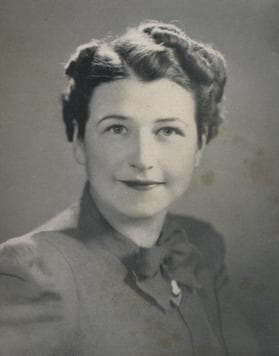
American · Arts
Ruth Graves Wakefield
June 17, 1903 – January 10, 1977
Early Life and Background
Ruth Jones Graves Wakefield was born on June 17, 1903, in East Walpole, Massachusetts, a community in the greater Boston area.[10][12] She grew up in nearby Easton, Massachusetts, where she attended local schools and developed interests that would later shape her career in domestic science and food service.[4][7][8] Her parents are recorded as Helen Vest Jones and Fred Graves, and she had at least two siblings.[8][12] Sources note that her father had been married twice, which contributed to the family’s blended structure.[12]
Wakefield completed her secondary education at Oliver Ames High School in North Easton, graduating in 1920.[4][7] At a time when advanced education for women was still relatively uncommon, particularly in fields related to science and nutrition, she pursued further study at the Framingham Normal School Department of Household Arts, an institution that later became Framingham State University.[2][7][10] She enrolled in 1921 and completed her degree in household arts on June 12, 1924.[7][10]
Her education included training in nutrition, food preparation, and home economics pedagogy, disciplines that were gaining recognition as professional fields in the early twentieth century. Framingham’s program prepared women to work as dietitians, teachers, and household arts specialists, reflecting broader Progressive Era trends toward scientific management of the home and the integration of domestic skills into formal curricula.[3][7][10] Wakefield’s later career as a dietitian, educator, restaurateur, and cookbook author drew directly on this educational foundation.
Career Beginnings and Development
After graduating from Framingham Normal School in 1924, Wakefield embarked on a career that combined education and applied nutrition. She taught home economics at Brockton High School, using her training to instruct students—likely predominantly young women—on cooking, nutrition, and household management.[7] She also worked as a hospital dietitian, applying scientific principles of nutrition to plan meals for patients, a role that demanded both technical knowledge and practical skill.[3][7][10]
Her early professional experiences placed her at the intersection of emerging fields in dietetics and home economics. In these roles, Wakefield gained expertise not just in recipe development but in balancing flavor, cost, and nutritional adequacy, skills that later informed the menus at her restaurant. These positions also exemplified the professionalization of domestic work: tasks historically associated with unpaid labor in the home were increasingly recognized as specialized occupations.
In 1926, Ruth Jones Graves married Kenneth Donald Wakefield, an executive in the refrigeration industry.[8][10][12] Their partnership proved both personal and entrepreneurial. Four years after their marriage, the couple purchased a property in Whitman, Massachusetts—described as a Cape Cod–style former toll house located halfway between Boston and New Bedford—and converted it into a restaurant and inn.[3][10][12] Kenneth handled aspects of the business and infrastructure, while Ruth took primary responsibility for the kitchen and menu design.
The Toll House Inn and Culinary Innovation
In 1930, Ruth and Kenneth Wakefield opened the Toll House Inn in Whitman, Massachusetts.[3][10] The inn occupied a building that had once served as a toll collection point, lending a sense of historical charm that complemented Wakefield’s emphasis on traditional New England fare. Situated along a busy route between Boston and New Bedford, the inn catered to travelers, local residents, and, over time, notable guests.
Wakefield served as the inn’s chef, developing its menu and preparing meals with a focus on quality ingredients and hospitality.[3][10] Her culinary repertoire included regional specialties and carefully crafted desserts. The Toll House Inn soon earned a reputation for excellent food, becoming a destination in its own right. Guests returned not only for lodging but for meals that showcased Wakefield’s skill and creativity.
It was in this environment—working daily in a professional kitchen and responding to diners’ tastes—that Wakefield’s most famous innovation emerged. While the precise date is not documented, various sources credit her with creating a new cookie in the late 1930s, often around 1937 or 1938.[1][3][7][10] Seeking to produce a chocolate-flavored cookie, she chopped a Nestlé semisweet chocolate bar into small pieces and added them to a standard cookie dough.
Contrary to her apparent expectation, the chocolate pieces did not fully melt into the dough but retained their shape, yielding discrete chunks embedded in the cookie.[10] The resulting dessert, initially called the Toll House Chocolate Crunch Cookie, quickly became popular among the inn’s guests.[3][7][10] Its texture and flavor distinguished it from other cookies of the period, and its origin in a well-known inn helped accelerate word-of-mouth spread.
Wakefield’s innovation built on her training in household arts and on years of experience adapting recipes to diners’ preferences. Far from being a mere accident, the cookie reflected her willingness to experiment with ingredients and her capacity to recognize and refine a successful product. Subsequent accounts sometimes romanticize the invention as an unintended consequence; however, multiple sources emphasize her systematic recipe development and culinary expertise.[1][3][10]
Major Works, Discoveries, and Accomplishments
Wakefield’s principal published work is the cookbook "Ruth Wakefield’s Tried and True Recipes", often cited with the subtitle Toll House Tried and True Recipes.[1][3][10] An early edition was released in 1931, featuring recipes drawn from her experience at the Toll House Inn.[10] Over time, the book went through multiple printings and revisions, becoming a widely used resource for home cooks seeking to replicate the inn’s dishes.
By 1938, the cookbook included the first printed recipe for the Toll House Chocolate Crunch Cookie, which is recognized as the earliest documented chocolate chip cookie recipe.[3][10] The Library of Congress notes that the cookie’s recipe appears on page 165 of the 1938 edition.[3] This publication transformed the dessert from a local specialty into an accessible formula that could be reproduced by home bakers nationwide.
Wakefield’s cookie recipe soon reached beyond the pages of her book. According to accounts from Framingham State University, its popularity among Toll House guests led to its publication in a Boston newspaper, further expanding its audience.[7] During the Second World War, soldiers from Massachusetts and other regions reportedly received Toll House cookies in care packages, spreading knowledge of the recipe as they shared the cookies with fellow servicemen from across the United States.[3][7] This wartime circulation helped cement the chocolate chip cookie as a symbol of home and comfort.
Around 1939, Wakefield entered into a notable agreement with the chocolate manufacturer Nestlé.
- She granted Nestlé the rights to print her Toll House cookie recipe on its chocolate packaging.[3][10]
- In return, she received a one‑time financial payment—commonly described as one dollar—and a lifetime supply of chocolate.[3][10]
This arrangement enabled Nestlé to market its semisweet chocolate bars, and later chocolate chips, explicitly for use in the Toll House cookie. The recipe appeared on packaging and promotional materials, ensuring that countless consumers encountered Wakefield’s formula in grocery stores and home kitchens.
Wakefield’s creation of the chocolate chip cookie and her partnership with Nestlé represent her most enduring accomplishments. The cookie became one of the most popular desserts in the United States, integrating into everyday baking, commercial production, and cultural representations of domestic life.[1][3][10] Her work reshaped expectations of what a cookie could be and demonstrated how a single recipe, developed by a woman chef in a regional inn, could influence global food culture.
Awards, Honors, and Recognition
During her lifetime, Ruth Wakefield appears not to have received major national awards on the scale of formal scientific or literary honors. However, her influence was recognized in several ways. Her cookbook’s success and repeated printings attest to its adoption by home cooks and to her status as an authority on baking and New England cuisine.[3][10]
The prominence of the Toll House cookie recipe on Nestlé packaging effectively functioned as an acknowledgment of her authorship, even if the financial terms were modest. Nestlé’s continued use of the "Toll House" name on its chocolate chips and branding helped keep Wakefield’s creation in public view, though her individual story was often overshadowed by the corporate brand.[3][10]
In later decades, institutions have sought to restore Wakefield to historical memory. Framingham State University, where she studied, has highlighted her as a notable alumna and the inventor of the chocolate chip cookie.[7][13] The Library of Congress has featured her in blog posts exploring the history of the Toll House cookie and its cultural impact.[3] Encyclopedias in multiple languages—including English, German, Portuguese, Spanish, Catalan, Basque, French, and Malayalam—now include entries on Wakefield, attesting to worldwide recognition of her contribution.[1][2][4][5][6][8][9][11]
Popular history outlets and children’s educational resources portray her as a pioneering woman in culinary innovation, often emphasizing her roles as chef, dietitian, educator, and business owner.[10][16] While these acknowledgments emerged largely after her death, they collectively underscore her significance in women’s history and in the broader history of food.
Personal Life
Ruth Jones Graves married Kenneth Donald Wakefield in 1926.[8][10][12] Kenneth worked as an executive in the refrigeration industry, a background that may have aided the couple in managing the practical aspects of running a restaurant, including food storage and equipment.[8] Together they purchased and operated the Toll House Inn, blending their professional skills in a joint enterprise.[3][10]
Although many modern accounts focus on Ruth’s culinary contributions, the Toll House Inn was fundamentally a family business. Kenneth managed operations, while Ruth oversaw the kitchen and menu. Their partnership exemplified the ways married couples in the early twentieth century could collaborate in small-scale entrepreneurship, with women’s labor in cooking and hospitality central to the establishment’s success.
Various biographical sketches mention that Ruth and Kenneth had a family, though details about children are limited in standard reference sources. The shape of her domestic responsibilities, combined with demanding work at the inn, reflects the dual burdens often shouldered by women who worked both inside and outside the home.
Her personal interests extended beyond baking. As a trained dietitian and lecturer, Wakefield engaged with broader questions of nutrition and food education. Her transition from school teaching and hospital dietetics to restaurant management and cookbook writing demonstrates a continuous thread: she sought to apply knowledge about food to improve everyday meals, whether in institutional settings or in her own kitchen.
Legacy and Historical Impact
Ruth Graves Wakefield’s legacy is anchored in her invention of the chocolate chip cookie and the development of the Toll House Chocolate Crunch Cookie recipe. This single innovation transformed dessert culture in the United States and, ultimately, around the world.
Her impact can be traced along several dimensions:
- Culinary innovation: Wakefield created a new cookie type distinguished by chunks of semisweet chocolate, establishing a flavor and texture profile that became canonical.[1][3][10]
- Commercial influence: Her Nestlé licensing agreement helped spur the production and marketing of chocolate chips as a distinct product category.[3][10] The "Nestlé Toll House" brand remains central to baking chocolate marketing.
- Home baking culture: Through her cookbook and the recipe printed on packaging, Wakefield’s cookie entered millions of households, shaping family traditions, school events, and celebrations.
- Women’s history: As a woman chef, dietitian, and business owner in the early twentieth century, Wakefield demonstrated how domestic expertise could translate into entrepreneurship and cultural influence.
The chocolate chip cookie’s ubiquity often obscures its origin in a particular time and place: a New England inn kitchen run by a trained home economist. The association of the cookie with comfort, home, and American identity owes much to the ways Wakefield’s recipe was shared—through cookbooks, newspaper publication, wartime care packages, and corporate packaging.[3][7][10]
In recent years, scholars and popular writers have used Wakefield’s story to highlight the contributions of women to food technology and business, arguing that her example illustrates broader patterns of women’s innovation being mediated through domestic spheres and commercial partnerships. Her recognition across multiple national and linguistic contexts underscores the global reach of her creation.
Later Life and Death
After the widespread success of the Toll House cookie and her partnership with Nestlé, Wakefield continued to be associated with the Toll House Inn and its culinary reputation. Over the decades, the inn remained a symbol of New England hospitality and of the origin story of the chocolate chip cookie, even as versions of the recipe proliferated in community cookbooks and commercial products.
Wakefield’s health declined in the 1970s. On January 10, 1977, she died at the age of 73 in Plymouth, Massachusetts, reportedly at Jordan Hospital, after a long illness.[4][6][11] Her death closed a chapter in American culinary history, but the dessert she created continued to grow in popularity.
In the years following her death, the Toll House brand and cookie remained staples of American baking, while Wakefield herself was often "missing in history"—her role overshadowed by corporate branding and the cookie’s everyday familiarity. Subsequent efforts by educators, historians, and institutions such as Framingham State University and the Library of Congress have helped re-center her in the narrative of the chocolate chip cookie’s origin.[3][7][13]
Today, Ruth Graves Wakefield is widely acknowledged in encyclopedias and educational materials as the inventor of the Toll House chocolate chip cookie and as a notable figure in American food history.[1][2][4][6][8][10] Her life story—moving from domestic science student to teacher, dietitian, innkeeper, cookbook author, and culinary innovator—illustrates the ways women’s expertise in food and household arts shaped both everyday life and commercial culture in the twentieth century.
Dated achievements
5 indexed.
- Jun171903Arts
Birth of Ruth Jones Graves Wakefield
Birth of Ruth Jones Graves (later Ruth Graves Wakefield) in East Walpole, Massachusetts, U.S.
View details Kids Britannica – Ruth Wakefield - Jan011930Arts
Opening of the Toll House Inn in Whitman, Massachusetts
Ruth and Kenneth Wakefield open the Toll House Inn in Whitman, Massachusetts, establishing the future birthplace of the chocolate chip cookie.