← All women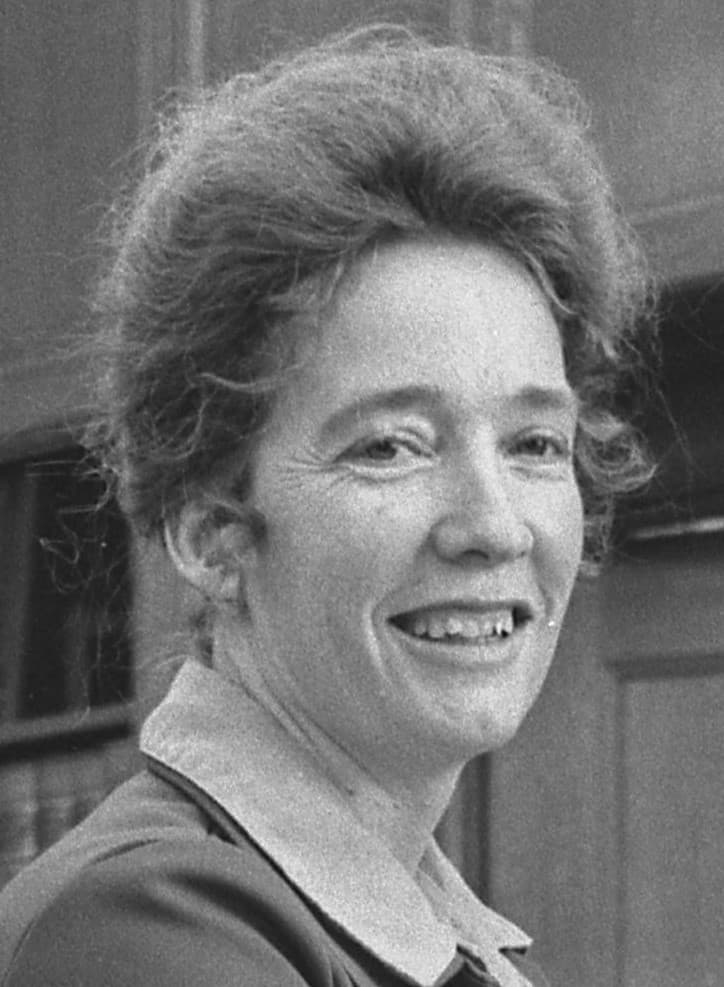
American · Law · Politics · Activism
Rose Bird
November 2, 1936 – December 4, 1999
Early Life and Education
Rose Elizabeth Bird was born on November 2, 1936, in Tucson, Arizona, the youngest of three children of Arthur and Anne Bird. Her family were tenant farmers who struggled during the Great Depression. When Rose was still young, her parents divorced, and her mother relocated the family to Sea Cliff, on Long Island, New York, where Anne Bird supported her children by working as a factory laborer and domestic worker. The family's economic hardship left a lasting impression on Rose, instilling in her an enduring sensitivity to issues of class, labor, and social justice that would shape her later career.
Bird attended local public schools on Long Island, excelling academically despite the family's financial constraints. She won a scholarship to Long Island University, where she began her undergraduate studies, before transferring to the University of California, Berkeley. She graduated from Berkeley in 1958 with a degree in political science, earning Phi Beta Kappa honors—a testament to her academic ability and drive. She went on to earn her law degree from Boalt Hall, the University of California, Berkeley's School of Law, in 1965, where she was one of only a handful of women in her class, reflecting the deep underrepresentation of women in the legal profession at the time.
Early Legal Career
After law school, Bird's career path was initially unconventional for a woman of her generation. She served as a law clerk for a justice of the Nevada Supreme Court from 1965 to 1966, then went on to work as a deputy public defender in Santa Clara County, California. There she distinguished herself as the first woman ever to serve in that office and quickly rose to become the head of the appellate division of the Public Defender's Office, a position of significant responsibility within the county's criminal justice system.
Her work as a public defender exposed her directly to the inequities faced by indigent defendants within the criminal justice system, further cementing her commitment to civil liberties and reform. She also spent time teaching, serving as a lecturer at Stanford University, which enhanced her academic credentials and connected her with influential legal scholars and future political allies.
California Secretary of Agriculture and Services
Bird's career took a decisive political turn when Governor Edmund G. "Jerry" Brown Jr. was elected in 1974. A reform-minded Democrat looking to diversify state government leadership, Brown appointed Bird as California's Secretary of Agriculture and Services on March 26, 1975. This appointment made her the first woman ever to serve in the cabinet of a California governor—an unprecedented breakthrough in a state government dominated almost entirely by men at the executive level.
In this cabinet post, Bird navigated one of the most contentious labor issues in California history: the ongoing struggle between agricultural growers and farmworkers, epitomized by the activism of Cesar Chavez and the United Farm Workers union. Bird was instrumental in crafting and passing the California Agricultural Labor Relations Act of 1975, landmark legislation that, for the first time, extended formal collective bargaining rights to farmworkers in California. This law was a major victory for the farmworker movement and cemented Bird's reputation as a fierce advocate for labor rights, while simultaneously making her deeply unpopular among growers and agribusiness interests—animosity that would resurface later in her career.
Chief Justice of the California Supreme Court
Just two years into her cabinet role, Governor Brown made an even more audacious move: on March 26, 1977, he nominated Rose Bird to serve as Chief Justice of the California Supreme Court. She was confirmed and sworn in shortly thereafter, becoming the first woman in history to sit on the California Supreme Court and simultaneously its chief justice—an extraordinary double milestone. She was only 40 years old.
Her appointment broke sharply with tradition, as Bird had never served as a judge at any level prior to her elevation to the state's highest court. This lack of prior judicial experience drew immediate and vocal criticism from segments of the legal community, the media, and political opponents, who considered her appointment an act of pure political patronage rather than a meritocratic judicial selection. Nonetheless, Bird was confirmed by California's Commission on Judicial Appointments and later won a retention election in 1978 to remain on the bench, becoming a fixture of the court for nearly a decade.
As Chief Justice, Bird presided over a court that developed a reputation for progressive jurisprudence, particularly regarding criminal justice, consumer protection, and civil rights. Her most consequential and controversial stance concerned capital punishment: Bird voted to overturn the death sentence in every single capital case that came before the California Supreme Court during her tenure—more than 60 cases in total. She argued that the state's death penalty statutes were often unconstitutionally applied and that procedural and substantive flaws in individual cases warranted reversal. Supporters praised her unwavering commitment to due process and her skepticism toward a punishment she and many legal scholars viewed as arbitrarily and unevenly applied; critics accused her of substituting her personal opposition to capital punishment for the will of the electorate and the law as written.
Political Backlash and Removal from Office
Bird's record on the death penalty, combined with lingering resentment from agricultural and business interests over her labor policies, galvanized a well-funded and highly organized political campaign to remove her from the bench when she came up for another retention election in 1986. Crime victims' rights groups, prosecutors' associations, and conservative political organizations poured enormous resources into a campaign portraying Bird as soft on crime and out of touch with public opinion.
On November 4, 1986, California voters rejected Bird's retention by an overwhelming margin of roughly two-to-one, making her the first chief justice in California history to be removed from office by the electorate. Two of her colleagues on the court who shared her death-penalty jurisprudence, Justices Cruz Reynoso and Joseph Grodin, were ousted in the same election—an unprecedented simultaneous removal of multiple sitting justices tied to a coordinated political campaign.
The 1986 election fundamentally reshaped the landscape of judicial politics not just in California but across the United States. It demonstrated how retention elections, designed to insulate judges from short-term political pressures, could nonetheless be transformed into high-stakes referenda on single controversial issues. Many legal scholars have since studied the Bird ouster as a cautionary tale about the tension between judicial independence and democratic accountability, and it is widely credited (or blamed, depending on perspective) with making subsequent state supreme court justices more cautious in capital punishment rulings for fear of similar electoral consequences.
Personal Life
Rose Bird never married and had no children, a fact that drew occasional and often sexist scrutiny from media and political opponents throughout her career, reflecting the era's persistent double standards for women in high-profile public roles. She was known for a reserved, private demeanor and a fierce dedication to her work, often described by colleagues as intensely focused, disciplined, and unwilling to compromise her principles for political expediency—traits that endeared her to supporters but also fueled the perception among critics that she was inflexible or aloof.
Later Life, Death, and Legacy
After her removal from the California Supreme Court in 1986, Bird largely withdrew from public life. She continued some legal and volunteer work, including assistance to low-income clients and advocacy organizations, but never sought or held another position of major public authority. In the years following her ouster, she was diagnosed with breast cancer, a battle she fought privately for over a decade while giving very few public interviews or statements about her legacy.
Rose Bird died on December 4, 1999, at her home in Palo Alto, California, at the age of 63. Her death prompted an outpouring of retrospective commentary reassessing her complicated legacy: pioneering feminist icon who shattered barriers for women in American law and government, versus a symbol of the fierce backlash that could follow judges who defied popular sentiment on charged political issues like capital punishment.
Bird's legacy endures in multiple dimensions. As the first woman ever appointed to a California governor's cabinet and the first woman to serve on, and to lead, the California Supreme Court, she opened doors for generations of women in law and public service who followed her. Her tenure and subsequent removal remain central case studies in American law school curricula and judicial politics scholarship examining the balance between judicial independence and electoral accountability. The California Supreme Court Historical Society and numerous feminist and legal organizations continue to commemorate her as a trailblazer whose career, for all its controversy, permanently altered perceptions of women's capacity to lead at the highest levels of American law.
Dated achievements
5 indexed.
- Nov021936Science
Born in Tucson, Arizona
Rose Elizabeth Bird was born on November 2, 1936, in Tucson, Arizona, later moving with her family to New York.
View details - Mar261975Politics
Appointed California Secretary of Agriculture and Services, first woman in a California governor's cabinet
Gov. Jerry Brown appointed Bird as California's Secretary of Agriculture and Services, making her the first woman to serve in a California governor's cabinet.
View details