← All women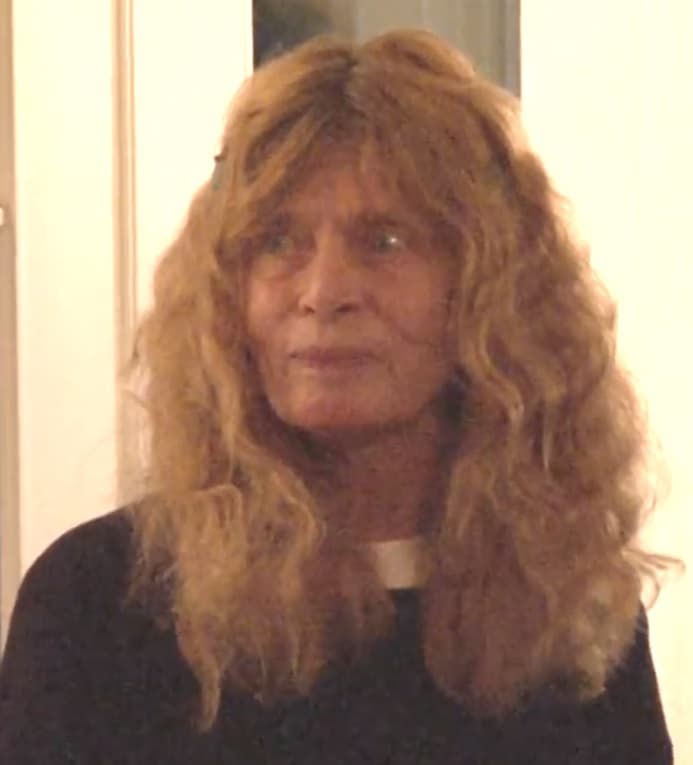
American · Sports · Activism
Roberta Louise "Bobbi" Gibb
November 2, 1942 – present
Early Life and Background
Roberta Louise “Bobbi” Gibb was born on November 2, 1942, in Cambridge, Massachusetts.[1][3] She grew up in nearby Winchester and spent time in Rockport, part of the greater Boston area that would later become central to her running story.[1][7] Her father was a chemistry professor at Tufts University’s School of Special Studies, and the family environment emphasized intellectual curiosity and independence.[15] Surrounded by books and scientific discussion, Gibb developed an early interest in both the natural world and big philosophical questions about human potential.
From childhood, Gibb loved to run, initially not as a competitive athlete but as a person seeking freedom and joy in movement.[7][9] She ran long distances through woods and along roads, often alone, at a time when organized sports opportunities for girls were limited and cultural expectations confined women to spectator roles. The medical establishment and athletic authorities commonly asserted that women were physically incapable of distance events beyond one and a half miles, and the International Olympic Committee did not include a women’s marathon until 1984.[1][12] These beliefs formed the backdrop against which Gibb would later challenge the Boston Marathon’s exclusionary rules.
Her early experiences in Massachusetts also acquainted her with the Boston Marathon as a major civic spectacle. Watching the race as a child and teenager, she recognized its symbolic power as both a test of endurance and a public celebration. The idea that women were barred from participating in such a central event struck her as fundamentally unjust and scientifically unfounded, a conviction that would shape her later decisions.
Education and Formative Influences
After completing her secondary education, Gibb attended Tufts University, following in her father’s academic footsteps.[14][15] At Tufts in the early 1960s, she continued to run long distances, famously commuting about eight miles to campus in basic Red Cross nurses’ sneakers because women’s athletic shoes were not widely available.[14] The absence of appropriate gear underscored the broader lack of institutional support for women athletes.
In 1962, while at Tufts, Gibb met runner William Bingay, who would become her first husband.[15] Their shared interest in running and the outdoors reinforced Gibb’s commitment to distance running as a central part of her life. That same year, she attended the Boston Marathon as a spectator and later began training seriously, gradually increasing her mileage to distances comparable to the marathon itself.[9]
Gibb’s intellectual interests extended beyond athletics. Over the course of her education and early adulthood, she studied philosophy and science, fields that informed her skepticism toward prevailing medical claims that women’s bodies were too fragile for marathons.[7][18] She questioned why there was no empirical basis for these prohibitions and resolved to test them herself through long‑distance running.
Path to the Boston Marathon
By the mid‑1960s, Gibb was routinely running distances up to 40 miles in training, sometimes in California, where she spent periods of her early adulthood.[16] Convinced of her own capability, she applied for official entry into the 1966 Boston Marathon. The response she received from race director Will Cloney, reflecting Amateur Athletic Union (AAU) rules and contemporary medical beliefs, categorically rejected her request and asserted that women were not physiologically able to run 26 miles and 385 yards.[1][16]
Rather than accepting this judgment, Gibb treated the letter as a challenge. She decided to run the marathon anyway, without official registration, to demonstrate publicly that a woman could complete the distance. This decision was informed by both her own training and a broader sense of injustice at the exclusion of women from endurance sports. The Boston Marathon, as one of the world’s most famous road races, offered a highly visible stage for this test.
1966 Boston Marathon: First Woman to Finish
On April 19, 1966, Patriots’ Day in Massachusetts, Gibb traveled to Hopkinton, the starting point of the Boston Marathon.[5][8] Wearing her brother’s Bermuda shorts and a tank top, and running in simple training shoes, she hid in a cluster of bushes near the start line. After the starting gun, she slipped into the pack of roughly 540 male runners, unregistered and without a bib.[5][8]
Throughout the race, Gibb encountered a range of reactions. Some runners were surprised to see a woman on the course, while many offered support and encouragement. Spectators, once they realized she was a woman, often cheered her enthusiastically, and news of her presence spread along the route.[5][10] Despite the skepticism embedded in the AAU’s rules, Gibb ran strongly and comfortably, drawing on her extensive training.
She completed the 26.2 miles in 3:21:40, finishing ahead of hundreds of male runners.[1] Although contemporary accounts and later interviews have reported slightly different times, the Boston Athletic Association’s official history lists 3:21:40 and is treated as authoritative.[1] At the finish line in Boston, the crowd responded with admiration rather than alarm, contradicting fears that a woman attempting the distance would suffer medical harm.
Gibb’s 1966 run was historically transformative. She became the first woman to run and finish the entire Boston Marathon, visibly disproving claims that women were incapable of such exertion.[1][3] Her action challenged entrenched medical and athletic dogma and helped ignite broader debates about women’s rights in sport. The run also occurred in the larger context of the 1960s women’s movement, adding a vivid athletic example to ongoing struggles for legal and social equality.
1967 Boston Marathon and Growing Pressure for Change
Undeterred by the lack of official recognition, Gibb returned to the Boston Marathon on April 19, 1967, again running without formal entry.[1][6] She completed the course and finished as the first woman, reinforcing the message that her 1966 performance had been neither a fluke nor an outlier.
The 1967 race is widely remembered for the incident involving Kathrine Switzer, who entered under her initials and received a bib, only to be physically confronted during the race by an official attempting to remove her from the course.[1] Gibb, in contrast, ran unofficially and was not attacked, but the presence of two determined women on the same course—one bibbed, one not—dramatically increased media attention to the injustice of excluding women from marathons.
The Boston Athletic Association later retroactively recognized Gibb as the women’s winner for 1967, categorizing her victory as part of the pre‑sanctioned era when women were barred from official registration but nonetheless ran and finished the marathon.[1][6] This second consecutive win underscored her athletic consistency and strengthened the case for institutional change.
1968 Boston Marathon: Third Consecutive Pre‑Sanctioned Win
On April 19, 1968, Gibb ran the Boston Marathon for the third year in a row, again unofficially.[1][6] She once more finished as the first woman, completing a trilogy of consecutive pre‑sanctioned victories. By then, her presence was familiar to many in the Boston running community, and she had become an emblematic figure in the push for women’s inclusion in distance running.
The Boston Athletic Association acknowledges Gibb as the women’s winner for 1968, alongside her 1966 and 1967 wins.[1][6] This sustained success over three years provided a powerful empirical record. Instead of a single protest run, her achievements formed a pattern that was difficult for officials and skeptics to dismiss.
Though women would not be officially allowed to enter the Boston Marathon until 1972, Gibb’s trilogy of unofficial wins significantly influenced the conversation. Writers, advocates, and fellow runners cited her performances as evidence that existing rules were based on prejudice rather than science. The AAU’s eventual decision to sanction a women’s division at Boston in 1972 is widely linked to the trailblazing efforts of Gibb and other early female marathoners.[5][12]
Career Beyond Running: Law, Science, and Art
While Gibb is best known for her marathon pioneering, she has led a multifaceted professional life. She trained and worked as a lawyer, practicing law while raising a family.[5][18] Her legal career reflects her broader interest in justice and systems of governance, themes that resonate with her earlier challenge to discriminatory sports policies.
Gibb also worked as a scientific researcher, including research on neurodegenerative diseases.[18] Her scientific work draws on her long‑standing fascination with the brain, consciousness, and human potential, tying back to the intellectual environment of her childhood and her philosophical reflections on limits and capabilities.
In addition, Gibb is an accomplished artist, both painter and sculptor. She maintains an official website dedicated to her art, where she presents paintings and sculptures often inspired by movement, nature, and human resilience.[18] Her sculptures include works related to running and the marathon, further interweaving her athletic and artistic identities.
As an author and speaker, Gibb has written about her experiences and delivered talks on running, women’s rights, and personal growth. She has engaged with students and audiences at institutions such as Wellesley College, discussing her journey as the first woman to run the Boston Marathon and encouraging younger generations to question limiting assumptions.[14]
Awards, Honors, and Recognition
For decades after her runs, Gibb’s achievements circulated in running lore, feminist histories, and feature journalism but were not fully integrated into official race records. This changed dramatically at the centennial Boston Marathon on April 15, 1996, when the Boston Athletic Association formally recognized her as the women’s champion for 1966, 1967, and 1968.[1][12] She received medals and her name was inscribed on the Boston Marathon Memorial in Copley Square, symbolically correcting the historical record.[16]
Gibb has also been profiled by major media outlets and sports organizations. Runner’s World, the BBC, and the Sports Museum in Boston have all highlighted her story as foundational to the emergence of women’s marathon running.[10][16][20] Articles and documentaries emphasize both her athletic courage and her broader commitment to intellectual and artistic pursuits.
In April 2016, marking the 50th anniversary of her 1966 run, Gibb served as grand marshal of the 120th Boston Marathon on April 18, 2016.[1][20] This honor placed her literally at the front of a race that now included tens of thousands of runners, nearly half of them women, underscoring how far the event had evolved since she once had to hide in the bushes to start.
Beyond formal awards, Gibb’s impact is reflected in the many retrospective histories of the Boston Marathon, museum exhibits, and oral histories that cite her as a central figure in the struggle for gender equality in sports.[1][5][10] Her name appears in multiple language editions of Wikipedia and in encyclopedia entries that recognize her as a pioneer of women’s long‑distance running.[1][2][3][12]
Personal Life
In 1962, while at Tufts University, Gibb met William Bingay, a fellow runner.[15] The two shared interests in distance running and the outdoors, and they married on February 5, 1966, in California, shortly before her historic Boston run later that year.[15] Their relationship supported her intensive training and exploratory approach to running in the early 1960s.
Gibb later raised a family while balancing careers in law, research, and art.[5][18] As of the mid‑2010s, media profiles describe her as a mother, attorney, researcher, athlete, and artist, highlighting the breadth of her commitments beyond sport.[5][18] Her ability to integrate demanding professional work with family responsibilities mirrors the experiences of many women who have navigated multiple roles while pursuing groundbreaking achievements.
She has remained connected to the running community, often participating in events, giving talks, and appearing at races and charity runs. Reports of her involvement in local Massachusetts events, including community races and educational programs, show her continuing to engage with both runners and the broader public.[17]
Legacy and Historical Impact
Bobbi Gibb’s legacy centers on her role as the first woman to run and finish the Boston Marathon and her three consecutive unofficial victories in 1966, 1967, and 1968.[1][3] These runs directly challenged prevailing medical and athletic orthodoxy that deemed marathon distances unsafe for women. By providing visible, repeated evidence of women’s endurance, she helped undermine the rationale for exclusion and opened the door to policy change.
Her actions contributed to a broader shift that culminated in the AAU’s 1972 decision to sanction an official women’s division at the Boston Marathon, and more broadly to the eventual inclusion of women’s marathon events in major competitions.[5][12] Gibb’s story is frequently cited alongside that of Kathrine Switzer and other early women marathoners as part of the foundation upon which contemporary women’s distance running is built.
In historical narratives of the Boston Marathon, Gibb’s 1966 run is often presented as a turning point—a moment when a single individual’s determination forced an institution and its audience to confront their assumptions.[1][5][10] The image of her emerging from the bushes at Hopkinton has become emblematic of quiet but resolute resistance to discriminatory rules. Her later recognition as official champion in 1996 illustrates how institutional memory can change, integrating once‑marginalized figures into the core story.
Gibb’s legacy also extends beyond athletics. As an artist, lawyer, and researcher, she embodies a model of life in which physical, intellectual, and creative pursuits reinforce one another. Her sculptures and paintings related to running help preserve the emotional and symbolic dimensions of her experience, while her legal and scientific work reflect a sustained engagement with questions of justice and human capability.[5][18]
Later Life and Continuing Influence
In later decades, Gibb has remained active as an artist and public figure. Her official art website showcases paintings and sculptures and describes her roles as mother, scientific researcher, attorney, athlete, author, and speaker.[18] She has participated in interviews and documentaries about the history of the Boston Marathon and women’s running, contributing firsthand testimony to the archival record.[11][16]
Her appearance as grand marshal in 2016 symbolized not only personal honor but also the broader recognition of the generations of women who followed in her footsteps. By that time, women regularly comprised around half of Boston Marathon starters, a transformation unimaginable when she first ran in 1966.[5] Gibb’s story continues to inspire runners, particularly women, who see in her example the possibility of challenging and changing entrenched systems.
As of the mid‑2020s, reliable sources describe Gibb as living and still engaged in artistic and intellectual projects.[1][18] She remains a sought‑after speaker on topics including running history, women’s rights in sport, and the integration of body, mind, and creativity.
In sum, Roberta Louise “Bobbi” Gibb’s life and career stand at the intersection of athletics, science, law, and art. Her decision to run the Boston Marathon against official prohibition reshaped the landscape of women’s distance running, and her subsequent recognition by the Boston Athletic Association confirmed her place in sports history. Her multifaceted pursuits and continued engagement with the public ensure that her legacy endures as both a historical milestone and a living source of inspiration.
Dated achievements
6 indexed.
- Nov021942Sports
Birth of Roberta Louise "Bobbi" Gibb
Roberta Louise "Bobbi" Gibb was born in Cambridge, Massachusetts.
View details Bobbi Gibb - Wikipedia - Apr191966Sports
First woman to run and finish the Boston Marathon
Bobbi Gibb breaks barriers as the first woman to run and complete the Boston Marathon.