← All women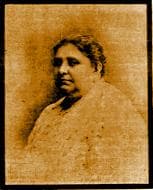
Mexican · Activism · Literature · Politics
Rita Cetina Gutiérrez
October 8, 1846 – March 11, 1908
Early Life and Background
Rita Cetina Gutiérrez was born on October 8, 1846, in Mérida, the capital of the Mexican state of Yucatán. She was born into a family of modest economic means, but one in which literacy and learning were valued despite the limited educational opportunities generally available to girls in mid-nineteenth-century Mexico. At that time, formal education for women was almost exclusively confined to religious and domestic instruction, with intellectual pursuits considered largely the province of men.
From a young age, Cetina showed an unusual aptitude and hunger for learning. She was largely self-taught in many subjects, supplementing whatever formal schooling she received with voracious independent reading. This autodidactic streak would become a hallmark of her later career as an educator: she firmly believed that access to knowledge, not inherited privilege, should determine a person's intellectual and social possibilities. Yucatán in this period had a relatively active regional press and a distinctive cultural identity shaped by its geographic isolation from central Mexico, its Maya heritage, and its trade connections with the Caribbean and Europe—all of which contributed to a comparatively fertile, if still conservative, intellectual environment.
Career Beginnings and Development
As a young woman, Cetina became a teacher, one of the few professional avenues open to educated women of her era. She quickly distinguished herself not merely as a classroom instructor but as an advocate for expanding the very concept of what women's education could and should include. She began to write poetry and prose, publishing her work in regional periodicals, and became known in Mérida's literary circles for the emotional depth and social conscience reflected in her writing.
Her poetry often explored themes of love, loss, nature, and homeland, but increasingly her work—both literary and journalistic—turned toward advocacy for women's intellectual emancipation. She argued that the moral and social advancement of Mexican society depended on educating women not just in domestic skills but in literature, science, and the humanities, positions that were considered progressive, even radical, for the time.
Major Accomplishments: La Siempreviva
Cetina's most enduring accomplishment was the founding, around 1870, of La Siempreviva ("The Everlasting" or "Evergreen"), together with fellow writer and educator Cristina Farfán and other collaborators. La Siempreviva began as a literary society and periodical publication run by and for women, providing a rare public platform where women could publish poetry, essays, and social commentary under their own names. The magazine quickly became an important vehicle for early feminist thought in Mexico, addressing topics such as women's right to education, their social role, and critiques of the restrictive norms that confined them to the domestic sphere.
Building on the society's success, Cetina and her collaborators established an associated school—also known as La Siempreviva—dedicated to educating girls and young women beyond the rudimentary skills typically offered to them. The school offered instruction in reading, writing, arithmetic, geography, history, and other subjects usually reserved for boys' education, as well as training that allowed graduates to become teachers themselves, thereby multiplying the movement's impact across subsequent generations. This teacher-training dimension was crucial: it meant Cetina's influence did not end with a single institution but propagated outward as her students went on to found and staff schools throughout Yucatán and, eventually, other parts of Mexico.
Cetina later contributed to and helped direct other educational and cultural initiatives in Yucatán, continuing to write essays and poetry that combined lyrical sensibility with an unmistakable feminist political consciousness. She remained active as an educator and public intellectual for decades, mentoring younger women writers and teachers and helping to institutionalize the cause of female education within Yucatecan civic life.
Awards, Honors, and Recognition
During her lifetime, Cetina's recognition came primarily through the esteem of her peers in Yucatán's literary and educational circles rather than through formal state honors, reflecting the limited institutional avenues available to women for public recognition in that era. Posthumously, however, her legacy has been increasingly celebrated. Schools throughout Yucatán and Mexico bear her name, and she has been recognized by Mexican governmental and educational institutions as one of the foundational figures of women's education and Mexican feminism.
Her most prominent recent honor came in 2024, when the federal government of Mexico under President Claudia Sheinbaum launched the "Beca Rita Cetina Gutiérrez", a nationwide scholarship program for basic education students, named explicitly in her honor to symbolize the government's commitment to educational equity and the historic struggle for women's access to schooling that Cetina championed. This naming brought significant renewed public and media attention to her biography and legacy across Mexico in late 2024.
Personal Life
Rita Cetina Gutiérrez is generally recorded as having remained unmarried and without children, devoting her life instead to teaching, writing, and institution-building. This choice—unusual and often socially scrutinized for women of her time—allowed her the relative independence to pursue her educational and literary projects without the domestic obligations that would typically have constrained a married woman's public activities. Her closest documented personal and professional relationships were with fellow women writers and educators, particularly Cristina Farfán, with whom she collaborated closely on La Siempreviva.
Legacy and Historical Impact
Rita Cetina Gutiérrez is remembered today as one of the earliest and most consequential pioneers of feminist thought and women's education in Mexico, predating by decades the more widely recognized twentieth-century Mexican feminist movements. Her insistence that women's access to comprehensive education was both a moral imperative and a practical necessity for social progress helped lay ideological groundwork for later generations of Mexican feminists and educational reformers.
The model she helped create—combining a women-led publication with a functioning school for girls—was influential beyond Yucatán, inspiring similar initiatives elsewhere in Mexico. Generations of teachers trained at institutions descended from her work went on to extend girls' access to education throughout the region. Her poetry and essays remain studied as important early examples of Mexican women's literary and political voice.
In the twenty-first century, Cetina's name has experienced a significant resurgence in public consciousness, particularly following the 2024 launch of the national scholarship program bearing her name, which introduced her story to a new generation of Mexicans and reaffirmed her status as a foundational figure in the history of Mexican education and feminism.
Later Life and Death
Cetina continued her educational and literary work in Mérida for the remainder of her life, remaining a respected figure in Yucatecan intellectual circles into her later years. She died on March 11, 1908, in Mérida, Yucatán, at the age of 61. Her death was mourned within the literary and educational communities she had helped build, and her institutional legacy—the schools, the tradition of women's periodicals, and the broader cultural shift toward valuing women's education—endured long after her passing, cementing her place as one of the most important pioneering figures in the history of Mexican feminism and education.
Dated achievements
3 indexed.
- Oct081846Science
Birth of Rita Cetina Gutiérrez in Mérida, Yucatán
Rita Cetina Gutiérrez was born on October 8, 1846, in Mérida, Yucatán, Mexico, into a modest family that valued education.
View details Rita Cetina Gutiérrez - Wikipedia - Apr101870Science
Founding of La Siempreviva, pioneering women's society and school
Rita Cetina co-founded La Siempreviva in Mérida in 1870, a literary society and school promoting women's education and rights in Yucatán.