← All women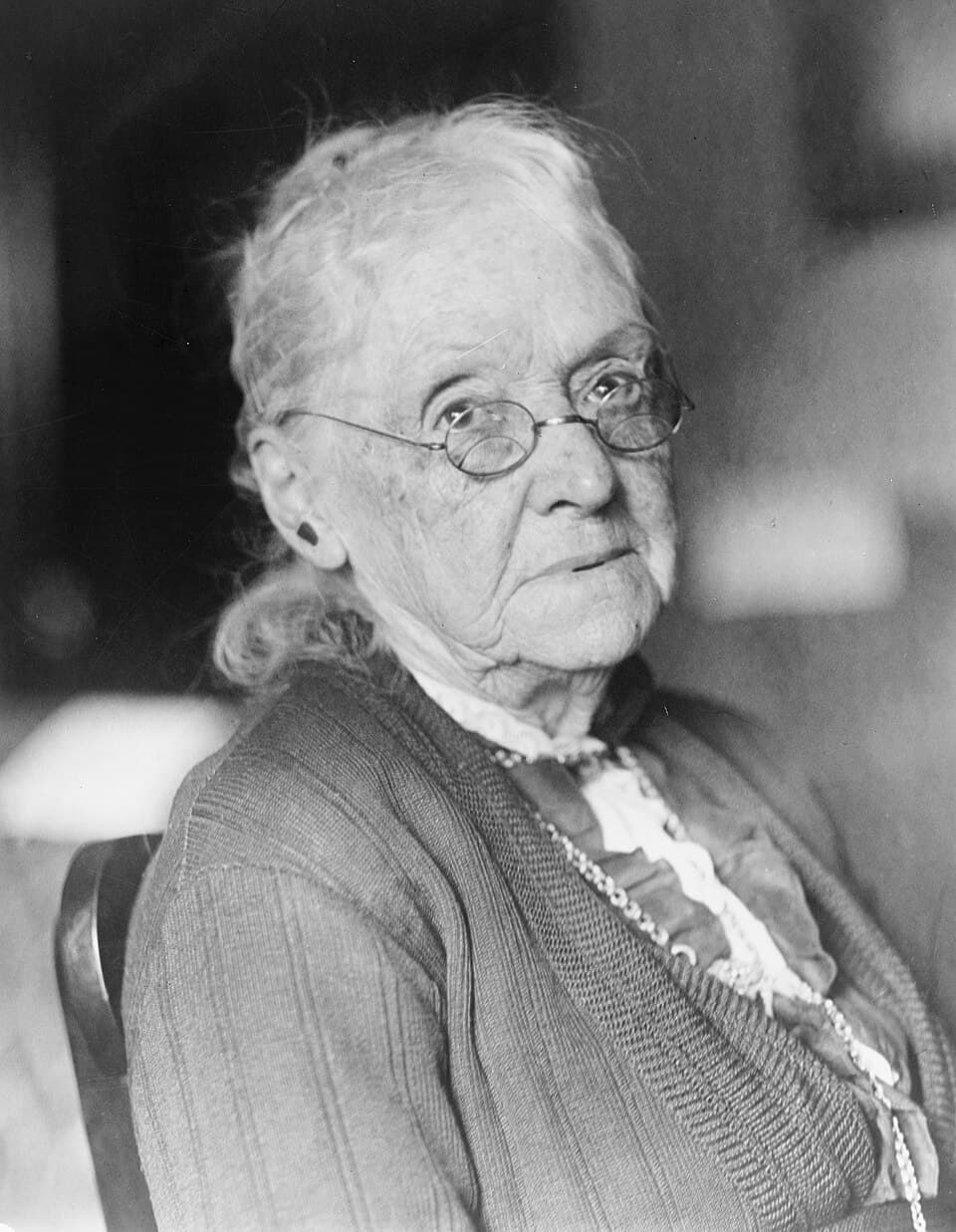
American · Politics · Activism
Rebecca Latimer Felton
June 10, 1835 – January 24, 1930
Early Life and Background
Rebecca Ann Latimer Felton (née Latimer) was born on June 10, 1835, near Decatur in DeKalb County, Georgia.[7][5][1] She was the eldest of three children of Charles Latimer, a farmer, businessman, and plantation owner, and Eleanor Swift Latimer
Despite the limits placed on girls’ education in the mid‑19th‑century South, Rebecca received what contemporaries regarded as a strong formal education. She attended private schools in Oxford and Decatur, Georgia, before enrolling at Madison Female College in Madison, Georgia.[6][7] In 1852 she graduated first in her class, an achievement noted in later biographical accounts as evidence of her intellectual drive and ambition.[7][3] Her schooling trained her in literature, rhetoric, and the social graces expected of elite Southern women, while also preparing her to become an effective writer and public speaker. The Latimer household appears to have encouraged conversation about politics, religion, and reform, and Felton later recalled her early exposure to public debates. This combination of privilege, education, and political awareness would shape her life trajectory: she would become both a prominent advocate of women’s rights and a vociferous defender of white supremacy and lynching. Her upbringing on a slave plantation proved central to her worldview, and modern historians emphasize that she remained a committed white supremacist throughout her long life.[5][11][10] On October 11, 1853, Rebecca Latimer married Dr. William Harrell Felton, a physician, Methodist minister, and rising figure in Georgia’s Democratic politics.[6][7][3] After their marriage, the couple settled in Bartow County, near Cartersville, Georgia, on the Felton family farm.[3][5][15] Rebecca quickly assumed the roles expected of a mid‑19th‑century Southern wife: managing household affairs, assisting with the plantation economy, and supporting her husband’s professional work. The couple had five children, four sons—three of whom died before reaching adulthood—and one daughter who died in infancy.[6] These losses, common in an era of high child mortality, deeply affected Felton and may have contributed to her later interest in public health reforms and maternal concerns. During the American Civil War, the Feltons, like many slaveholding families, faced economic disruption and the eventual end of their enslaved labor force, though Felton’s writings show little sympathy for emancipated Black people and instead emphasize white Southern suffering.[5][11] Felton’s full‑time exposure to politics intensified in the 1870s1874, William H. Felton was elected to the U.S. House of Representatives from Georgia, and Rebecca served as his advisor, strategist, and speechwriter.[3][9] She played a central role in crafting his reformist, anti‑Bourbon Democratic message, positioning him as a champion of farmers and the rural poor against entrenched party elites.[3][5] Beginning in 1877, she embarked on a long tenure as his behind‑the‑scenes political partner, helping to shape his speeches, campaign literature, and legislative priorities.[3] Felton’s public career developed on several fronts in the late 19th century. She became a prolific journalist, contributing columns and essays to Georgia newspapers, especially the Atlanta Journal.[3][9] For roughly twenty‑eight years she wrote regular pieces under titles such as "Mrs. Felton’s Timely Talks" and "The Country Home", offering a mix of political commentary, social advice, and household counsel.[3] Her columns blended advocacy for reforms—such as improved education and temperance—with appeals to traditional gender roles and white supremacy. Felton also emerged as a popular lecturer, speaking at public gatherings, churches, and club meetings around Georgia and beyond.[4] She addressed topics including women’s rights, temperance, prison reform, and rural development. Her oratorical style was forceful and uncompromising, and she developed a reputation as one of the South’s most outspoken female voices on public affairs.[5] She often framed her arguments in moral terms, appealing to Christian values and the welfare of the "home," while endorsing aggressive measures toward those she regarded as threats to white women and the social order. By the late 19th century, Felton was recognized as a leading Georgia reformer of the Progressive Era.[5] She campaigned against the convict lease system, a notorious practice in which primarily Black prisoners were leased to private businesses for forced labor, arguing that it was both inhumane and corrupt.[5][9] She advocated statewide prohibition, seeing alcohol as a menace to family stability and public morality. She supported improvements in public schooling and teacher training, especially for rural communities.[5] At the same time, she endorsed child labor and opposed certain labor protections, believing that strict discipline and work were necessary for social order.[8] Modern assessments of Felton emphasize that she was not only a reformer but also a virulent white supremacist and defender of racial terror. She repeatedly expressed the view that Black men posed a sexual threat to white women and endorsed lynching as an appropriate response.[5][11][8] Her most notorious statement came in an 1897 speech, in which she declared that if lynching was necessary to protect white women from Black men, then, "I say lynch a thousand a week."[5][8] This speech was widely reported and provoked strong criticism from Black leaders, notably journalist Ida B. Wells, who denounced Felton’s remarks and challenged the myth of Black male sexual predation that underpinned white Southern lynching culture.[11] Felton’s rhetoric helped legitimize mob violence in the eyes of many white Southerners and contributed to an atmosphere in which extrajudicial killing of Black people was seen as a defense of white womanhood. Her advocacy of lynching has led historians to characterize her as one of the South’s most outspoken proponents of racial terror.[5][11] This aspect of Felton’s legacy profoundly complicates her status as a pioneering woman politician. While she championed greater public roles for white women, she simultaneously worked to preserve and intensify racial hierarchies and violence. Her example illustrates how gender progress and racial oppression could be intertwined in Southern reform movements at the turn of the century. Alongside her racial views, Felton advocated a range of reforms that placed her within the broader Progressive Era tradition. She campaigned vigorously against the convict lease system, and her writings and speeches are credited with helping build momentum for its eventual abolition in Georgia. In 1908, Georgia enacted measures ending convict leasing and establishing statewide prohibition, outcomes that contemporary observers and later historians linked in part to Felton’s advocacy.[5][9] Felton’s commitment to temperance reflected a widely shared belief among middle‑class reformers that alcohol abuse undermined family stability and moral order. She supported local and statewide prohibition campaigns, frequently aligning herself with church groups and women’s organizations dedicated to banning liquor.[5][3] She also backed efforts to improve prisons and reduce corruption in the penal system, arguing that the existing structures were both cruel and inefficient.[4][9] In the realm of women’s rights, Felton emerged as one of the South’s best‑known advocates for woman suffrage by the early 20th century. She argued that women, particularly white women, should have the vote to protect their homes, influence legislation on education and morality, and counterbalance what she saw as the dangerous political power of urban machines and Black voters.[5][9] After the ratification of the Nineteenth Amendment in 1920, Felton celebrated the new constitutional status of women voters and urged them to participate actively in public life.[3][5] Felton was deeply involved in women’s organizational politics. She served as a delegate and state chair of the women’s auxiliary of Theodore Roosevelt’s Progressive "Bull Moose" Party, reflecting her alignment with certain national Progressive currents.[3] Her activism often focused on mobilizing rural white women, whom she saw as both guardians of traditional values and essential participants in modern political campaigns. Felton was not only a columnist and lecturer but also a author of several books that documented and interpreted Georgia’s political and social history from her perspective. Her major works include: These books, alongside her long‑running newspaper columns, helped shape public memory of Georgia’s past and promoted her vision of women’s roles in society. They also serve as key primary sources for historians studying white women’s activism, Southern memory, and the ideological justifications of segregation and lynching. Felton’s prominence as a reformer and political figure brought her significant recognition in Georgia. In 1922, the University of Georgia awarded her an honorary doctorate, acknowledging her public influence and her advocacy for education and social reforms.[9][3] The degree represented an unusual honor for a woman of her generation in the South and symbolized institutional validation of her decades of activity. Later that same year, her appointment to the U.S. Senate made her a national figure. Even though her service lasted only about one day, she was widely celebrated in the press as the first woman to be appointed to and to serve in the U.S. Senate.[7][12][15] Photographs and news accounts emphasized her advanced age and Southern background, portraying her as both a grandmotherly figure and a political pioneer. In subsequent decades, institutional histories—such as those of the U.S. Senate, the House of Representatives, the New Georgia Encyclopedia, and Encyclopaedia Britannica—have continued to note Felton’s status as the first woman senator as a key milestone in American political history.[7][5][12][1] At the same time, these sources stress her white supremacist beliefs, reflecting a modern commitment to more critical commemoration. Felton’s most famous political moment came in 1922. After Georgia Senator Thomas E. Watson died in office, Governor Thomas W. Hardwick appointed Felton to the vacant Senate seat on October 3, 1922, making her the first woman ever chosen to serve in the U.S. Senate.[9][15] Hardwick, who had previously opposed woman suffrage, sought to win favor with newly enfranchised women voters by selecting a nationally known female reformer and suffragist.[11][15] Felton, then eighty‑seven, did not immediately take her seat because the Senate was not in session and a special election was scheduled to choose Watson’s permanent replacement. On November 21, 1922, after Walter F. George had won the election but before he arrived in Washington, Felton was called to the Senate floor to be sworn in.[15][1] Escorted to the front of the chamber, she took the oath of office and was formally seated, becoming the first woman to serve in the United States Senate.[15][7] Her tenure was brief—she served for roughly twenty‑four hours until George took his oath the next day—but symbolically powerful. The galleries were crowded with suffragists and supporters who saw her seating as the culmination of decades of struggle for woman suffrage and a sign that women could now hold the highest legislative offices.[11][13][15] Felton herself embraced this interpretation, describing her appointment as a victory for women. The following day, November 22, 1922, she delivered a speech titled "Address by the First Woman Senator", in which she reflected on women’s political responsibilities, praised the Nineteenth Amendment, and urged women to use their votes to promote education and moral reform.[3][15] This speech, preserved in the Senate’s official records, was the first formal address by a woman senator to the U.S. Senate. Modern historians note that Felton was also the last former slaveholder to serve in the Senate and that her record of endorsing lynching and racial terror sits uneasily with commemorations of her as a trailblazing woman.[8][11][5] Her Senate tenure thus stands as a complex symbol: a breakthrough for women’s representation, but one achieved by a figure whose racial politics were profoundly reactionary. Felton’s personal life was closely intertwined with her public work. Her marriage to William H. Felton was a political partnership as well as a domestic one, and she remained deeply involved in his career until his death in 1909.[3][9] After he died, she left the farm and moved into the town of Cartersville, to a house at the corner of Leake Street and South Avenue.[3] There she continued writing, lecturing, and engaging in local civic activities. In her later years, Felton became something of a regional institution—an elder spokesperson for rural white Georgians and for certain Progressive reforms, as well as a persistent voice of white supremacy. She continued to publish books and columns, and her home became a site where visitors and journalists sought her opinions on contemporary events.[3][4] Even after her brief time in the Senate, she remained active in public discourse, commenting on national and state politics and reinforcing her stature as an influential Georgian. Her long lifespan meant that she could connect memories of antebellum plantation life directly to the modern politics of the 1920s, giving her a unique, if deeply biased, perspective on Southern history. Felton’s legacy is paradoxical and heavily debated among historians. On one hand, she is undeniably significant as the first woman to be appointed to and to serve in the United States Senate, marking a major milestone in the inclusion of women in federal legislative office.[7][15][1] Her career as a journalist, lecturer, and reformer made her one of the most prominent Southern women of the Progressive Era, and she played important roles in campaigns for temperance, penal reform, and women’s political participation.[5][9][4] On the other hand, Felton’s advocacy of white supremacy and lynching places her among the most notorious defenders of racial terror in Southern history. Her 1897 statement urging that a thousand Black men be lynched each week if necessary to protect white women has become emblematic of the lethal ideology underpinning mob violence.[5][8][11] She repeatedly used her platform to portray Black men as sexual predators and to justify extrajudicial killings, contributing to an environment in which thousands of Black people were murdered by lynch mobs. Institutional accounts such as those by the U.S. Senate, the New Georgia Encyclopedia, and Smithsonian magazine now emphasize both sides of her legacy: her pioneering role as a woman in national politics and her status as a "virulent white supremacist" and the last former slaveholder to serve in Congress.[5][11][12] This dual framing reflects broader shifts in historical scholarship toward more critical and inclusive narratives that acknowledge the harms inflicted by celebrated figures. Felton’s life illustrates the complexities of women’s history in the United States. She demonstrates that breaking gender barriers does not necessarily entail progressive views on race or class and that women’s political empowerment has sometimes been mobilized in support of deeply oppressive structures. Her story is therefore important not only as a tale of firsts but also as a cautionary example of how reform movements can coexist with, or even reinforce, systemic injustice. In her final years, Felton continued to write and reflect on her long life. She published The Romantic Story of Georgia Women in 1930, a work that underscored her belief in the centrality of white women to Georgia’s history and culture.[3] Shortly thereafter, on January 24, 1930, she died of pneumonia in Atlanta, Georgia, at the age of ninety‑four.[7][5] At the time of her death, Felton was widely remembered as an accomplished writer, reformer, and the first woman to serve in the U.S. Senate.[5][7] Subsequent historical reassessment has placed greater emphasis on her racial views and the damage wrought by her pro‑lynching rhetoric, but her role in women’s political history remains a key reference point. Her passing marked the end of a direct personal link between the slaveholding antebellum elite and the modern era of women’s suffrage and national officeholding. Today, Felton’s life is studied in detail by scholars of Southern history, women’s activism, and racial violence. Archives such as the Rebecca Latimer Felton Papers at the University of Georgia preserve her letters, manuscripts, and writings, providing rich material for understanding both the possibilities and limits of women’s reform politics in the Jim Crow South.[9] Her story, recounted in encyclopedias, museum exhibits, and Senate histories, continues to provoke debate about commemoration, responsibility, and the intertwined histories of gender and race in American public life.Marriage, Civil War, and Entry into Public Life
Career Beginnings: Journalism, Oratory, and Reform
White Supremacy and the 1897 Lynching Speech
Progressive-Era Reforms and Women’s Rights
Major Works and Publications
Awards, Honors, and Recognition
The First Woman in the U.S. Senate
Personal Life and Later Years
Legacy and Historical Impact
Later Life and Death
Dated achievements
5 indexed.
- Jun101835Politics
Birth of Rebecca Latimer Felton
Rebecca Ann Latimer (later Felton) was born near Decatur, Georgia.
View details Britannica Biography of Rebecca Ann Felton - Oct031922Politics
First woman appointed to the U.S. Senate
Appointed to the U.S. Senate, the first woman in such a role.