← All women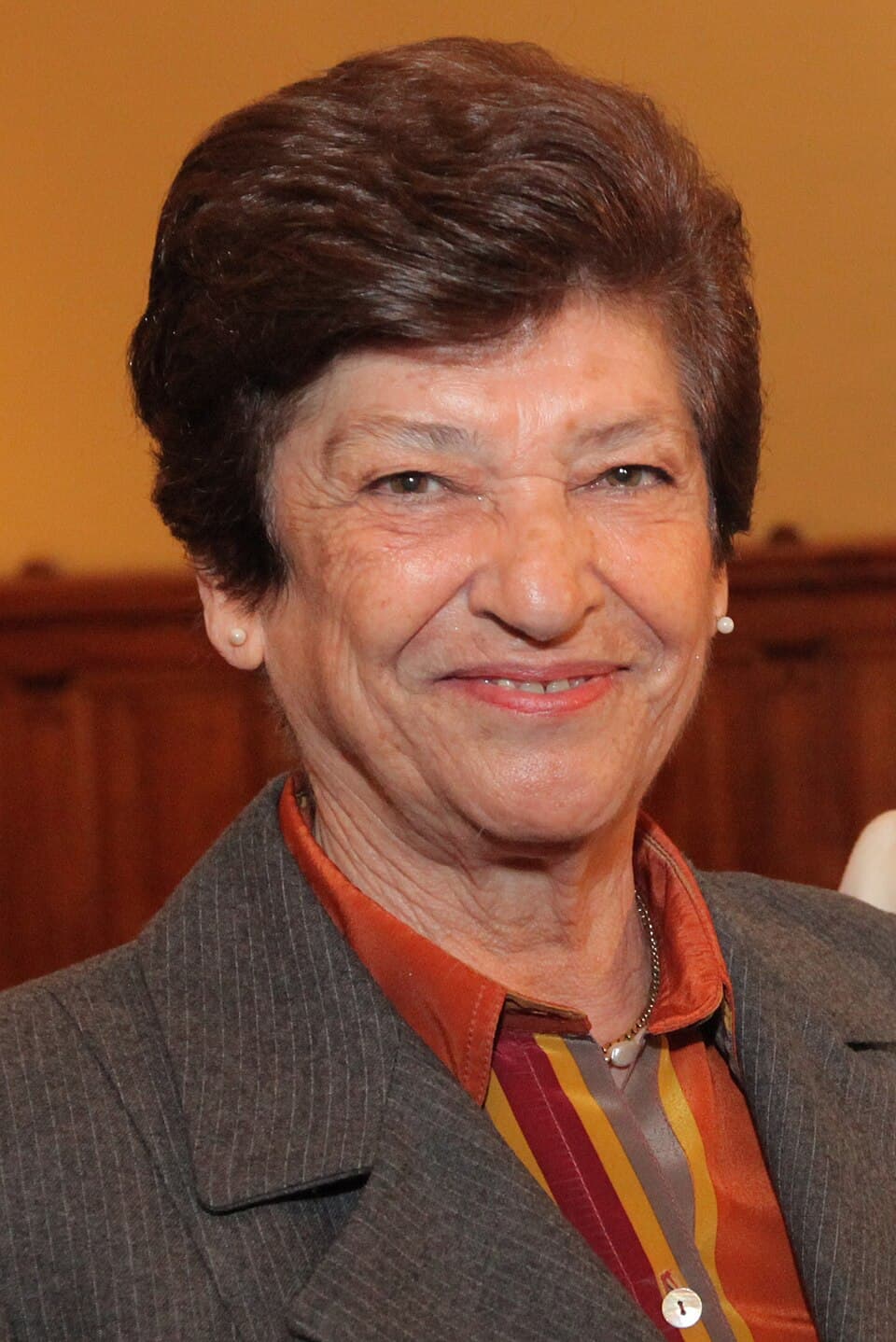
Chilean · Politics
Raquel Correa
July 15, 1934 – September 10, 2012
"
Early Life and Background
Raquel Correa was born in Chile in 1935, into a country on the cusp of significant social and political transformation. Details of her early family life remain relatively scarce in the historical record compared to the extensive documentation of her professional career, a common asymmetry for women journalists of her generation whose personal biographies were often eclipsed by their public work. She came of age in a Chile marked by expanding literacy, the growth of a professional middle class, and an increasingly vibrant print media landscape that would come to define much of twentieth-century Chilean public life.
Correa pursued studies that led her into journalism at a time when the profession was still overwhelmingly dominated by men, particularly in the realm of hard-hitting political reporting. Her entry into newsrooms during the mid-twentieth century placed her among a small cohort of women who had to establish credibility in an environment skeptical of female bylines on political subject matter, let alone women conducting adversarial interviews with heads of state and cabinet ministers.
Career Beginnings and Development
Correa's professional ascent occurred principally through her long association with the Chilean newsmagazine Ercilla, one of the most influential political weeklies in the country during the 1960s and 1970s. It was there that she developed the interview format for which she would become famous: extended, probing, often confrontational conversations with the most powerful figures in Chilean public life. Her approach eschewed deference, favoring direct and sometimes uncomfortable questions that many of her subjects were unaccustomed to facing from a journalist, let alone a woman.
She later moved to the newspaper El Mercurio, Chile's most prominent and historically conservative daily, where she became a fixture of the Sunday edition with a long-running interview column. This platform gave her access to and influence over the national conversation for decades, spanning some of the most consequential periods in modern Chilean history: the presidency of Eduardo Frei Montalva, the socialist government of Salvador Allende, the 1973 military coup and the subsequent seventeen-year dictatorship of General Augusto Pinochet, and the return to democratic rule in 1990 and beyond.
Major Works and Accomplishments
Correa's body of work consists primarily of hundreds of published interviews with an extraordinary range of subjects: presidents, generals, guerrilla figures, artists, writers, and business leaders. She was among the very few journalists who secured and published interviews with figures across the entire ideological spectrum of Chilean politics, from committed leftists to the architects of the military government, reflecting both her professional versatility and the immense respect—tinged with apprehension—that she commanded.
Her interviewing technique became legendary for its precision and its refusal to allow subjects to evade difficult questions. She was known for meticulous preparation, often arriving with research that put interviewees on the back foot, and for a willingness to ask the question others considered too dangerous or impolite to raise, particularly during the dictatorship years when press freedom was severely curtailed and journalists faced real risks for critical reporting.
Several of her interviews have been collected and republished in book form, cementing their place as primary historical documents for understanding Chilean political history as told through the words of its principal actors, filtered through Correa's exacting journalistic lens. Compilations of her work, including retrospective volumes published posthumously, have been used by historians, political scientists, and journalism students to study both the substance of her interviews and the evolution of her interrogative craft.
Awards, Honors, and Recognition
Throughout her career and posthumously, Correa received recognition from Chilean journalistic and academic institutions for her contributions to the profession. She is frequently cited in retrospectives on Chilean press history as one of the defining interviewers of the twentieth century, and her archive has been the subject of institutional study, including by universities such as the Universidad Diego Portales and the Pontificia Universidad Católica de Chile, both of which have published essays and retrospectives characterizing her as an emblematic figure of independent, rigorous journalism in a country where press independence was frequently tested by political upheaval.
Her nickname—variably rendered as the journalist 'feared by the powerful'—itself functions as a form of informal but widely recognized professional honor, repeated in obituaries and academic writing alike as shorthand for her uncompromising reputation.
Personal Life
Comprehensive public documentation of Correa's personal life, including marriage and family details, is limited relative to the extensive record of her professional output, reflecting both the norms of privacy maintained by public figures of her era and the media's tendency to focus overwhelmingly on her journalistic persona rather than her private affairs. She remained a public figure primarily defined by her professional identity throughout her life, with her name inseparable from the model of adversarial political interviewing she helped establish in Chile.
Legacy and Historical Impact
Raquel Correa's legacy rests on her transformation of the political interview into a serious journalistic instrument of accountability in Chile. In a media environment where sycophantic coverage of political power was common, particularly under authoritarian rule, Correa's interviews stood out for their willingness to press subjects on uncomfortable truths. Her work is frequently invoked in Chilean journalism education as a model for rigorous, fearless reportage, and her archive continues to be mined by historians seeking primary-source insight into the mindsets of Chile's political class across dramatically different regimes.
She is remembered as a trailblazer for women in Chilean journalism, having achieved prominence and authority in a field that offered few opportunities to women of her generation, especially in the male-dominated arena of political and investigative reporting. Her career is often cited alongside other pioneering Latin American women journalists as evidence of the gradual, hard-won opening of serious political journalism to women throughout the region.
Later Life and Death
Correa continued her journalistic work into her later years, remaining a respected voice in Chilean media commentary and retrospective analysis of the country's political history. She died in Santiago, Chile, on September 10, 2012. Her death prompted extensive tributes from Chilean media outlets, journalism schools, and former colleagues, who highlighted both the breadth of her interview subjects and the enduring rigor of her method. Institutions including Radio Universidad de Chile and various academic outlets published retrospectives underscoring her outsized influence on the practice of journalism in Chile.
In the years following her death, her work has continued to be studied and anthologized, with archival institutions preserving her interviews as vital historical documents. Her name remains synonymous in Chile with fearless, incisive journalism conducted in the public interest, regardless of the political winds of the moment.
"Dated achievements
2 indexed.
- Jul151934Politics
Birth of Raquel Correa
Raquel Correa was born on July 15, 1934, in Santiago, Chile.
View details Wikipedia Esp - Raquel Correa - Sep102012Politics
Death of Raquel Correa
Raquel Correa passed away on September 10, 2012, leaving a significant legacy in journalism.
View details