← All women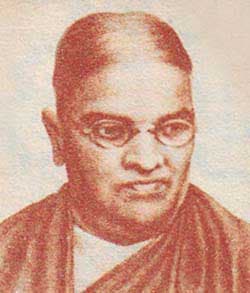
Indian · Activism · Literature
Ramabai Ranade
January 25, 1863 – January 22, 1924
Early Life and Background
Ramabai Ranade was born on 25 January 1863 in the village of Devrashtre in the Satara district of the Bombay Presidency (present-day Maharashtra), India. She was born into an orthodox Marathi Hindu family in an era when female education was almost unheard of and child marriage was the accepted social norm across most Hindu communities in western India. Like nearly all girls of her class and time, Ramabai received no formal schooling in her childhood and was illiterate at the time of her marriage.
At the age of eleven, in 1873, she was married to Mahadev Govind Ranade, a rising judge, scholar, and one of the foremost social and religious reformers of nineteenth-century India. Ranade, then in his early thirties, was a widower who had lost his first wife. The marriage was itself unusual for the reformist circles Ranade moved in, since many progressive contemporaries were beginning to question both child marriage and the remarriage of widowers to very young girls—contradictions that would later shape much of Ramabai's own reformist consciousness.
Education and Transformation
Unlike most husbands of his time, Justice Ranade took a personal and sustained interest in his young wife's education. He personally taught her to read and write in Marathi and English, and encouraged her to study a range of subjects including history, literature, and current affairs. This was a radical act in a society where educating women, particularly one's own wife, was often viewed with suspicion or ridicule by conservative sections of society.
Ramabai's education did not stop at basic literacy. Under her husband's guidance and encouragement, she began to engage with the ideas of the reform movements sweeping through Maharashtra, including the Prarthana Samaj, of which Justice Ranade was a leading figure. She attended meetings, listened to debates on social reform, and gradually developed her own independent views on the position of women in Indian society. This period of intellectual growth transformed her from a secluded child bride into an articulate, socially conscious woman capable of public engagement—an extraordinary trajectory for the time.
Public Life and Social Work
Ramabai Ranade's public life began in earnest during her husband's lifetime, as she started participating in women's associations and social gatherings organized by reform-minded families in Poona (Pune) and Bombay. She was associated with organizations working toward the upliftment of women, including efforts related to the Arya Mahila Samaj, a women's association with links to the reformer Pandita Ramabai (no direct relation), which worked on issues of female education and against child marriage.
Following the death of Justice Ranade in 1901, Ramabai—now a widow herself—did not retreat into seclusion, as was expected of Hindu widows of the period, who were traditionally confined to lives of austerity and social invisibility. Instead, she emerged as an independent public figure in her own right. She became deeply involved in establishing and running the Seva Sadan Society (Society for Women's Service), an institution devoted to providing shelter, vocational training, education, and medical aid to destitute women and widows. The Seva Sadan grew to have branches in several cities and became one of the pioneering women's welfare institutions in colonial India.
She also traveled extensively to deliver public speeches on the education and emancipation of women, at a time when it was still highly unusual for Hindu widows—let alone women in general—to appear and speak in public forums. Her speeches often drew on both her personal experience of the constraints placed on women and the reformist ideology she had absorbed from her husband's circle. She used her platform to advocate for widow remarriage, the abolition of the purdah system, women's access to education, and the reform of oppressive customs that governed women's lives, particularly those of widows.
Literary Contribution
Perhaps Ramabai Ranade's most enduring legacy is her memoir, originally published in Marathi and later translated into English as Ranade: His Wife's Reminiscences (Marathi title: Amchya Ayushyatil Kahi Athavani). Written in the early twentieth century, the memoir offers a rare and intimate first-person account of domestic life, marriage, and social reform in nineteenth-century Maharashtra from a woman's perspective—a genre almost entirely absent from the historical record of the period, which was otherwise dominated by male reformist and administrative narratives.
The memoir is valued by historians not merely as a personal account of her marriage to Justice Ranade, but as an invaluable social document illuminating the everyday realities of upper-caste Hindu domestic life, the practice of child marriage, the status of widows, and the gradual, often painful, process of social reform as it was lived and negotiated within families. It remains one of the earliest autobiographical works by an Indian woman and is frequently cited in scholarship on the history of Indian women's writing and the social reform movement.
Personal Life
Ramabai's marriage to Mahadev Govind Ranade was central to her personal and intellectual development. The couple did not have biological children, but their household was known for its intellectual and reformist ferment, hosting numerous discussions on social and religious reform. Justice Ranade's death in January 1901 left Ramabai a widow at the age of thirty-eight, a status that in orthodox Hindu society of the time typically meant a life of severe social restriction, tonsuring, plain dress, and exclusion from social and religious functions.
Ramabai's refusal to accept these constraints, and her decision instead to build an active public life of service and advocacy, was itself a significant statement against the customs her husband and his fellow reformers had long criticized. In this sense, her own widowhood became a living demonstration of the reforms she and her husband had championed together.
Legacy and Historical Significance
Ramabai Ranade occupies a distinctive place in the history of the Indian women's movement as one of the earliest examples of a woman who moved from complete illiteracy and childhood seclusion to public leadership and authorship within a single lifetime. She is frequently cited alongside contemporaries such as Pandita Ramabai and Anandibai Joshi as part of the first generation of Indian women to gain visibility in public life during the colonial period.
The institutions she helped build, particularly the Seva Sadan Society, continued to serve women long after her death, providing models for later women's welfare organizations across India. Her memoir remains an important primary source for historians studying gender, marriage, and social reform in nineteenth-century western India, and is frequently referenced in feminist historiography of the period.
Modern retrospectives, including profiles published by outlets such as ThePrint and Feminism in India, have highlighted Ramabai Ranade as a figure who embodied both the constraints and the possibilities of her era—a woman shaped by orthodox tradition who nonetheless became an agent of modernity and reform in her own right, rather than merely a passive beneficiary of her husband's progressive views.
Death
Ramabai Ranade died on 22 January 1924 in Pune, at the age of sixty-one. Her death was widely mourned in reformist and educational circles, where she had come to be recognized not simply as the widow of a great reformer, but as a reformer and public figure in her own right, whose life's work in women's education and welfare left a lasting institutional and literary legacy.
Dated achievements
2 indexed.
- Jan251863Activism
Birth of Ramabai Ranade
Ramabai Ranade was born on 25 January 1863 in Devrashtre, Satara district, Maharashtra, into a Marathi Hindu family.
View details Ramabai Ranade - Wikipedia - Jan221924Activism
Death of Ramabai Ranade
Ramabai Ranade died on 22 January 1924, remembered as a pioneering social reformer, educator, and advocate for women's rights in India.